Jun 17, 2015
Requiring GE foods to have a special label would be inherently misleading because it would indicate that there was something different about those foods.
The Public Record
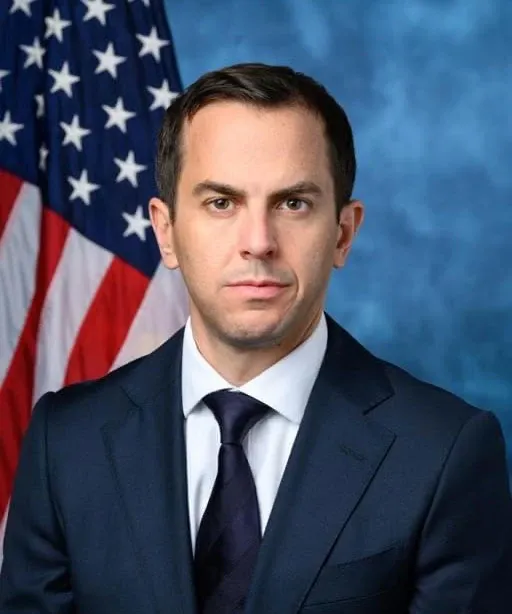
Frank Joseph Pallone is an American politician serving as the U.S. Representative for New Jersey's 6th congressional district since 1993. A member of the Democratic Party, Pallone has been a prominent advocate for health care reform, environmental protection, and consumer rights. He has played a key role in shaping legislation related to public health and climate change, often speaking out against policies he views as detrimental to these areas.
Requiring GE foods to have a special label would be inherently misleading because it would indicate that there was something different about those foods.
I don't think genetically engineered foods pose special safety or environmental risks or are otherwise different from non-GEO foods.
If mandatory GE labeling were inherently misleading, for example, because it implied that GE food was somehow inferior to normal food, that would seem to be a compelling reason to prohibit it.
There is no scientific evidence that GE foods pose safety issues any different from non-GE foods.
I have strongly opposed any attempts to weaken existing labeling requirements, such as the Commonsense Nutrition Labeling bill.
I have been long been a proponent of strong food labeling requirements. I was an original co-sponsor of the Nutrition Labeling and Education Act of 1990.
I have worked with my friend, Mr. Pompeo, and others in advocating for a Federal framework for labeling and crop commercialization.
I want to commend Rep. Mike Pompeo (R-KS) and Rep. G.K. Butterfield (D-NC) for their leadership on these issues.
Thank you, Chairman Walden and Ranking Member Eshoo, for holding this hearing today.
I have been such a supporter of making New Jersey's one of FirstNet's early builder projects.
I thank Representative Murphy for putting this in front of us for discussion.
The fact is America is facing a public health crisis related to the misuse and abuse of opioids, and we should not be cutting, in my opinion, any funding for that or for other SAMHSA substance abuse programs.
Medicaid access is critical, and in that system in particular, people are leaving jails and prisons without the services they need.
Lack of insurance coverage is not only a significant barrier, but maybe the most significant barrier to someone receiving consistent care for a serious mental illness.
I hope those states will see both the economic and moral benefit of Medicaid expansion, sooner rather than later.
I am opposed to several provisions in the bill, including its changes to HIPAA that would weaken the privacy rights of individuals with diagnosed mental illness.
I want to recognize that there are provisions of H.R. 2646 that I strongly support, including the increased focus on workforce development.
The first Health Subcommittee hearing on mental health is once again a legislative hearing on the Helping Families in Mental Health Crisis Act.
I want to add to it because, I think many of you know, or maybe you don't, that he was dealing and urging us to pass the Mental Health Parity Bill long before we even had it included in the ACA.
I also appreciate my colleague from California, Congresswoman Matsui, for her efforts to improve mental health care delivery.
I appreciate my colleague from Pennsylvania, Dr. Murphy's, endeavor to advance comprehensive mental health reform.
Since the beginning of the Clean Air Act, polluters have cried wolf every time EPA has passed a new rule to protect public health.
No matter how high the cost estimate may be, in my opinion there is no reason to oppose the new ozone rule.
Politicians like Frank Pallone