Mar 1, 1897
Though it seems to be clear that the consul-general should have professional aid in such investigation, that matter, together with the selection of the particular persons to act with him, properly devolves upon my successor in office.
The Public Record
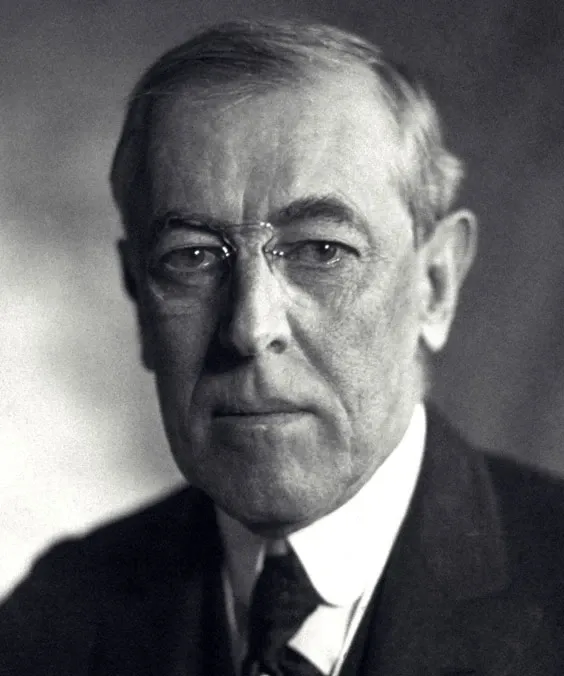
Grover Cleveland was the 22nd and 24th President of the United States, serving two non-consecutive terms from 1885 to 1889 and again from 1893 to 1897. A member of the Democratic Party, he was born in New Jersey and is known for his commitment to honesty and integrity in government. Cleveland's presidency was marked by his opposition to high tariffs and his efforts to reform the civil service system, which earned him a reputation as a champion of the common man.
Though it seems to be clear that the consul-general should have professional aid in such investigation, that matter, together with the selection of the particular persons to act with him, properly devolves upon my successor in office.
This requirement proceeds upon the assumption that the foreign relatives coming here are in every case, by reason of poverty, liable to become a public charge unless the immigrant is capable of their support.
A radical departure from our national policy relating to immigration is here presented.
When we consider these provisions of the bill in connection with our long northern frontier and the boundaries of our States and Territories, often but an imaginary line separating them from the British dominions, and recall the friendly…
In my opinion, it is infinitely more safe to admit a hundred thousand immigrants who, though unable to read and write, seek among us only a home and opportunity to work than to admit one of those unruly agitators and enemies of…
I have not thought it compatible with the public interest that the correspondence referred to in the resolution should be communicated pending the public and exhaustive investigation about to be instituted.
To the Senate:I transmit herewith, in response to the resolution of the Senate of February 24, 1897, a report from the Secretary of State, in relation to the claim of M. A. Cheek against the Siamese Government, with accompanying papers.
The ability to read and write, as required in this bill, in and of itself affords, in my opinion, a misleading test of contented industry and supplies unsatisfactory evidence of desirable citizenship or a proper apprehension of the…
It is not claimed, I believe, that the time has come for the further restriction of immigration on the ground that an excess of population overcrowds our land.
A careful examination of this bill has convinced me that for the reasons given and others not specifically stated its provisions are unnecessarily harsh and oppressive.
The time is quite within recent memory when the same thing was said of immigrants who, with their descendants, are now numbered among our best citizens.
I herewith return without approval House bill No. 1299, entitled 'An act to pension Harriet Woodbury, of Windsor, Vt.'
I am unable to discover any principle which justifies her restoration to that relationship upon the death of her second husband.
No feature of our pension laws is so satisfactory and just as a fair allowance to the widows of our soldiers who have died from causes attributable to their army service.
A departure from this rule, even in aid of cases of hardship, can not fail to establish precedents inviting the abandonment of reasonable and justifiable pension theories.
Her pensionable relation to the Government terminated with her remarriage.
To the Senate: In response to the resolution of the Senate of the 24th ultimo, I transmit herewith a report from the Secretary of State.
I indorse the recommendation of the Secretary of State that Congress authorize the printing of a special edition of 10,000 copies.
To the Senate and House of Representatives:I transmit herewith, for the information of the Congress, a communication from the Secretary of State, covering the report of the Director of the Bureau of the American Republics for the year 1896.
All extraordinary occasion requires the Senate of the United States to convene at the Capitol
I transmit herewith a communication from the Secretary of State, covering the report of the joint commission on behalf of the United States and Great Britain, dated December 31, 1896, relative to the preservation of the fisheries in waters…
I am not willing, even by inaction, to be charged with acquiescence in what appears to be such an entire departure from the principle, as well as sentiment, connected with reasonable pension legislation.
I return herewith without my approval House bill No. 6902, entitled 'An act granting a pension to Mrs. Mary A. Viel.'
Politicians like Grover Cleveland