I support this amendment which would improve protection for human health and the environment nationwide, and I would like to thank my colleague from North Carolina for her hard work on this important issue and for offering this amendment…
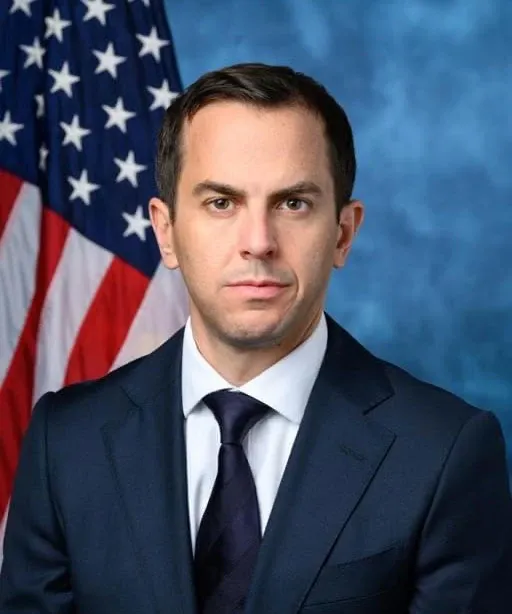
Frank Pallone
The Public Record
Frank Joseph Pallone is an American politician serving as the U.S. Representative for New Jersey's 6th congressional district since 1993. A member of the Democratic Party, Pallone has been a prominent advocate for health care reform, environmental protection, and consumer rights. He has played a key role in shaping legislation related to public health and climate change, often speaking out against policies he views as detrimental to these areas.
In support of my amendment. Mr. Chairman, this bill is dangerous for human health and the environment, in part, because it deletes or undermines important protections in EPA's final coal ash rule. The deleted requirements include location…
In response to the chairman of the subcommittee, I just want to stress again that I don't think that you should rely on EPA's decision to regulate as nonhazardous, meaning that coal ash is considered nontoxic. The fact of the matter is…
As someone who cares about beneficial reuse and wants to see the beneficial reuse flourish, I am listening to this debate. And one might think that we are facing a stark choice, either vote for this bill or coal ash recycling will stop…
Under the proven model of environmental regulation, Congress sets the standard of protection the State programs must meet. EPA interprets that standard through rules or guidance so States know what they must do to achieve that level of…
The gentleman from West Virginia seems to suggest that this legislation will improve enforcement of EPA's important coal ash standards. If that were true, the public interest groups that have fought for strong standards for years would…
The priority in Congress should never be if we should invest in infrastructure; it should be only how we invest.
These aren't by any means a cure-all prescription to what ails our Nation's broadband system.
Discussions about whether to invest in our Nation's infrastructure should not have two sides.
It is important to the Medicare program to bring a commonsense provision that has been used in Medicaid, Tricare and commercial insurance.
That is why in 2013 myself and our colleague, Ben Ray Lujan, first introduced the Medicare Part D Patient Safety and Drug Abuse Prevention Act.
This practice, commonly referred to as lock-in, I mentioned in my opening statement has been successful implemented in the private insurance market and some State Medicaid programs.
Now, more than 40 million Americans have access to affordable medications through the Medicare Part D program.
The Medicare Part D program has been a great success for our Nation's seniors and for people with disabilities.
The ACA strengthened Medicare by improving the solvency of the program and strengthening program integrity.
The Affordable Care Act strengthened Part D and took crucial steps to improve affordability and access.
I am glad we are here today to discuss ways to strengthen and improve the program.
These are real dollars and real savings for Americans, allowing them to live healthier lives.
The Medicare Part D program has been a great success for our Nation's seniors and for people with disabilities.
But how can these questions remain open for so long, and how have you tried to resolve them, and maybe most importantly, how can we help you?
Congress will need to reauthorize the Pipeline Safety Act soon, and yet, as a number of us noted in our opening statements, PHMSA has yet to complete some of the most critical rulemakings mandated by the 2011 Act.
I know that PHMSA used this authority to address threats posed to Santa Barbara by two of the lines operated by Plains All American, but I am concerned that perhaps the hurdle for using this authority is still too high.