Political science, perhaps as highly perfected in our own time and country as in any other, has not yet disclosed any means by which civil wars can be absolutely prevented.
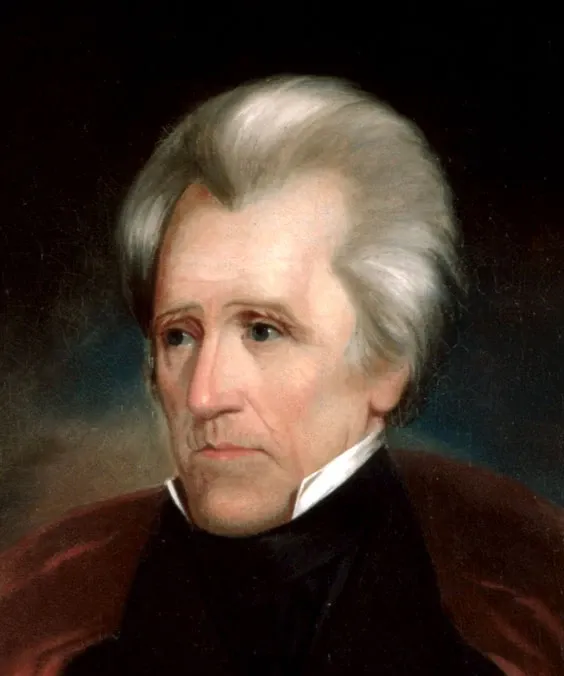
Andrew Johnson
The Public Record
Andrew Johnson was the 17th President of the United States, serving from April 15, 1865, to March 4, 1869. A member of the Democratic Party, he was born in Tennessee and became the first president to assume office following the assassination of Abraham Lincoln. Johnson's presidency was characterized by his strong opposition to the Reconstruction policies implemented by Congress, which aimed to rebuild the South and secure rights for newly freed African Americans. His resistance to these policies ultimately led to his impeachment by the House of Representatives in 1868, although he was acquitted by the Senate and remained in office until the end of his term.
gutenberg.org
An enlightened nation, however, with a wise and beneficent constitution of free government, may diminish their frequency and mitigate their severity by directing all its proceedings in accordance with its fundamental law.
When a civil war has been brought to a close, it is manifestly the first interest and duty of the state to repair the injuries which the war has inflicted, and to secure the benefit of the lessons it teaches as fully and as speedily as…
The destruction of the Constitution will be followed by other and still greater calamities.
Without that obedience we can look forward only to continual outrages upon individual rights, incessant breaches of the public peace, national weakness, financial dishonor, the total loss of our prosperity, the general corruption of…
To save our country from evils so appalling as these, we should renew our efforts again and again.
If it be said that we are not bound to keep faith with rebels, let it be remembered that this promise was not made to rebels only.
Thousands of true men in the South were drawn to our standard by it, and hundreds of thousands in the North gave their lives in the belief that it would be carried out.
Being sincerely convinced that these views are correct, I would be unfaithful to my duty if I did not recommend the repeal of the acts of Congress which place ten of the Southern States under the domination of military masters.
If calm reflection shall satisfy a majority of your honorable bodies that the acts referred to are not only a violation of the national faith, but in direct conflict with the Constitution, I dare not permit myself to doubt that you will…
Not being granted, we violate our trust by assuming them as palpably as we would by acting in the face of a positive interdict; for the Constitution forbids us to do whatever it does not affirmatively authorize, either by express words or…
If the authority we desire to use does not come to us through the Constitution, we can exercise it only by usurpation, and usurpation is the most dangerous of political crimes.
It leads directly and immediately to the establishment of absolute rule, for undelegated power is always unlimited and unrestrained.
The acts of Congress in question are not only objectionable for their assumption of ungranted power, but many of their provisions are in conflict with the direct prohibitions of the Constitution.
Yet the system of measures established by these acts of Congress does totally subvert and destroy the form as well as the substance of republican government in the ten States to which they apply.
It binds them hand and foot in absolute slavery, and subjects them to a strange and hostile power, more unlimited and more likely to be abused than any other now known among civilized men.
It tramples down all those rights in which the essence of liberty consists, and which a free government is always most careful to protect.
Personal freedom, property, and life, if assailed by the passion, the prejudice, or the rapacity of the ruler, have no security whatever.
It has the effect of a bill of attainder or bill of pains and penalties, not upon a few individuals, but upon whole masses, including the millions who inhabit the subject States, and even their unborn children.
These wrongs, being expressly forbidden, can not be constitutionally inflicted upon any portion of our people, no matter how they may have come within our jurisdiction, and no matter whether they live in States, Territories, or districts.
I have no desire to save from the proper and just consequences of their great crime those who engaged in rebellion against the Government, but as a mode of punishment the measures under consideration are the most unreasonable that could be…
The punitive justice of this age, and especially of this country, does not consist in stripping whole States of their liberties and reducing all their people, without distinction, to the condition of slavery.
It deals separately with each individual, confines itself to the forms of law, and vindicates its own purity by an impartial examination of every case before a competent judicial tribunal.
If this does not satisfy all our desires with regard to Southern rebels, let us console ourselves by reflecting that a free Constitution, triumphant in war and unbroken in peace, is worth far more to us and our children than the…
It is true this military government is to be only provisional, but it is through this temporary evil that a greater evil is to be made perpetual.
Politicians like Andrew Johnson