At the inauguration of Washington the foreign relations of the country were few and its trade was repressed by hostile regulations; now all the civilized nations of the globe welcome our commerce, and their governments profess toward us…
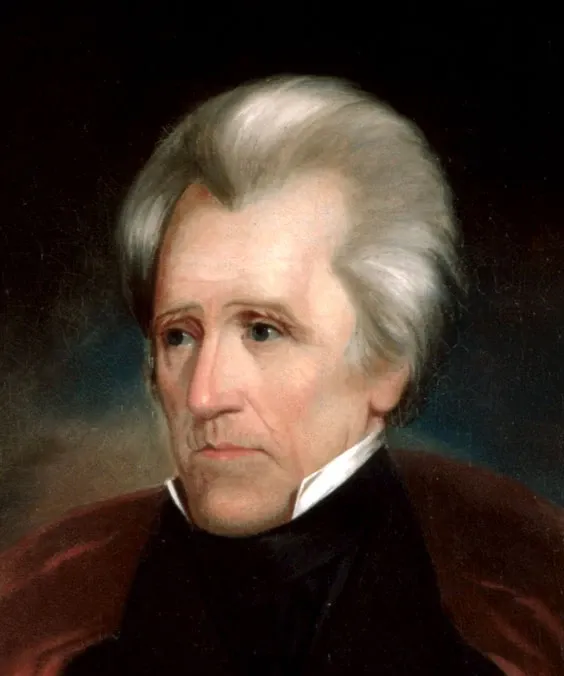
Andrew Johnson
The Public Record
Andrew Johnson was the 17th President of the United States, serving from April 15, 1865, to March 4, 1869. A member of the Democratic Party, he was born in Tennessee and became the first president to assume office following the assassination of Abraham Lincoln. Johnson's presidency was characterized by his strong opposition to the Reconstruction policies implemented by Congress, which aimed to rebuild the South and secure rights for newly freed African Americans. His resistance to these policies ultimately led to his impeachment by the House of Representatives in 1868, although he was acquitted by the Senate and remained in office until the end of his term.
gutenberg.org
Here, through the easy development of boundless resources, wealth has increased with twofold greater rapidity than numbers, so that we have become secure against the financial vicissitudes of other countries and, alike in business and in…
Here religion, released from political connection with the civil government, refuses to subserve the craft of statesmen, and becomes in its independence the spiritual life of the people.
Here toleration is extended to every opinion, in the quiet certainty that truth needs only a fair field to secure the victory.
Here the human mind goes forth unshackled in the pursuit of science, to collect stores of knowledge and acquire an ever-increasing mastery over the forces of nature.
Here exists the democratic form of government; and that form of government, by the confession of European statesmen, "gives a power of which no other form is capable, because it incorporates every man with the state and arouses everything…
Where in past history does a parallel exist to the public happiness which is within the reach of the people of the United States?
Where in any part of the globe can institutions be found so suited to their habits or so entitled to their love as their own free Constitution?
One thing, however, yet remained to be done before the work of restoration could be completed, and that was the admission to Congress of loyal Senators and Representatives from the States whose people had rebelled against the lawful…
I deem it a subject of profound regret that Congress has thus far failed to admit to seats loyal Senators and Representatives from the other States whose inhabitants, with those of Tennessee, had engaged in the rebellion.
Ten States--more than one-fourth of the whole number--remain without representation; the seats of fifty members in the House of Representatives and of twenty members in the Senate are yet vacant, not by their own consent, not by a failure…
Their admission, it is believed, would have accomplished much toward the renewal and strengthening of our relations as one people and removed serious cause for discontent on the part of the inhabitants of those States.
It would have accorded with the great principle enunciated in the Declaration of American Independence that no people ought to bear the burden of taxation and yet be denied the right of representation.
It is true it has been assumed that the existence of the States was terminated by the rebellious acts of their inhabitants, and that, the insurrection having been suppressed, they were thenceforward to be considered merely as conquered…
The legislative, executive, and judicial departments of the Government have, however, with Heat distinctness and uniform consistency, refused to sanction an assumption so incompatible with the nature of our republican system and with the…
Throughout the recent legislation of Congress the undeniable fact makes itself apparent that these ten political communities are nothing less than States of this Union.
In the admission of Senators and Representatives from any and all of the States there can be no just ground of apprehension that persons who are disloyal will be clothed with the powers of legislation, for this could not happen when the…
Upon this question, so vitally affecting the restoration of the Union and the permanency of our present form of government, my convictions, heretofore expressed, have undergone no change, but, on the contrary, their correctness has been…
If the admission of loyal members to seats in the respective Houses of Congress was wise and expedient a year ago, it is no less wise and expedient now.
If this anomalous condition is right now--if in the exact condition of these States at the present time it is lawful to exclude them from representation--I do not see that the question will be changed by the efflux of time.
Ten years hence, if these States remain as they are, the right of representation will be no stronger, the right of exclusion will be no weaker.
This would consummate the work of restoration and exert a most salutary influence in the reestablishment of peace, harmony, and fraternal feeling.
It would bind us more closely together as a nation and enable us to show to the world the inherent and recuperative power of a government founded upon the will of the people and established upon the principles of liberty, justice, and…
Our increased strength and enhanced prosperity would irrefragably demonstrate the fallacy of the arguments against free institutions drawn from our recent national disorders by the enemies of republican government.
The admission of loyal members from the States now excluded from Congress, by allaying doubt and apprehension, would turn capital now awaiting an opportunity for investment into the channels of trade and industry.
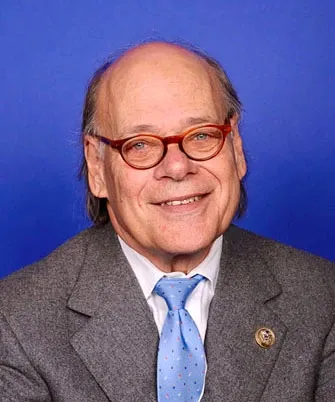
Politicians like Andrew Johnson