The freedman can not fairly be accused of unwillingness to work so long as a doubt remains about his freedom of choice in his pursuits and the certainty of his recovering his stipulated wages.
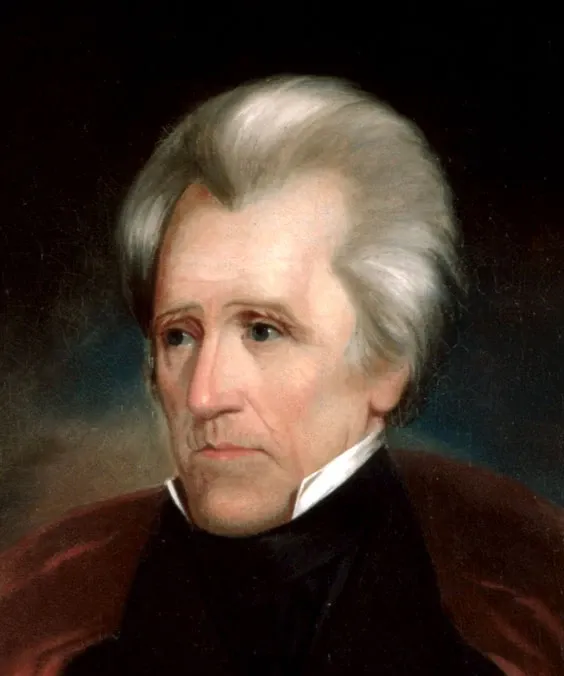
Andrew Johnson
The Public Record
Andrew Johnson was the 17th President of the United States, serving from April 15, 1865, to March 4, 1869. A member of the Democratic Party, he was born in Tennessee and became the first president to assume office following the assassination of Abraham Lincoln. Johnson's presidency was characterized by his strong opposition to the Reconstruction policies implemented by Congress, which aimed to rebuild the South and secure rights for newly freed African Americans. His resistance to these policies ultimately led to his impeachment by the House of Representatives in 1868, although he was acquitted by the Senate and remained in office until the end of his term.
gutenberg.org
The employer desires in his workmen spirit and alacrity, and these can be permanently secured in no other way.
The public interest will be best promoted if the several States will provide adequate protection and remedies for the freedmen.
Until this is in some way accomplished there is no chance for the advantageous use of their labor, and the blame of ill success will not rest on them.
I know that sincere philanthropy is earnest for the immediate realization of its remotest aims; but time is always an element in reform.
The career of free industry must be fairly opened to them, and then their future prosperity and condition must, after all, rest mainly on themselves.
If they fail, and so perish away, let us be careful that the failure shall not be attributable to any denial of justice.
Now that slavery is at an end, or near its end, the greatness of its evil in the point of view of public economy becomes more and more apparent.
Slavery was essentially a monopoly of labor, and as such locked the States where it prevailed against the incoming of free industry.
Where labor was the property of the capitalist, the white man was excluded from employment, or had but the second best chance of finding it; and the foreign emigrant turned away from the region where his condition would be so precarious.
With the destruction of the monopoly free labor will hasten from all pans of the civilized world to assist in developing various and immeasurable resources which have hitherto lain dormant.
The eight or nine States nearest the Gulf of Mexico have a soil of exuberant fertility, a climate friendly to long life, and can sustain a denser population than is found as yet in any part of our country.
And the future influx of population to them will be mainly from the North or from the most cultivated nations in Europe.
The removal of the monopoly of slave labor is a pledge that those regions will be peopled by a numerous and enterprising population, which will vie with any in the Union in compactness, inventive genius, wealth, and industry.
Our Government springs from and was made for the people--not the people for the Government.
But while the Government is thus bound to defer to the people, from whom it derives its existence, it should, from the very consideration of its origin, be strong in its power of resistance to the establishment of inequalities.
Monopolies, perpetuities, and class legislation are contrary to the genius of free government, and ought not to be allowed.
Here there is no room for favored classes or monopolies; the principle of our Government is that of equal laws and freedom of industry.
Wherever monopoly attains a foothold, it is sure to be a source of danger, discord, and trouble.
The Government is subordinate to the people; but, as the agent and representative of the people, it must be held superior to monopolies, which in themselves ought never to be granted, and which, where they exist, must be subordinate and…
It is of the first necessity, for the maintenance of the Union, that that commerce should be free and unobstructed.
No State can be justified in any device to tax the transit of travel and commerce between States.
It is best, while the country is still young and while the tendency to dangerous monopolies of this kind is still feeble, to use the power of Congress so as to prevent any selfish impediment to the free circulation of men and merchandise.
A tax on travel and merchandise in their transit constitutes one of the worst forms of monopoly, and the evil is increased if coupled with a denial of the choice of route.
When the vast extent of our country is considered, it is plain that every obstacle to the free circulation of commerce between the States ought to be sternly guarded against by appropriate legislation within the limits of the Constitution.
Politicians like Andrew Johnson