But the true theory is that all pretended acts of secession were from the beginning null and void.
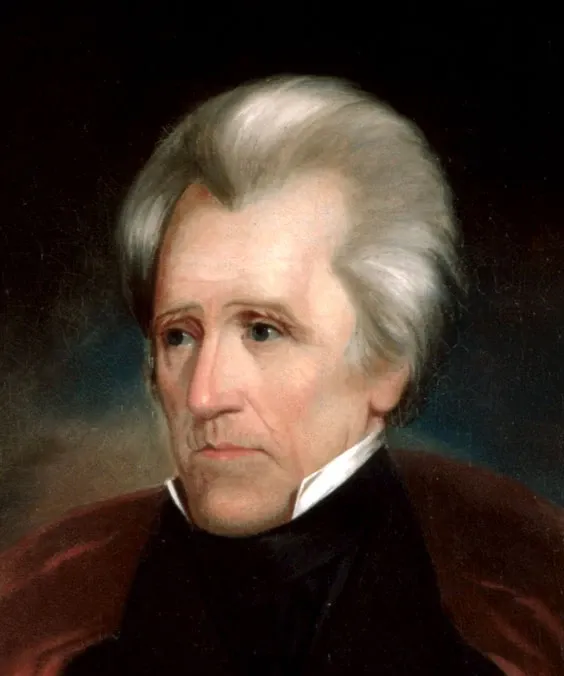
Andrew Johnson
The Public Record
Andrew Johnson was the 17th President of the United States, serving from April 15, 1865, to March 4, 1869. A member of the Democratic Party, he was born in Tennessee and became the first president to assume office following the assassination of Abraham Lincoln. Johnson's presidency was characterized by his strong opposition to the Reconstruction policies implemented by Congress, which aimed to rebuild the South and secure rights for newly freed African Americans. His resistance to these policies ultimately led to his impeachment by the House of Representatives in 1868, although he was acquitted by the Senate and remained in office until the end of his term.
gutenberg.org
The States can not commit treason nor screen the individual citizens who may have committed treason any more than they can make valid treaties or engage in lawful commerce with any foreign power.
The States attempting to secede placed themselves in a condition where their vitality was impaired, but not extinguished; their functions suspended, but not destroyed.
On this principle I have acted, and have gradually and quietly, and by almost imperceptible steps, sought to restore the rightful energy of the General Government and of the States.
I know very well that this policy is attended with some risk; that for its success it requires at least the acquiescence of the States which it concerns; that it implies an invitation to those States, by renewing their allegiance to the…
In the choice of difficulties it is the smallest risk; and to diminish and if possible to remove all danger, I have felt it incumbent on me to assert one other power of the General Government--the power of pardon.
In exercising that power I have taken every precaution to connect it with the clearest recognition of the binding force of the laws of the United States and an unqualified acknowledgment of the great social change of condition in regard to…
The next step which I have taken to restore the constitutional relations of the States has been an invitation to them to participate in the high office of amending the Constitution.
Every patriot must wish for a general amnesty at the earliest epoch consistent with public safety.
All parties in the late terrible conflict must work together in harmony.
So long as the adoption of this amendment is delayed, so long will doubt and jealousy and uncertainty prevail.
This is the measure which will efface the sad memory of the past; this is the measure which will most certainly call population and capital and security to those parts of the Union that need them most.
Indeed, it is not too much to ask of the States which are now resuming their places in the family of the Union to give this pledge of perpetual loyalty and peace.
It is manifest that treason, most flagrant in character, has been committed.
Moreover, a concession of the elective franchise to the freedmen by act of the President of the United States must have been extended to all colored men, wherever found, and so must have established a change of suffrage in the Northern…
Such an act would have created a new class of voters, and would have been an assumption of power by the President which nothing in the Constitution or laws of the United States would have warranted.
On the other hand, every danger of conflict is avoided when the settlement of the question is referred to the several States.
In my judgment the freedmen, if they show patience and manly virtues, will sooner obtain a participation in the elective franchise through the States than through the General Government, even if it had power to intervene.
When the tumult of emotions that have been raised by the suddenness of the social change shall have subsided, it may prove that they will receive the kindest usage from some of those on whom they have heretofore most closely depended.
I can not too strongly urge a dispassionate treatment of this subject, which should be carefully kept aloof from all party strife.
We must equally avoid hasty assumptions of any natural impossibility for the two races to live side by side in a state of mutual benefit and good will.
The experiment involves us in no inconsistency; let us, then, go on and make that experiment in good faith, and not be too easily disheartened.
The country is in need of labor, and the freedmen are in need of employment, culture, and protection.
While their right of voluntary migration and expatriation is not to be questioned, I would not advise their forced removal and colonization.
Let us rather encourage them to honorable and useful industry, where it may be beneficial to themselves and to the country; and, instead of hasty anticipations of the certainty of failure, let there be nothing wanting to the fair trial of…
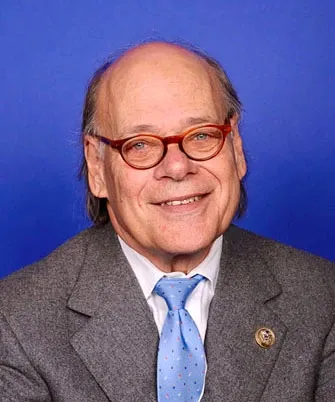
Politicians like Andrew Johnson