The lands in the hands of industrious settlers, whose labor creates wealth and contributes to the public resources, are worth more to the United States than if they had been reserved as a solitude for future purchasers.
Andrew Johnson
The Public Record
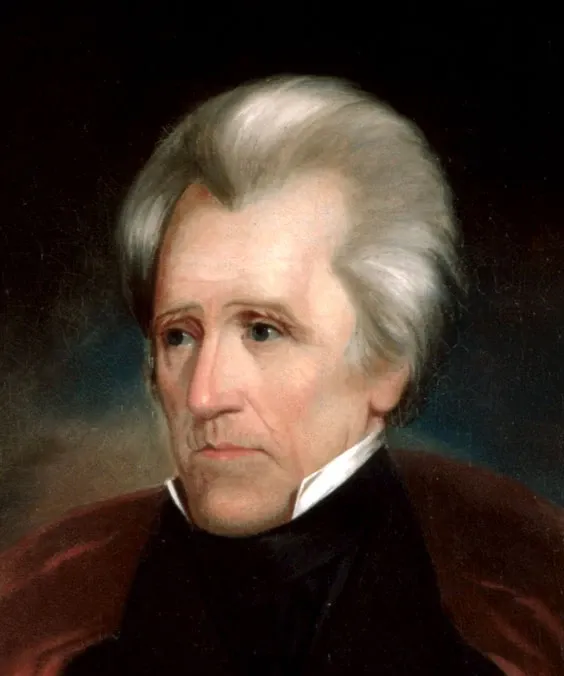
Andrew Johnson was the 17th President of the United States, serving from April 15, 1865, to March 4, 1869. A member of the Democratic Party, he was born in Tennessee and became the first president to assume office following the assassination of Abraham Lincoln. Johnson's presidency was characterized by his strong opposition to the Reconstruction policies implemented by Congress, which aimed to rebuild the South and secure rights for newly freed African Americans. His resistance to these policies ultimately led to his impeachment by the House of Representatives in 1868, although he was acquitted by the Senate and remained in office until the end of his term.
gutenberg.org
A grateful people will not hesitate to sanction any measures having for their object the relief of soldiers mutilated and families made fatherless in the efforts to preserve our national existence.
We must aim at nothing less than the complete effacement of the financial evils that necessarily followed a state of civil war.
We must endeavor to apply the earliest remedy to the deranged state of the currency, and not shrink from devising a policy which, with-out being oppressive to the people, shall immediately begin to effect a reduction of the debt, and, if…
It is our first duty to prepare in earnest for our recovery from the ever-increasing evils of an irredeemable currency without a sudden revulsion, and yet without untimely procrastination.
I hold it the duty of the Executive to insist upon frugality in the expenditures, and a sparing economy is itself a great national resource.
To aid our fellow-citizens in the prudent management of their monetary affairs, the duty devolves on us to diminish by law the amount of paper money now in circulation.
The simple statement of the fact recommends more strongly than any words of mine could do the necessity of our restraining this expansion.
The gradual reduction of the currency is the only measure that can save the business of the country from disastrous calamities, and this can be almost imperceptibly accomplished by gradually funding the national circulation in securities…
Our debt is doubly secure--first in the actual wealth and still greater undeveloped resources of the country, and next in the character of our institutions.
The most intelligent observers among political economists have not failed to remark that the public debt of a country is safe in proportion as its people are free; that the debt of a republic is the safest of all.
The secret of this superiority springs not merely from the fact that in a republic the national obligations are distributed more widely through countless numbers in all classes of society; it has its root in the character of our laws.
No favored class should demand freedom from assessment, and the taxes should be so distributed as not to fall unduly on the poor, but rather on the accumulated wealth of the country.
We should look at the national debt just as it is--not as a national blessing, but as a heavy burden on the industry of the country, to be discharged without unnecessary delay.
I have faith that we shall do all this within a reasonable time; that as we have amazed the world by the suppression of a civil war which was thought to be beyond the control of any government, so we shall equally show the superiority of…
The formal accordance of belligerent rights to the insurgent States was unprecedented, and has not been justified by the issue.
The consequences of this conduct were most disastrous to the States then in rebellion, increasing their desolation and misery by the prolongation of our civil contest.
It had, moreover, the effect, to a great extent, to drive the American flag from the sea, and to transfer much of our shipping and our commerce to the very power whose subjects had created the necessity for such a change.
The sincere desire for peace by which I am animated led me to approve the proposal, already made, to submit the question which had thus arisen between the countries to arbitration.
They had a higher motive, and it was in the interests of peace and justice to establish important principles of international law.
For the future, friendship between the two countries must rest on the basis of mutual justice.
From the moment of the establishment of our free Constitution the civilized world has been convulsed by revolutions in the interests of democracy or of monarchy, but through all those revolutions the United States have wisely and firmly…
It is the only government suited to our condition; but we have never sought to impose it on others, and we have consistently followed the advice of Washington to recommend it only by the careful preservation and prudent use of the blessing.
We should regard it as a great calamity to ourselves, to the cause of good government, and to the peace of the world should any European power challenge the American people, as it were, to the defense of republicanism against foreign…
Experience has proved its sufficiency in peace and in war; it has vindicated its authority through dangers and afflictions, and sudden and terrible emergencies, which would have crushed any system that had been less firmly fixed in the…
Politicians like Andrew Johnson