The Constitution to which life was thus imparted contains within itself ample resources for its own preservation.
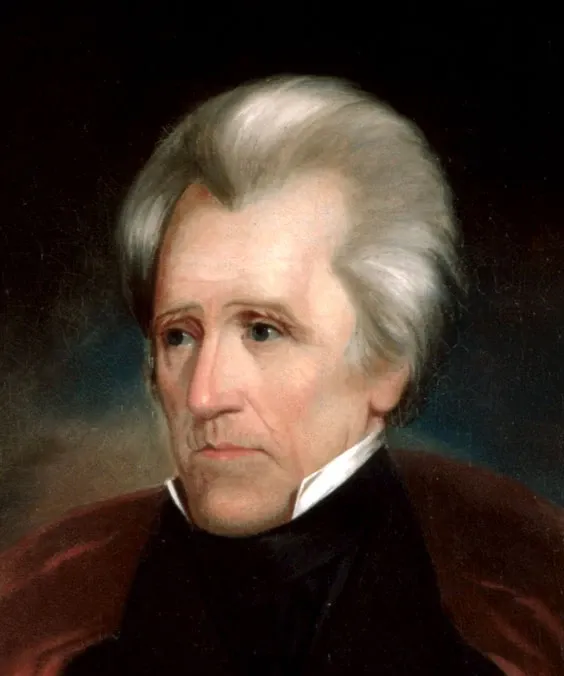
Andrew Johnson
The Public Record
Andrew Johnson was the 17th President of the United States, serving from April 15, 1865, to March 4, 1869. A member of the Democratic Party, he was born in Tennessee and became the first president to assume office following the assassination of Abraham Lincoln. Johnson's presidency was characterized by his strong opposition to the Reconstruction policies implemented by Congress, which aimed to rebuild the South and secure rights for newly freed African Americans. His resistance to these policies ultimately led to his impeachment by the House of Representatives in 1868, although he was acquitted by the Senate and remained in office until the end of his term.
gutenberg.org
It has power to enforce the laws, punish treason, and insure domestic tranquillity.
In case of the usurpation of the government of a State by one man or an oligarchy, it becomes a duty of the United States to make good the guaranty to that State of a republican form of government, and so to maintain the homogeneousness of…
A simple mode of amendment is provided in the Constitution itself, so that its conditions can always be made to conform to the requirements of advancing civilization.
No room is allowed even for the thought of a possibility of its coming to an end.
It is not strange that the framers of the Constitution, which had no model in the past, should not have fully comprehended the excellence of their own work.
Fresh from a struggle against arbitrary power, many patriots suffered from harassing fears of an absorption of the State governments by the General Government, and many from a dread that the States would break away from their orbits.
But the very greatness of our country should allay the apprehension of encroachments by the General Government.
The sovereignty of the States" is the language of the Confederacy, and not the language of the Constitution.
Certainly the Government of the United States is a limited government, and so is every State government a limited government.
With us this idea of limitation spreads through every form of administration--general, State, and municipal--and rests on the great distinguishing principle of the recognition of the rights of man.
The American system rests on the assertion of the equal right of every man to life, liberty, and the pursuit of happiness, to freedom of conscience, to the culture and exercise of all his faculties.
As a consequence the State government is limited--as to the General Government in the interest of union, as to the individual citizen in the interest of freedom.
States, with proper limitations of power, are essential to the existence of the Constitution of the United States.
And if we look beyond the letter of the Constitution to the character of our country, its capacity for comprehending within its jurisdiction a vast continental empire is due to the system of States.
The perpetuity of the Constitution brings with it the perpetuity of the States; their mutual relation makes us what we are, and in our political system their connection is indissoluble.
The whole can not exist without the parts, nor the parts without the whole.
So long as the Constitution of the United States endures, the States will endure.
The destruction of the one is the destruction of the other; the preservation of the one is the preservation of the other.
It has been my steadfast object to escape from the sway of momentary passions and to derive a healing policy from the fundamental and unchanging principles of the Constitution.
Now military governments, established for an indefinite period, would have offered no security for the early suppression of discontent, would have divided the people into the vanquishers and the vanquished, and would have envenomed hatred…
Peaceful emigration to and from that portion of the country is one of the best means that can be thought of for the restoration of harmony, and that emigration would have been prevented; for what emigrant from abroad, what industrious…
The powers of patronage and rule which would have been exercised under the President, over a vast and populous and naturally wealthy region are greater than, unless under extreme necessity, I should be willing to intrust to any one man.
The willful use of such powers, if continued through a period of years, would have endangered the purity of the general administration and the liberties of the States which remained loyal.
Besides, the policy of military rule over a conquered territory would have implied that the States whose inhabitants may have taken part in the rebellion had by the act of those inhabitants ceased to exist.
Politicians like Andrew Johnson