Our relations with Mexico during the year have been marked by an increasing growth of mutual confidence.
Andrew Johnson
The Public Record
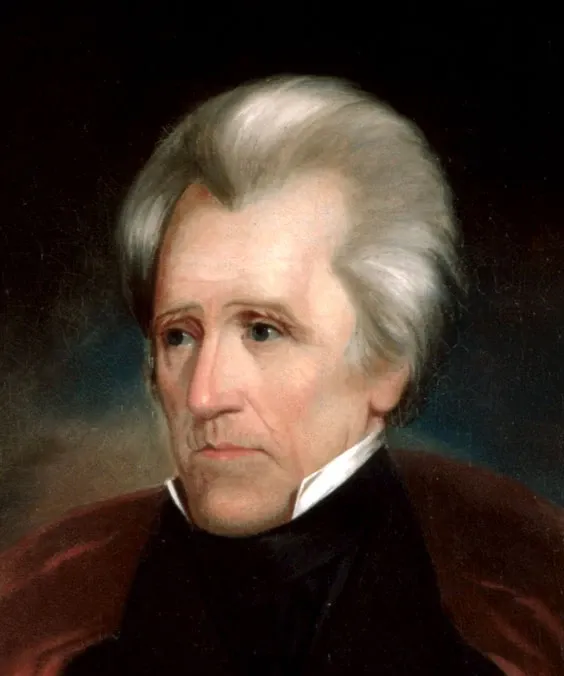
Andrew Johnson was the 17th President of the United States, serving from April 15, 1865, to March 4, 1869. A member of the Democratic Party, he was born in Tennessee and became the first president to assume office following the assassination of Abraham Lincoln. Johnson's presidency was characterized by his strong opposition to the Reconstruction policies implemented by Congress, which aimed to rebuild the South and secure rights for newly freed African Americans. His resistance to these policies ultimately led to his impeachment by the House of Representatives in 1868, although he was acquitted by the Senate and remained in office until the end of his term.
gutenberg.org
With the release of capital, new life would be infused into the paralyzed energies of our people and activity and vigor imparted to every branch of industry.
The fruits of their labors should be enjoyed by our citizens rather than used to build up and sustain moneyed monopolies in our own and other lands.
It needs no argument to show that legislation which has produced such baneful consequences should be abrogated, or else made to conform to the genuine principles of republican government.
The time has come, however, when the Government and national banks should be required to take the most efficient steps and make all necessary arrangements for a resumption of specie payments at the earliest practicable period.
The anomalous condition of our currency is in striking contrast with that which was originally designed.
This striking fact makes it the obvious duty of the Government, as early as may be consistent with the principles of sound political economy, to take such measures as will enable the holder of its notes and those of the national banks to…
The forced retention in office of a single dishonest person may work great injury to the public interests.
They are given merely as a trust for the public benefit, sometimes for a fixed period, sometimes during good behavior, but generally they are liable to be terminated at the pleasure of the appointing power, which represents the collective…
It is not the theory of this Government that public offices are the property of those who hold them.
Must he forbear his complaint until the mischief is done and can not be prevented?
This would be simply civil war, and civil war must be resorted to only as the last remedy for the worst of evils.
We are not permitted to do evil that good may come.
By that crime the enemies of free government in all ages have worked out their designs against public liberty and private right.
But it was a solemn public, official pledge of the national honor, and I can not imagine upon what grounds the repudiation of it is to be justified.
If we can not support the Constitution with the cheerful alacrity of those who love and believe in it, we must give to it at least the fidelity of public servants who act under solemn obligations and commands which they dare not disregard.
New fields of enterprise would be opened to our progressive people and soon the devastations of war would be repaired and all traces of our domestic differences effaced from the minds of our countrymen.
The States themselves had been asked to take Dart in the high function of amending the Constitution, and of thus sanctioning the extinction of African slavery as one of the legitimate results of our internecine struggle.
Since those times we have advanced in wealth and power, but we retain the same purpose to leave the nations of Europe to choose their own dynasties and form their own systems of government.
Here all men contribute to the public welfare and bear their fair share of the public burdens.
Now, on the first occasion of the meeting of Congress since the return of peace, it is of the utmost importance to inaugurate a just policy, which shall at once be put in motion, and which shall commend itself to those who come after us…
Vast as is its amount, it fades away into nothing when compared with the countless blessings that will be conferred upon our country and upon man by the preservation of the nation's life.
The life of a republic lies certainly in the energy, virtue, and intelligence of its citizens; but it is equally true that a good revenue system is the life of an organized government.
The revenue system of the country is a subject of vital interest to its honor and prosperity, and should command the earnest consideration of Congress.
As no State can throw a defense over the crime of treason, the power of pardon is exclusively vested in the executive government of the United States.
Politicians like Andrew Johnson