May 8, 1866
The expediency of authorizing other proceedings in case they should ultimately prove to be indispensable is submitted to your consideration.
The Public Record
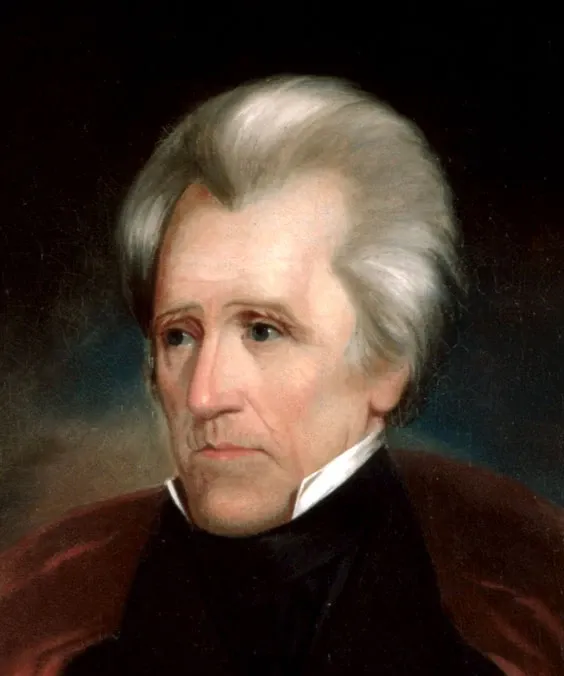
Andrew Johnson was the 17th President of the United States, serving from April 15, 1865, to March 4, 1869. A member of the Democratic Party, he was born in Tennessee and became the first president to assume office following the assassination of Abraham Lincoln. Johnson's presidency was characterized by his strong opposition to the Reconstruction policies implemented by Congress, which aimed to rebuild the South and secure rights for newly freed African Americans. His resistance to these policies ultimately led to his impeachment by the House of Representatives in 1868, although he was acquitted by the Senate and remained in office until the end of his term.
The expediency of authorizing other proceedings in case they should ultimately prove to be indispensable is submitted to your consideration.
I transmit herewith reports from the Secretary of State, the Secretary of the Treasury, the Secretary of War, and the Attorney-General, together with a copy of the amnesty proclamation of the 29th of May, 1865, and a copy of the warrants…
In answer to the resolution of the House of Representatives of the 25th instant, requesting information in regard to the rebel debt known as the cotton loan, I transmit a report from the Secretary of State, to whom the resolution was…
I transmit to the Senate, for its consideration with a view to ratification, a convention which was signed at Tangier on the 31st of May last between the United States and other powers on the one part and the Sultan of Morocco on the other…
In answer to the resolution of the House of Representatives of the 10th instant, requesting information in regard to the rights and interests of American citizens in the fishing grounds adjacent to the British Provinces, I transmit a…
In compliance with the resolution of the Senate of the 27th ultimo, in relation to the seizure and detention at New York of the steamship Meteor, I transmit herewith a report from the Secretary of State and the papers by which it was…
That in appointments to office in the several Executive Departments of the General Government and the various branches of the public service connected with said Departments preference shall be given to such meritorious and honorably…
To the Senate of the United States: I transmit to the Senate a memorial of the legislature of Alabama, asking an extension of time for the completion of certain railroads in said State.
In answer to the resolutions of the Senate of the 5th of January and 27th of February last, requesting information in regard to provisional governors of States, I transmit reports from the Secretary of State and the Secretary of War, to…
I have examined with care the bill, which originated in the Senate and has been passed by the two Houses of Congress, to amend an act entitled 'An act to establish a bureau for the relief of freedmen and refugees,' and for other purposes.
I recommend that an appropriation be made by Congress toward providing for his compensation
I have with that view nominated to the Senate an officer of the same grade with the one now accredited to the Republic of Hayti
In compliance with the resolution of the Senate of the 11th instant, requesting information in regard to a negotiation for the transit of United States troops in 1861 through Mexican territory
To the Senate: In compliance with the resolution of the Senate of the 11th instant, respecting the occupation by the French troops of the Republic of Mexico and the establishment of a monarchy there, I transmit a report from the Secretary…
I transmit a report from the Secretary of State and the documents by which it was accompanied
The employers desire in their workmen spirit and alacrity, and these can be permanently secured in no other way.
There must be confidence between the Government and the States, and while the Government confides in the people the people must have faith in the Government.
The usurpation of such power will be treated as a grave military offense.
That upon the requisition of the Commissioner or the assistant commissioners of the Bureau transportation be furnished such destitute refugees and freedmen as are dependent upon the Government for support to points where they can procure…
Seventh. That the Secretary of the Interior put in force the laws relating to the Interior Department applicable to the geographical limits aforesaid
Sixth. That the Secretary of the Navy take possession of all public property belonging to the Navy Department within said geographical limits and put in operation all acts of Congress in relation to naval affairs having application to the…
I do hereby appoint William Marvin provisional governor of the State of Florida
Politicians like Andrew Johnson