Our only standard of civil duty being set at naught, the sheet anchor of our political morality is lost, the public conscience swings from its moorings and yields to every impulse of passion and interest.
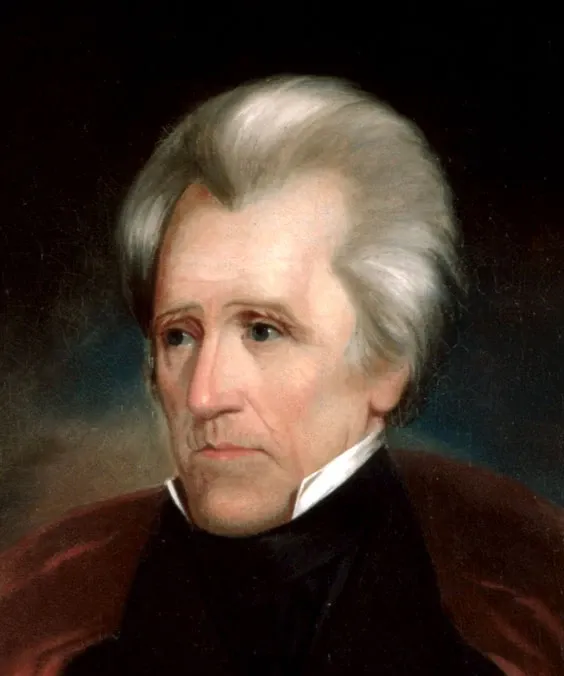
Andrew Johnson
The Public Record
Andrew Johnson was the 17th President of the United States, serving from April 15, 1865, to March 4, 1869. A member of the Democratic Party, he was born in Tennessee and became the first president to assume office following the assassination of Abraham Lincoln. Johnson's presidency was characterized by his strong opposition to the Reconstruction policies implemented by Congress, which aimed to rebuild the South and secure rights for newly freed African Americans. His resistance to these policies ultimately led to his impeachment by the House of Representatives in 1868, although he was acquitted by the Senate and remained in office until the end of his term.
gutenberg.org
If we repudiate the Constitution, we will not be expected to care much for mere pecuniary obligations.
Besides, if we acknowledge that the national debt was created, not to hold the States in the Union, as the taxpayers were led to suppose, but to expel them from it and hand them over to be governed by Negroes, the moral duty to pay it may…
I say it may seem so, for I do not admit that this or any other argument in favor of repudiation can be entertained as sound; but its influence on some classes of minds may well be apprehended.
The Southern trade, from which the North would have derived so great a profit under a government of law, still languishes, and can never be revived until it ceases to be fettered by the arbitrary power which makes all its operations unsafe.
That rich country--the richest in natural resources the world ever saw--is worse than lost if it be not soon placed under the protection of a free constitution.
Instead of being, as it ought to be, a source of wealth and power, it will become an intolerable burden upon the rest of the nation.
We live in a country where the popular will always enforces obedience to itself, sooner or later.
It can not have escaped your attention that from the day on which Congress fairly and formally presented the proposition to govern the Southern States by military force, with a view to the ultimate establishment of Negro supremacy, every…
The affections of this generation can not be detached from the institutions of their ancestors.
Their determination to preserve the inheritance of free government in their own hands and transmit it undivided and unimpaired to their own posterity is too strong to be successfully opposed.
Every weaker passion will disappear before that love of liberty and law for which the American people are distinguished above all others in the world.
A faithful and conscientious magistrate will concede very much to honest error, and something even to perverse malice, before he will endanger the public peace; and he will not adopt forcible measures, or such as might lead to force, as…
In all the Northern States they still held in their hands the sacred right of the ballot, and it was safe to believe that in due time they would come to the rescue of their own institutions.
It gives me pleasure to add that the appeal to our common constituents was not taken in vain, and that my confidence in their wisdom and virtue seems not to have been misplaced.
It is well and publicly known that enormous frauds have been perpetrated on the Treasury and that colossal fortunes have been made at the public expense.
This species of corruption has increased, is increasing, and if not diminished will soon bring us into total ruin and disgrace.
The public creditors and the taxpayers are alike interested in an honest administration of the finances, and neither class will long endure the large-handed robberies of the recent past.
It is not wonderful that official malfeasance should become bold in proportion as the delinquents learn to think themselves safe.
I am entirely persuaded that under such a rule the President can not perform the great duty assigned to him of seeing the laws faithfully executed, and that it disables him most especially from enforcing that rigid accountability which is…
The Constitution invests the President with authority to decide whether a removal should be made in any given case; the act of Congress declares in substance that he shall only accuse such as he supposes to be unworthy of their trust.
The Constitution makes him sole judge in the premises, but the statute takes away his jurisdiction, transfers it to the Senate, and leaves him nothing but the odious and sometimes impracticable duty of becoming a prosecutor.
The prosecution is to be conducted before a tribunal whose members are not, like him, responsible to the whole people, but to separate constituent bodies, and who may hear his accusation with great disfavor.
If the charge be incapacity, what evidence will support it?
Fidelity to the Constitution may be understood or misunderstood in a thousand different ways, and by violent party men, in violent party times, unfaithfulness to the Constitution may even come to be considered meritorious.
Politicians like Andrew Johnson