This is the measure which will efface the sad memory of the past; this is the measure which will most certainly call population and capital and security to those parts of the Union that need them most.
Andrew Johnson
The Public Record
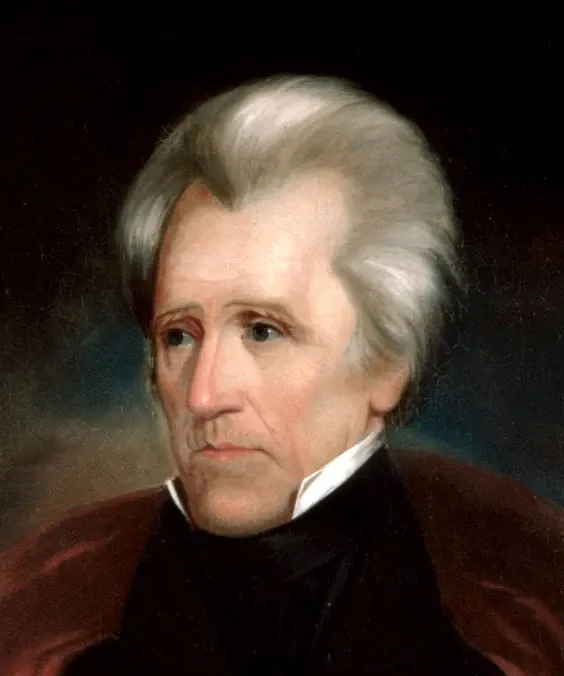
Andrew Johnson was the 17th President of the United States, serving from April 15, 1865, to March 4, 1869. A member of the Democratic Party, he was born in Tennessee and became the first president to assume office following the assassination of Abraham Lincoln. Johnson's presidency was characterized by his strong opposition to the Reconstruction policies implemented by Congress, which aimed to rebuild the South and secure rights for newly freed African Americans. His resistance to these policies ultimately led to his impeachment by the House of Representatives in 1868, although he was acquitted by the Senate and remained in office until the end of his term.
gutenberg.org
So long as the adoption of this amendment is delayed, so long will doubt and jealousy and uncertainty prevail.
All parties in the late terrible conflict must work together in harmony.
Every patriot must wish for a general amnesty at the earliest epoch consistent with public safety.
The next step which I have taken to restore the constitutional relations of the States has been an invitation to them to participate in the high office of amending the Constitution.
In exercising that power I have taken every precaution to connect it with the clearest recognition of the binding force of the laws of the United States and an unqualified acknowledgment of the great social change of condition in regard to…
As no State can throw a defense over the crime of treason, the power of pardon is exclusively vested in the executive government of the United States.
In the choice of difficulties it is the smallest risk; and to diminish and if possible to remove all danger, I have felt it incumbent on me to assert one other power of the General Government--the power of pardon.
I know very well that this policy is attended with some risk; that for its success it requires at least the acquiescence of the States which it concerns; that it implies an invitation to those States, by renewing their allegiance to the…
On this principle I have acted, and have gradually and quietly, and by almost imperceptible steps, sought to restore the rightful energy of the General Government and of the States.
The States attempting to secede placed themselves in a condition where their vitality was impaired, but not extinguished; their functions suspended, but not destroyed.
The States can not commit treason nor screen the individual citizens who may have committed treason any more than they can make valid treaties or engage in lawful commerce with any foreign power.
But the true theory is that all pretended acts of secession were from the beginning null and void.
Besides, the policy of military rule over a conquered territory would have implied that the States whose inhabitants may have taken part in the rebellion had by the act of those inhabitants ceased to exist.
The willful use of such powers, if continued through a period of years, would have endangered the purity of the general administration and the liberties of the States which remained loyal.
The powers of patronage and rule which would have been exercised under the President, over a vast and populous and naturally wealthy region are greater than, unless under extreme necessity, I should be willing to intrust to any one man.
Peaceful emigration to and from that portion of the country is one of the best means that can be thought of for the restoration of harmony, and that emigration would have been prevented; for what emigrant from abroad, what industrious…
Now military governments, established for an indefinite period, would have offered no security for the early suppression of discontent, would have divided the people into the vanquishers and the vanquished, and would have envenomed hatred…
It has been my steadfast object to escape from the sway of momentary passions and to derive a healing policy from the fundamental and unchanging principles of the Constitution.
The destruction of the one is the destruction of the other; the preservation of the one is the preservation of the other.
So long as the Constitution of the United States endures, the States will endure.
The whole can not exist without the parts, nor the parts without the whole.
The perpetuity of the Constitution brings with it the perpetuity of the States; their mutual relation makes us what we are, and in our political system their connection is indissoluble.
And if we look beyond the letter of the Constitution to the character of our country, its capacity for comprehending within its jurisdiction a vast continental empire is due to the system of States.
States, with proper limitations of power, are essential to the existence of the Constitution of the United States.
Politicians like Andrew Johnson