Jan 20, 2015
If, in fact, the sanctions which exist that all heralded and said brought Iran to the table expire next year, in 2016, and we do not reauthorize them, there is nothing at least in that context to snap back to.
The Public Record
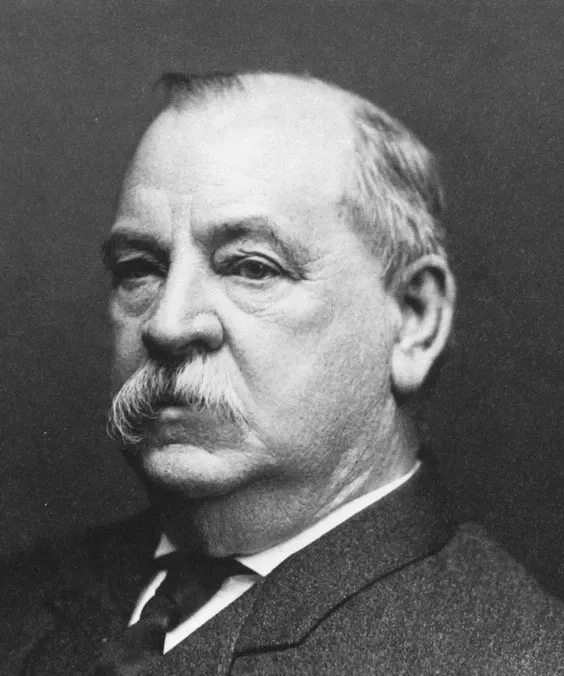
Robert Menendez is a prominent Democratic politician currently serving as a member of the United States Senate, representing New Jersey. He was first elected to the Senate in 2006 and has since been re-elected multiple times. Menendez has played a significant role in various policy areas, including foreign relations, immigration reform, and healthcare. He has served on several Senate committees, including the Senate Foreign Relations Committee, where he has been an advocate for human rights and democracy abroad.
If, in fact, the sanctions which exist that all heralded and said brought Iran to the table expire next year, in 2016, and we do not reauthorize them, there is nothing at least in that context to snap back to.
It passed 99 to zero, and then subsequently by the administration as the reason why Iran has come back to the negotiating table.
Your comment was to Wendy Sherman and David Cohen, 'So what you are really saying is that this is a very blunt instrument which risk adverse reaction as opposed to a calculated effort.'
It will in the long run, I think, make it harder to demonstrate that Iran's program is not... being used for peaceful purpose.
I am concerned that the deal enshrines for Iran... an industrial scale nuclear power program complete with industrial scale enrichment.
I appreciate the enormous work and the arduous quest that you have been in pursuit of.
I do not know if we are going to have any more briefings along the way, but I would commend to your attention this Defense Science Board report; it is about a year old.
So this is what I am concerned about, is where we are headed on all of these elements, as to any final agreement.
Is it not essential for us to be able to make it clear that even after the expiration of the agreement with Iran that we would not permit it to possess enough nuclear fuel to make a single weapon?
Precisely because Iran will be left as a nuclear threshold state and has clearly preserved the option of becoming a nuclear weapon state, the United States must go on record now, that it is committed to using all means necessary, including…
Should we accept an agreement in which Iran is not required to ratify the modified code of the additional protocol?
I think the resolution of the PMD issue is indispensable to the viability and credibility of this agreement.
A comprehensive deal can only be reached if uncertainties over Iran's military nuclear capability are credibly addressed.
Whenever confronted with Iranian intransigence, they fold. It is going to be hard for a lot of people to support this deal if they give in on past military dimensions.
It sets a dangerous precedent, from my perspective, of what we are looking at as we try to build confidence.
So we basically have a violation of the agreement. For some of us, it is not insignificant.
Are we not making the same mistake regarding Iran and the proposed new agreement?
I think the world has come to that conclusion notwithstanding what they say.
I do know that Iran has not yet and has never submitted a complete and correct declaration of all its nuclear activities.
The agreed framework agreement with North Korea in my view failed in large part over something that was not explicitly covered
As President Obama said, by year 13, the so-called breakout time may be back to zero.
When you have more money, you can help your people to some degree, but you can still promote that terrorism.
If our interest is to support state systems, and Tehran's whole purpose has been undermining state systems...
Politicians like Bob Menendez