Jan 20, 2015
The JCPOA will also have a detrimental impact on nuclear weapons activities in the Middle East. It legitimizes Iran's nuclear program and could set into motion a nuclear arms race in the most volatile area of the world.
The Public Record
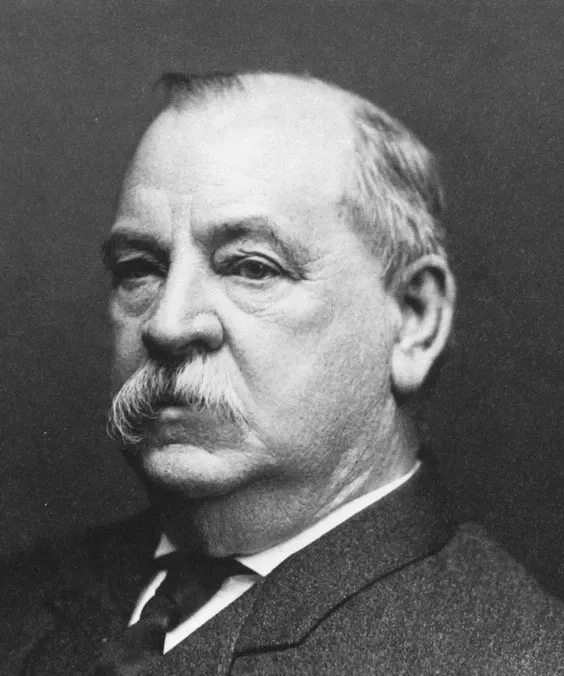
Robert Menendez is a prominent Democratic politician currently serving as a member of the United States Senate, representing New Jersey. He was first elected to the Senate in 2006 and has since been re-elected multiple times. Menendez has played a significant role in various policy areas, including foreign relations, immigration reform, and healthcare. He has served on several Senate committees, including the Senate Foreign Relations Committee, where he has been an advocate for human rights and democracy abroad.
The JCPOA will also have a detrimental impact on nuclear weapons activities in the Middle East. It legitimizes Iran's nuclear program and could set into motion a nuclear arms race in the most volatile area of the world.
The JCPOA is not the source of any such prohibition; Iran has agreed it will never develop a nuclear weapon because it does not want one, not because of the JCPOA, or even the NPT.
I believe that Congress should disapprove the JCPOA and vote to override any veto, because the Plan is inadequate in limiting Iran's nuclear program and makes no effort to curb its other illegal conduct.
Well, the Iranians had no problem in sending a letter to the Security Council saying that reintroduction or reimposition is a violation of the agreement...
I am concerned that it would seem to me that at the same time that we were hopeful in taking 2 years to see if there could be an agreement that we would have had a parallel track.
I have a very clear sense--and I hope I am wrong--that what we have here is a permissive environment.
If I am sitting in the gulf and I look at Ukraine and look at the United States as a party to the Bucharest agreement, where we said give up your nuclear weapons.
The reality, based on the 20-year history that Iran has had as it has marched forward by deception, deceit, and delay, where they are on the verge of being a nuclear-threshold state.
The only thing that prevents that nuclear arms race is a pretty ironclad belief by our partners in the region that somehow Iran will not get there by virtue of this agreement.
If Iran makes a political decision to move forward... then we are just kicking the ball down the road.
I already am a little concerned that what we bought here was a very expensive alarm system.
If Iran can get away with these things, it will have defeated a central tenet of IAEA inspections.
I do not believe Iran wants a conventional war with the United States. The problem with this agreement is that it will shift the balance of power toward Iran.
The breakout time--that the agreement does not seem to accomplish a 1-year breakout--that it may be between 6 and 7 months.
If it is true that sanctions did not stop Iran's nuclear program, neither does this negotiated agreement.
The ayatollah trying to think about, 'How do I preserve the regime and the revolution?'
It seems to me that the burden is shifting here, that under the Joint Comprehensive Plan of Action, it is almost like we have to prove our case versus that, look, you are in violation.
You cannot advise and consent, in a sense, to something for which you are going in the blind on pure faith.
The entire inspection regime, the entire verification regime, depends upon the IAEA.
I am deeply, deeply disappointed of their unwillingness to come in any session, public or classified, to have a discussion.
If you do not have economic sanctions to stop that Iran, then you really only have military force, or you concede.
My worst-case scenario is that, as you have described, a much stronger Iran, a much more economically resilient Iran.
I do not think it is quite the same choice, Mr. Chairman, because you will have an Iran that is economically resurgent.
Politicians like Bob Menendez