Jan 20, 2015
I hope that in the next Congress, colleagues who have been reticent to deal with the nonnuclear issues of Iran will be willing to be engaged.
The Public Record
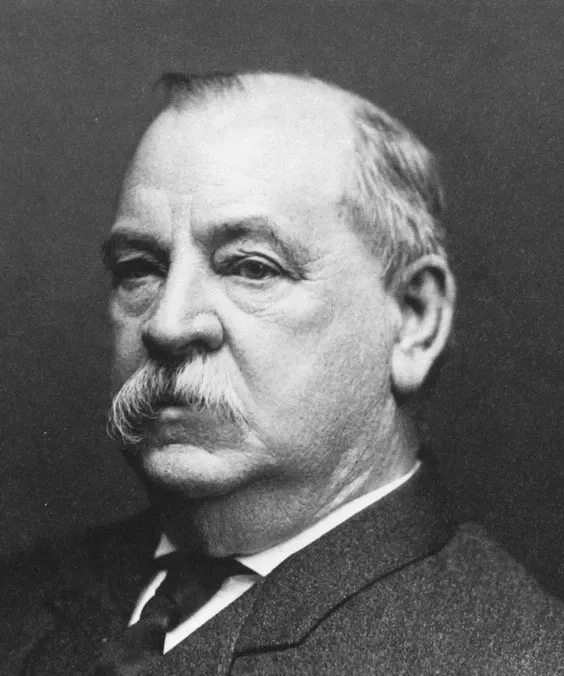
Robert Menendez is a prominent Democratic politician currently serving as a member of the United States Senate, representing New Jersey. He was first elected to the Senate in 2006 and has since been re-elected multiple times. Menendez has played a significant role in various policy areas, including foreign relations, immigration reform, and healthcare. He has served on several Senate committees, including the Senate Foreign Relations Committee, where he has been an advocate for human rights and democracy abroad.
I hope that in the next Congress, colleagues who have been reticent to deal with the nonnuclear issues of Iran will be willing to be engaged.
Iran has sought to extend its brand of governing through terror and intimidation throughout the region.
I was pleased to see the unanimous support in the United States Senate for the passage of the Iran Sanctions Act extension.
I fear that walking away from the JCPOA now amplifies the prospects of war in Iran while leaving the United States isolated.
I did not support the JCPOA as it was negotiated. But now that we are in 2 years of the agreement's implementation, we cannot just walk away without risking the credibility of U.S. commitments.
I pressed very hard about the question of shouldn't we have the ability and shouldn't we pursue the reauthorization of the Iran Sanctions Act.
I cannot understand this view that we cannot act on those nefarious activities independent of the JCPOA.
According to the U.N. special rapporteur, things are getting worse, not better.
They have actually probably accelerated their efforts to destabilize the region.
I think it is absolutely critical that we send a clear message to the Iranians now and certainly in time for the next administration that we do not interpret the JCPOA as precluding nonnuclear sanctions.
This agreement has the best chance of succeeding if its weaknesses are squarely addressed.
U.S. policy in Iran has always been strongest when Congress stands together, united.
I do not think a single person today said that they wanted to lighten up in pursuit of Iran adhering to this agreement.
Finally, how will the IAEA and/or the procurement working group know that exporters are going through the procurement channel?
If an access issue arose to the joint commission, would the IAEA still get access within 24 days, if any members of the joint commission disagreed on its significance?
Because if there was a dispute on something, you would be more formal and everyone would know about it.
Let me ask you this. You said that there was interpretation--correct me if I am wrong--interpretation questions. So have there been instances of questionable compliance thus far that were resolved outside of the dispute resolution…
So they communicate to the joint commission in writing? verbally? To individuals? I am trying to get the process here, because that is one of the things the GAO talks about. What is the process to do this?
Let's not be bashful about the need for U.S. leadership, and Congress has a critical role in that.
If we are the only country, we will do it. But when we act, we generally can get our partners in Europe to pay more attention to us.
We should have a strategy to respond to that, and we will be stronger if Congress gives you the way to deal with that.
You cannot snap back to something that does not exist, at the end of the day.
Politicians like Bob Menendez