She has never claimed the right to search American vessels--no such thing.
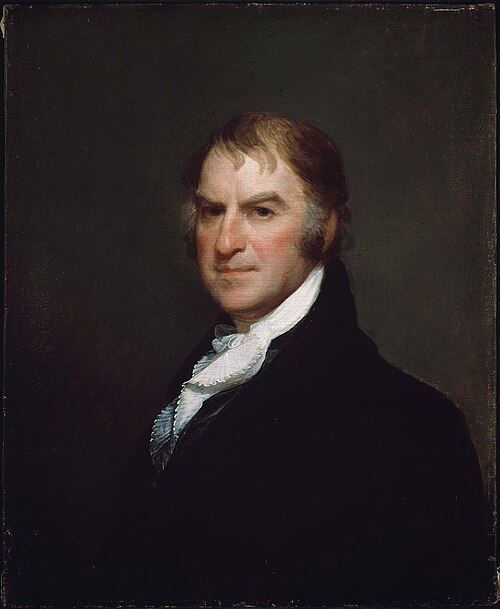
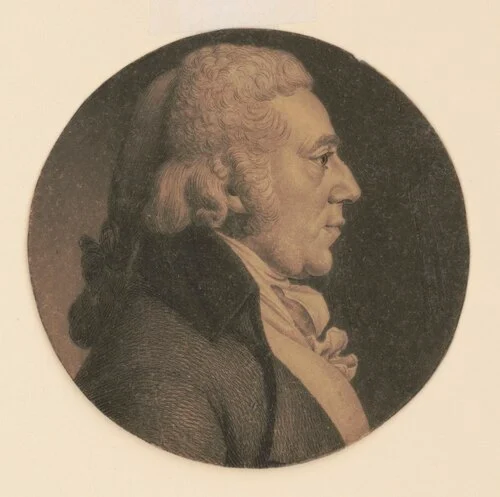
Josiah Quincy
The Public Record
Josiah Quincy III was an American educator and political figure. He was a member of the U.S. House of Representatives (1805–1813), mayor of Boston (1823–1828), and President of Harvard University (1829–1845). The historic Quincy Market in downtown Boston is named in his honor. A panel of 69 scholars in 1993 ranked him among the ten best mayors in American history.
gutenberg.org
He maintained that there is no such thing as a right of search--no such right in time of war, none in time of peace.
The greatest question in the world, which now agitated nearly all Christendom, was this mixed question of the slave-trade and the right of visit and search.
We lived in a republican country, in an armed nation; and he would rather take this nation as it was than the most completely armed nation in the world.
It was not only the duty of this government to demand the liquidation of our claims and the liberation of our citizens, but to go further, and demand the non-invasion of Texas.
He had laid out a great platform for his defence, if he was forced to continue it; but he was willing to forego it all, provided it could be done without sacrificing his rights, the rights of his constituents, and those of the petitioners.
I am in the midst of that fiery ordeal, and day and night absorbed in the struggle against this attempt at my ruin.
Adams then said, in reply to the audacious, atrocious charge of 'high treason:' 'I call for the reading of the first paragraph of the Declaration of Independence.
A single breath blew all his mock-judicial array into air and smoke.
Because, judging from the history of past nations, that Union, if persisted in, in the present course of things, will certainly overwhelm the whole nation in utter destruction.
There is neither spotless integrity nor consummate ability at the helm of the ship, and she will be more than ever the sport of winds and waves, drifting between breakers and quicksands.
Upon the rule-question (that is, refusing to receive or refer petitions on the subject of slavery) I cannot be silent, but shall be left alone, as heretofore.
The bended knee, no less than the full prostration to the ground, is a symbol of homage from an inferior to a superior, and if not equally humiliating to the performer, it is only because he has been made familiar by practice with one, and…
A philosophical republican may smile at the distinction by which a British nobleman saw no objection to delivering his credentials on the bended knee, but could not bring his stomach to the attitude of entire prostration.
This submission to insult is the more extraordinary for being practised by Christian nations, which, in their intercourse with one another, push the principle of equality and reciprocity to the minutest punctilios of form.
The cause of the war is the pretension on the part of the Chinese that in all their intercourse with other nations, political or commercial, their superiority must be implicitly acknowledged, and manifested in humiliating forms.
This is a mere incident to the dispute, but no more the cause of war than the throwing overboard of the tea in Boston harbor was the cause of the North American Revolution.
It is a general, but I believe altogether a mistaken opinion, that the quarrel is merely for certain chests of opium, imported by British merchants into China, and seized by the Chinese government for having been imported contrary to law.
It is time that this enormous outrage upon the rights of human nature, and upon the first principle of the rights of nations, should cease.
The fundamental principle of the Chinese empire is anti-commercial.
But, China not being a Christian nation, its inhabitants do not consider themselves bound by the Christian precept to love their neighbors as themselves.
The moral obligation of commercial intercourse between nations is founded entirely and exclusively upon the Christian precept to love your neighbor as yourself.
The people are not Christians, nor can a Christian nation appeal to the principles of a common faith to settle the question of right and wrong between them.
It is only as to consequences that I enter my caveat against the too frequent use of those terms on this floor; for there is meaning in those words, 'empire state,' when used among co-estates, more than meets the ear.
They are all, as members of this Union, equal, and the State of Delaware has as good a right to be called the 'empire state' as New York.
Politicians like Josiah Quincy