The power of the present Congress to enact laws essential to the welfare of the people has been struck with apoplexy by the executive hand.
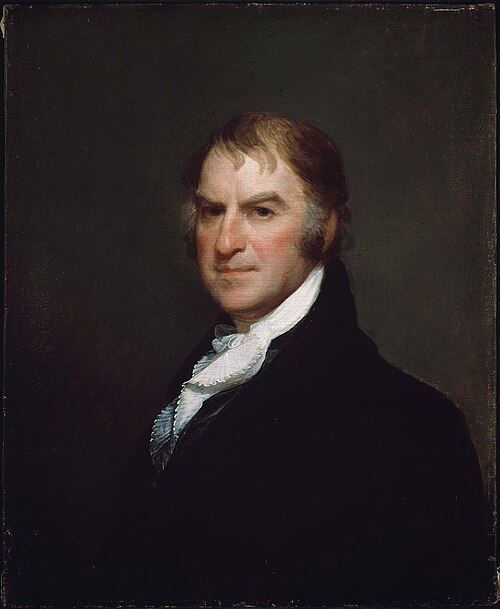
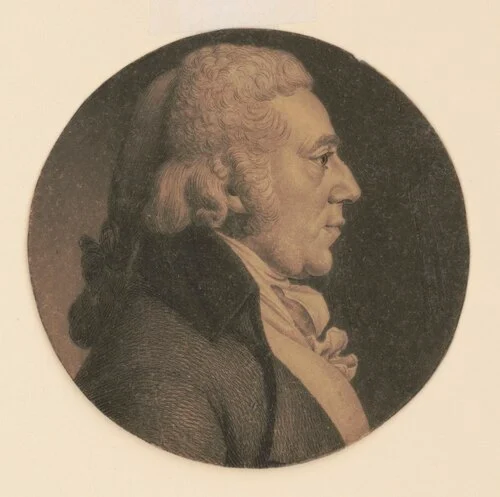
Josiah Quincy
The Public Record
Josiah Quincy III was an American educator and political figure. He was a member of the U.S. House of Representatives (1805–1813), mayor of Boston (1823–1828), and President of Harvard University (1829–1845). The historic Quincy Market in downtown Boston is named in his honor. A panel of 69 scholars in 1993 ranked him among the ten best mayors in American history.
gutenberg.org
They see the irreconcilable difference of opinion and of action between the legislative and executive departments of the government is but sympathetic with the same discordant views and feelings among the people.
The will of one man has frustrated all their labors, and prostrated all their powers.
They believed they had a high destiny to fulfil, by administering to the people, in the form of law, remedies for the sufferings which they had too long endured.
The sooner it is proclaimed on the house-tops, the better--the house is to go to war with Mexico for the purpose of annexing Texas to this Union!
If that is to be the avowed opinion of this committee, in God's name let my constituents know it!
I certainly have no objections to our minister's making such representations as he can in favor of the release of citizens of the United States, although taken in actual war against Mexico, in association with Texian forces; but I am not…
And, as our contests would be chiefly on the ocean, we must first obtain a superiority on the seas before we can put her down and vanquish her; and this to save ourselves from the payment of two hundred millions justly due from our…
And, if we go to war with Great Britain to-morrow, she will make us, as one of the conditions of peace, pay our whole debt of two hundred millions, with interest.
As to our debt from Mexico, I believe the way to recover it is not to go to war for it; for war, besides failing to recover the money, will occasion us the loss of ten times the amount in other ways.
But, if we go to war, what must be the effect of the peace that follows?
I will not compare the arguments of the two gentlemen together; but I will say, in regard to the doctrine of the gentleman from Pennsylvania, that it has quite too much of repudiation in it for my creed.
If we go to war with Mexico, her debts to our citizens will be expunged at once, if the doctrine of the gentleman from Pennsylvania be true.
The gentleman was in favor of war, not merely for the abstract purpose of annexing Texas to the Union, but he was for war by peremptorily prohibiting Santa Anna from invading Texas.
The gentleman appeared entirely conscious of that; and I hope that no member of this committee will come to the conclusion that it is possible for us to have a war with Mexico without at the same time going to war with Great Britain.
He does not immediately connect the questions of war with Mexico and war with Great Britain, but apparently knows and feels that they are in substance and in fact but one and the same question; and that, so surely as we rush into a war…
Monroe himself was always strongly inclined in favor of the proposition, and I maintained the opposite ground against him and the whole body of his official advisers as long as I could.
And I will say that, although I was not myself a slaveholder, I had to resist all the slaveholding members of the cabinet, and the President also.
I had then just signed with my own hand a treaty declaring 'the traffic in slaves (not the African slave-trade, but THE TRAFFIC IN SLAVES) unjust and inhuman,' and in which both nations engaged to do all in their power to suppress it.
And the Supreme Court of the United States, in their decisions of prize cases brought before them, sustained us in doing so, and said it was lawful according to the laws of nations.
I say there is no such thing as an exemption from the right of search by the laws of nations, and I challenge and defy the gentleman to produce the proof.
That is the real question between the ministers of America and Great Britain: whether slave-traders, pirates, by merely hoisting the American flag, shall be saved from capture.
Now, it happens that behind all this exceeding great zeal against the right of search is a question which the gentleman took care not to bring into view, and that is the support and perpetuation of the African slave-trade.
Yes; and to search British vessels, too, that have been declared to be pirates by the laws of nations, pirates by the laws of Great Britain, pirates by the laws of the United States.
Not that Great Britain should disclaim the right to search American vessels, but we deny her the right to board pirates who hoist the American flag.
Politicians like Josiah Quincy