It establishes false estimates of virtue and vice; for what can be more false and heartless than this doctrine, which makes the first and holiest rights of humanity to depend on the color of the skin?
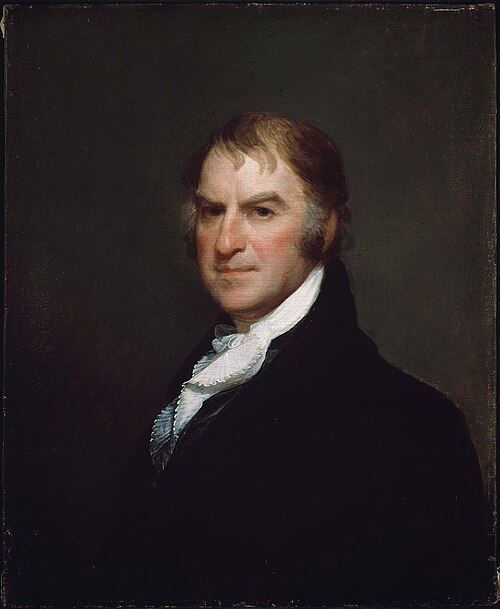
Josiah Quincy
The Public Record
Josiah Quincy III was an American educator and political figure. He was a member of the U.S. House of Representatives (1805–1813), mayor of Boston (1823–1828), and President of Harvard University (1829–1845). The historic Quincy Market in downtown Boston is named in his honor. A panel of 69 scholars in 1993 ranked him among the ten best mayors in American history.
gutenberg.org
It is among the evils of slavery that it taints the very source of moral principle.
They look down on the simplicity of Yankee manners, because they have no habits of overbearing like theirs, and cannot treat negroes like dogs.
They fancy themselves more generous and noble-hearted than the plain freemen, who labor for subsistence.
They disclaim all participation in the introduction of it, and cast it all on the shoulders of 'old grandame Great Britain.' But, when probed to the quick upon it, they show at the bottom of their souls pride and vain-glory in their very…
It is in truth all perverted sentiment; mistaking labor for slavery, and dominion for freedom.
Adams replied that this confounding the ideas of servitude and labor was one of the bad effects of slavery.
In this instance the slave states have clung together in one unbroken phalanx, and have been victorious by the means of accomplices and deserters from the ranks of freedom.
It is a contemplation not very creditable to human nature that the cement of common interest, produced by slavery, is stronger and more solid than that of unmingled freedom.
The fault is in the constitution of the United States, which has sanctioned a dishonorable compromise with slavery.
Egotism, Virginian aristocracy, slave-purging liberty, religion, literature, science, wit, fancy, generous feelings, and malignant passions, constitute a chaos in his mind, from which nothing orderly can ever flow.
A life devoted to it would be nobly spent or sacrificed.
Slavery is the great and foul stain on the American Union, and it is a contemplation worthy of the most exalted soul, whether its total abolition is not practicable.
There is a great mass of cool judgment and of plain sense on the side of freedom and humanity, but the ardent spirits and passions are on the side of oppression.
By what fatality does it happen that all the most eloquent orators are on its slavish side?
Never, since human sentiment and human conduct were influenced by human speech, was there a theme for eloquence like the free side of this question, now before the Congress of the Union.
All the states south of the River Ohio, and west of Pennsylvania and Delaware, will be peopled with slaves; and the establishment of new states west of the River Mississippi will serve to extend slavery, instead of freedom, over that…
If Missouri, and the states formed to the west of the River Mississippi, are permitted to introduce and establish slavery, the repose, if not the security, of the Union, may be endangered.
In case of foreign war, or domestic insurrection, slaves not only do not add to, but diminish the faculty of self-defence.
In a country where manual labor is performed by slaves, that of freemen is dishonored.
The existence of slavery impairs the industry and power of a nation.
But the extension of this disproportionate power to the new states would be unjust and odious.
The effect of the constitution has been obvious in the preponderance it has given to the slave-holding states over the other states.
The equality of rights, which includes an equality of burdens, is a vital principle in our theory of government.
Under this self-restraint he observed that slavery, unhappily, exists in the United States; that enlightened men in the states where it is permitted, and everywhere out of them, regret its existence among us, and seek for the means of…
Politicians like Josiah Quincy