The constitution contains no provision concerning slavery in a new state; Congress, therefore, may make it a condition of the admission of a new state that slavery shall forever be prohibited within it.
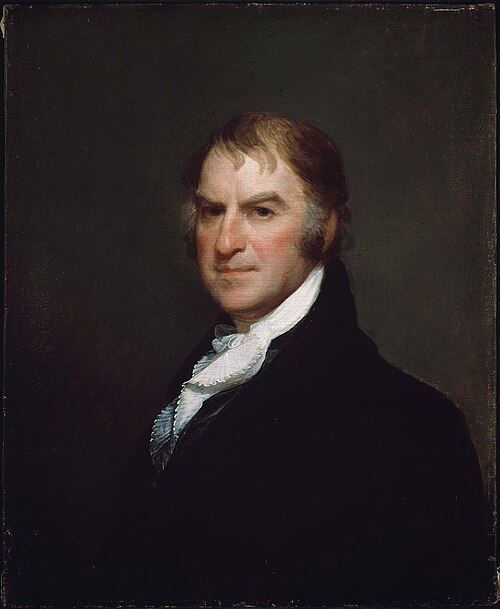
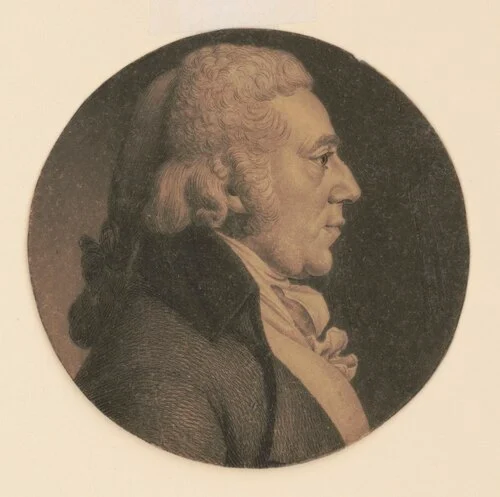
Josiah Quincy
The Public Record
Josiah Quincy III was an American educator and political figure. He was a member of the U.S. House of Representatives (1805–1813), mayor of Boston (1823–1828), and President of Harvard University (1829–1845). The historic Quincy Market in downtown Boston is named in his honor. A panel of 69 scholars in 1993 ranked him among the ten best mayors in American history.
gutenberg.org
The slave states are free to continue or abolish slavery.
Its inevitable consequence is to make every administration a scene of continuous and furious electioneering for the succession to the Presidency.
This rendered it more unavoidable that the remainder of the continent should ultimately be ours.
From the time we became an independent people, it was as much a law of nature that this should become our pretension, as that the Mississippi should flow to the sea.
Nothing we can say will remove this impression until the world shall be familiarized with the idea of considering the continent of North America to be our proper dominion.
Great Britain, who had been vilifying us for twenty years as a low-minded nation, with no generous ambition, no God but gold, had now changed her tune, and was endeavoring to alarm the world at the gigantic grasp of our ambition.
But, of all its other difficulties, the most objectionable is that it obviously includes the engrafting a colonial establishment upon the constitution of the United States, and thereby an accession of power to the national government…
The only possible chance for a head of a department to attain the Presidency is by ingratiating himself with the members of Congress; and as many of them have objects of their own to obtain, the temptation is immense to corrupt coalitions…
Whatever talents I possess, that of intrigue is not among them.
May a merciful Providence spare for many future years my only remaining parent!
At once silent and active as the movement of the orbs of heaven, one of the links which connected me with former ages is no more.
While she lived, whenever I returned to the paternal roof, I felt as if the joys and charms of childhood returned to make me happy; all was kindness and affection.
The silver cord is broken,--the tenderest of natural ties is dissolved,--life is no longer to me what it was,--my home is no longer the abode of my mother.
His only resource was to pursue his course according to his own sense of right, and abide by the consequences.
If they disavow him, they must give offence to his friends, encounter the shock of his popularity, and have the appearance of truckling to Spain.
If they avow and approve Jackson's conduct, they incur the double responsibility of having made a war against Spain, in violation of the constitution, without the authority of Congress.
Now, secrecy is contrary to one of the first principles of legislation, but the absurdity flows from having given to Congress, instead of the executive, the power of declaring war.
But, as we have made it legislative, whenever secrecy is necessary for an operation of the executive involving the question of peace and war, Congress must pass a secret law to give the President power.
Adams declared himself against such recognition, as it would interfere with a negotiation with Spain for the purchase of the Floridas.
I never, by the most distant hint to any one, expressed a wish for any public office, and I shall not now begin to ask for that which, of all others, ought to be most freely and spontaneously bestowed.
My business is to serve the public to the best of my abilities in the station assigned to me, and not to intrigue for my own advancement.
Being asked by one of them whether it would not be advisable to expose the conduct and motives of rival statesmen, in the newspapers, he answered explicitly in the negative, saying: "The execution of my duties is the only answer I can give…
Adams remarked: "Whether it is for my own good is known only to God.
Adams had talents, integrity, fidelity to his country, and devotion to the fulfilment of official duty, in which he had no superior.
Politicians like Josiah Quincy