If it is a mere agreement of mutual exclusion, tending to diminish the occasion for exercising the right of search, and undoubtedly if it should prove effectual, it would in the end operate as an inducement to forbear the exercise of the…
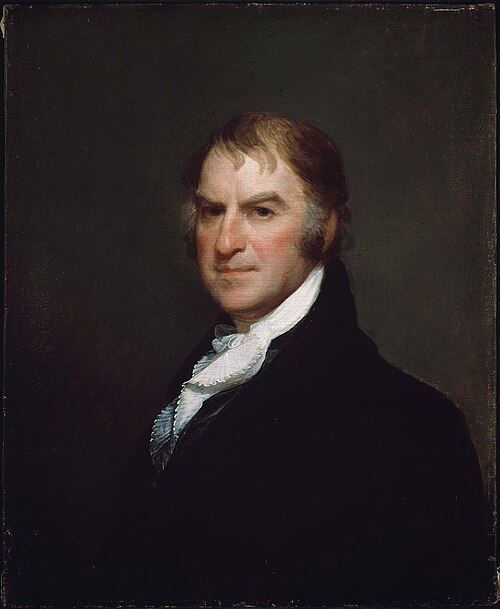
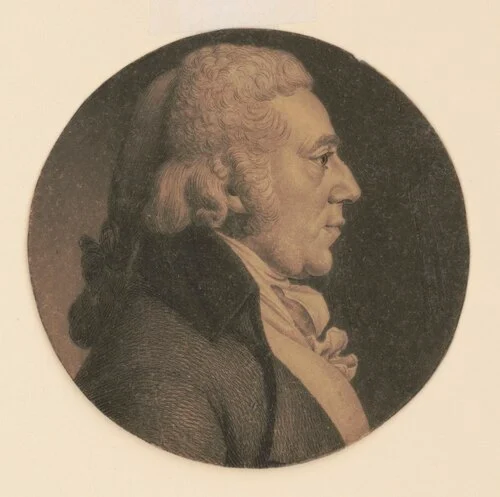
Josiah Quincy
The Public Record
Josiah Quincy III was an American educator and political figure. He was a member of the U.S. House of Representatives (1805–1813), mayor of Boston (1823–1828), and President of Harvard University (1829–1845). The historic Quincy Market in downtown Boston is named in his honor. A panel of 69 scholars in 1993 ranked him among the ten best mayors in American history.
gutenberg.org
Adams said, with regard to his proposal of excluding each other's seamen, "that he was not prepared to say that an article could not be framed by which the parties might stipulate the principle of mutual exclusion, without at all affecting…
They were merely not excluded; and even now, in making the proposal to exclude them, it is not from any change of policy, but solely for the purpose of giving satisfaction to Great Britain, and of stopping the most abundant source of…
The wages in the king's ships are much lower, and numbers of British seamen, accordingly, find employment on board American vessels; but encouragement from the American government they never had in any manner.
Our government certainly gave no encouragement to this; neither did our merchants, who would surely have engaged their seamen at lower wages, if possible.
We require five years' residence in the United States, two years of notice in a court of record, and a certificate of character, before the act of naturalization is granted.
Adams replied, "That may be; but there is a very material distinction between giving encouragement and doing nothing to prevent them.
Adams replied, "that he understood his lordship perfectly; but what he asserted was his profound conviction that he was mistaken in point of fact.
If we now give up that, how will it be possible to devise any regulation, depending upon the performance of another state, which will be thought as efficacious as that we have in our own hands?
For his own part, since he had been at the head of affairs, he could sincerely protest one wish had been at the bottom of all his policy, and the aim of all his labors,--and that was universal peace.
The Emperor Napoleon, with all his power, could neither control the elements nor the passions of mankind.
If the day was forty-eight hours, instead of twenty-four, I could employ them all, if I had but eyes and hands to read and write.
Time is too short for me, rather than too long.
With such an ardor for knowledge, and universality in its pursuit, it is not surprising that he should say, as on one occasion he did, "I feel nothing like the tediousness of time.
I have withstood them hitherto, and hope for firmness of character to withstand them in future.
In this country beyond all others, and in my situation more than any other, the temptations to expense amount almost to compulsion.
The whole of my life has been one continued experience of the difficulty of a man's adhering to the principle of living within his income; the first and most important principle of private economy.
The sight of so many of his countrymen in distress was extremely painful, and he determined to make an effort for their relief, without waiting for express authority from his government.
He concluded by asserting that an embargo was not necessary to the safety of our seamen, our vessels, or our merchandise, and was calculated to mislead the public mind to the public ruin.
When it was intimated to him that his course was regarded as symptomatic of party apostasy, he replied that his sense of duty should never yield to the pleasure of party.
I hope I shall be prepared for and able to bear it, from the consciousness of my sincerity and of my duty.
If I cannot hope to give satisfaction to my country, I am at least determined to have the approbation of my own reflections.
The worst of these has the popular current in its favor, and uses its triumph with all the unprincipled fury of faction; while the other is waiting, with all the impatience of revenge, for the time when its turn may come to oppress and…
The country is so totally given up to the spirit of party, that not to follow the one or the other is an unexpiable offence.
He regarded the constitution of the United States to be one of limited powers; and he declared that he could not reconcile it to his judgment that the authority exercised in this section was within the legitimate powers conferred by the…
Politicians like Josiah Quincy