Where is the man who ever served in a legislative capacity in your councils whose character could stand a test like this?
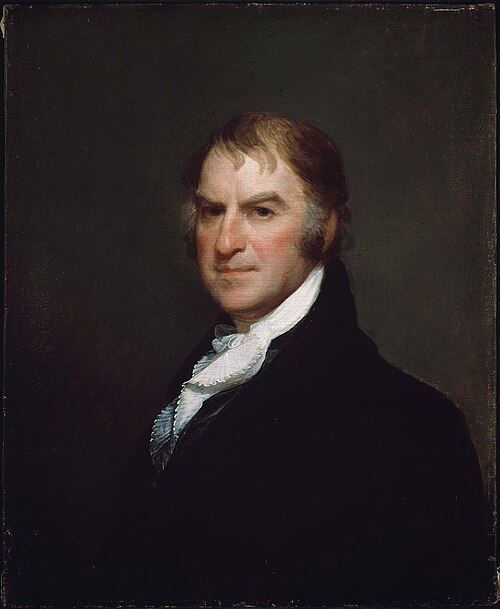
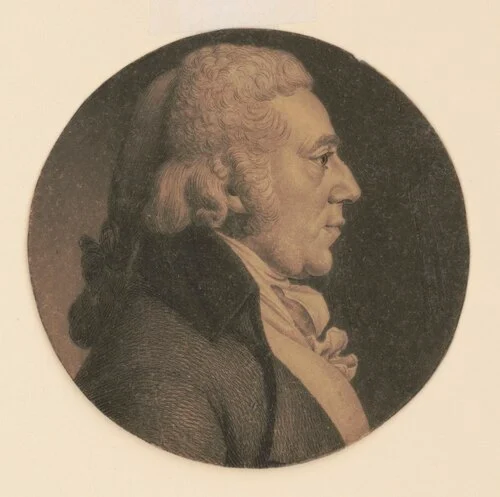
Josiah Quincy
The Public Record
Josiah Quincy III was an American educator and political figure. He was a member of the U.S. House of Representatives (1805–1813), mayor of Boston (1823–1828), and President of Harvard University (1829–1845). The historic Quincy Market in downtown Boston is named in his honor. A panel of 69 scholars in 1993 ranked him among the ten best mayors in American history.
gutenberg.org
I disdain the ignoble warfare, and neither wage it myself or encourage it in my friends.
From the nature of our institutions, competitors for public favor and their respective partisans seek success by slander of each other.
His first attempt will bring a hornet's nest about his head; and, if they do not sting him to death or to blindness, he will have to pursue his march with them continually swarming over him, and be beset on all sides with obloquy and…
He replied: "An independent newspaper is very necessary to make truth known to the people; but an editor really independent must have a heart of oak, nerves of iron, and a soul of adamant, to carry it through.
The tongue of falsehood can never be silenced.
But there are two modes of obtaining their ends: the one, by subserviency; the other, by opposition.
Individual, personal jealousies, envyings, and resentments, partisan ambition, and private interests and hopes, mingle in the motives which prompt this policy.
Adams considered that the greatest danger of the Union was in the overgrown extent of its territory, combining with the slavery question.
There must be, some time, a conflict on this very question between slave and free representation.
They have threatened and entreated, bullied and wheedled, until their more simple adversaries have been half coaxed, half frightened into a surrender of their principles for a bauble of insignificant promises.
If slavery be the destined sword, in the hand of the destroying angel, which is to sever the ties of this Union, the same sword will cut asunder the bonds of slavery itself.
I would defend them, should the dissolution of the Union be the consequence; for it would be, not to the defence, but to the violation of their rights, to which all the consequences would be imputable; and, if the dissolution of the Union…
Weak and defenceless as they are, so much the more sacred the obligation of the Legislatures of the states to which they belong to defend their lawful rights.
This barbarous article deprives them of the little remnant of right yet left them--their rights as citizens and as men.
If acquiesced in, it will change the terms of the federal compact--change its terms by robbing thousands of citizens of their rights.
All which, he said, should be done, not to violate, but to redeem from violation, the constitution of the United States.
The result affords an illustration of the remark, how much more keen and powerful the impulse is of personal interest than is that of any general consideration of benevolence and humanity.
Many of our public men have principles too pliable to popular impulse, but few are deliberately dishonest; and there is not a man in the Union of purer integrity than Rufus King.
There are, no doubt, hypocrites of humanity as well as of religion; men with cold hearts and warm professions, trading upon benevolence, and using justice and virtue only as stakes upon the turn of a card or the cast of a die.
And it is no just cause of reproach to any man, that, in promoting to the utmost of his power the public good, he is desirous; at the same time, of promoting his own.
It came originally from the devil.--'Doth Job serve God for naught?' The selfish and the social passions are intermingled in the conduct of every man acting in a public capacity.
If the Union must be dissolved, slavery is precisely the question upon which it ought to break.
This would have produced a new Union of thirteen or fourteen states unpolluted with slavery, with a great and glorious object, that of rallying to their standard the other states, by the universal emancipation of their slaves.
But perhaps it would have been a wiser and bolder course to have persisted in the restriction on Missouri, until it should have terminated in a convention of the states to revise and amend the constitution.
Politicians like Josiah Quincy