On the south side of a boundary line, then, slavery may exist by force of positive law; while, on the north side, in the absence of any such law, slavery is unlawful.
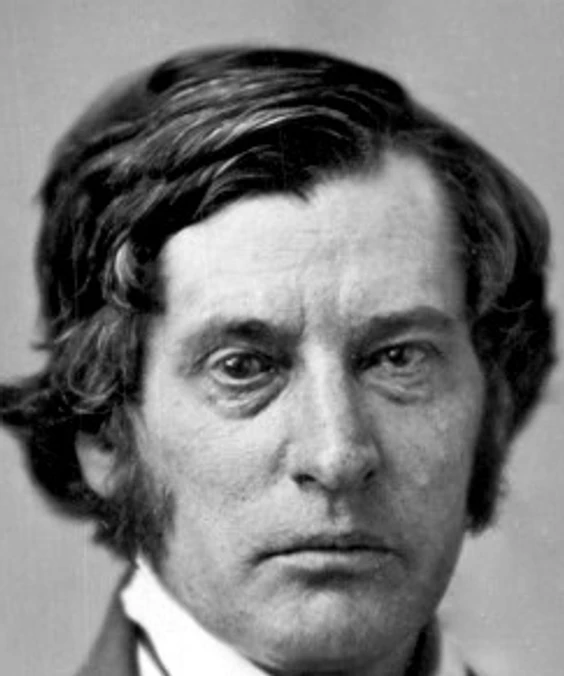
Horace Mann
The Public Record
Horace Mann was an American educational reformer, abolitionist and Whig politician known for his commitment to promoting public education; he is thus also known as The Father of American Education. In 1848, after public service as Secretary of the Massachusetts State Board of Education, Mann was elected to the United States House of Representatives (1848–1853). From September 1852 to his death in 1859, he served as President of Antioch College.
gutenberg.org
If it did not,--if a man who has a legal right to a slave in Virginia, has a legal right to him anywhere,--then the provision in the constitution, and the act of 1793 for recapturing fugitive slaves, would have been unnecessary.
The debates in all the conventions for adopting the constitution of the United States, proceed upon the ground that slavery depends upon positive law for its existence.
But if a slave passes out of the jurisdiction where violence overpowers right, into a jurisdiction where right is superior to violence, he is then free; not because there is any change in the man, but because there is a change in the laws…
Within the jurisdictional limits of such states, then, slavery is made legal, though it is not made right.
The law of nature recedes before this legalized violence; but it recedes no farther than the legalized violence drives it back.
But in some governments the law of the state, upheld by the power of the state, overrides the law of nature, and enslaves a portion of the people.
The moment they put their feet on board of a British man-of-war, not lying within the waters of East Florida, (where undoubtedly the laws of that country would prevail,) those persons who had before been slaves were free....
That every man has a natural right to the fruits of his own labor, is generally admitted; and that no other person can rightfully deprive him of those fruits and appropriate them against his will, seems to be the necessary result of this…
The grand reason against slavery given by Lord Mansfield, in Somerset’s case, was, “that it is so intrinsically wrong that it is incapable of being introduced into any country, on any reasons moral or political, and can only stand on…
The first position I take is this: That slavery has no legal existence any where, unless by force of positive law.
In my conscientious opinion, slavery exists in this District only by original usurpation and subsequent acquiescence.
This idea of perpetual slavery in the very household of a republic of freemen is not to be tolerated, and cannot be tolerated.
On the same ground on which slavery in this District has been defended for the last fifty years, it can be defended for the next fifty, or the next five hundred years; it can be defended forever.
They say that if slavery in this District should be surrendered, it would only be giving the adversary a vantage ground, on which he could plant himself to attack slavery in the states.
They would lose nothing by surrendering it; we suffer every thing by its continuance.
The existence of slavery here is no benefit to them; it is of unspeakable injury to us.
Surely they gain no credit, no character by it; we lose both credit and character.
Now I ask southern gentlemen how it is consistent with magnanimity and honor, with a fraternal feeling towards the north, for them to force the odium of this inconsistency upon us?
You could abolish slavery there if you would; you do not; and therefore the sin of its continuance is yours, as much as if it existed in New York or Massachusetts.
But they still retort upon us, and say, There is one spot for which you are responsible,--the District of Columbia.
When we are reminded of this,--whether in a kindly and expostulatory manner by our friends, or in an offensive and taunting one by our enemies,--we of the north can say, at least, that we are not responsible for it.
Throughout every nation in Europe, it is the common language and the common sentiment, that an institution which exists in one half of the states of this Union is in flagrant contrast and contradiction to the theory of our government.
We of the Northern States feel it at home; we are made to feel it still more deeply abroad.
But it is wholly otherwise with regard to the institutions that prevail in this District; their honor, or their infamy, attaches to us.
Politicians like Horace Mann