Can Congress pass a bill of attainder corrupting the blood of an inhabitant of this District, or repeal or suspend at any time his right to a writ of habeas corpus, or establish a religion here, or interdict the free exercise thereof?
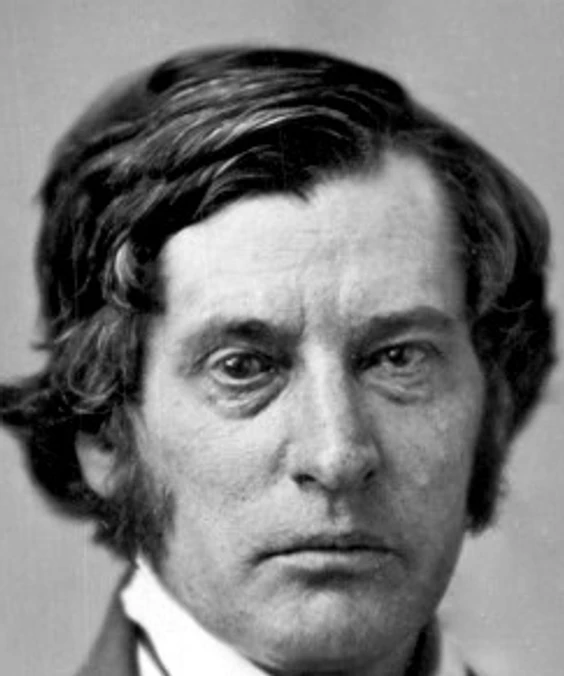
Horace Mann
The Public Record
Horace Mann was an American educational reformer, abolitionist and Whig politician known for his commitment to promoting public education; he is thus also known as The Father of American Education. In 1848, after public service as Secretary of the Massachusetts State Board of Education, Mann was elected to the United States House of Representatives (1848–1853). From September 1852 to his death in 1859, he served as President of Antioch College.
gutenberg.org
Will any man say that Congress can pass an ex post facto law for this District, and defend itself by referring to its power of “exclusive legislation” over it?
I suppose no one will deny that the positive prohibitions, against the exercise of certain enumerated powers, apply to Congress, when legislating for this District, just as much as when legislating for the union at large.
But let us look to the prohibitions of the constitution; for I maintain that there is not only no power, express or implied, in the constitution authorizing Congress to create or continue slavery in this District, but that it is debarred…
Like a culprit, in whom some love of character still survives, it speaks of its offence without calling it by name.
The country, coming fresh from that baptism of fire,--the American Revolution,--would not profane its lips with this unhallowed word.
The constitution is ashamed to utter such a name.
The abhorred word “slave” is nowhere mentioned in it.
In regard to this whole matter of slavery, the constitution touches the subject with an averted face.
But I go further than this; and I say that the constitution not only does not empower Congress to establish or continue slavery in this District, but again and again, by the strongest implications possible, it prohibits the exercise of…
The legal existence of slavery was annulled in this District when Congress exercised its “exclusive” power over it, just as much as the debtor’s right to be discharged under the Maryland bankrupt law was annulled.
They would have been transferred to a free jurisdiction,--just as much as an individual owner of a slave transfers him to a free jurisdiction, when he voluntarily takes him to the north.
Suppose Maryland had ceded her share of the District to Massachusetts, would not every slave in it have been instantaneously free by the constitution of Massachusetts?
And if Congress cannot so much as restore a slave to a master, who has voluntarily carried him into a free state, how can it continue slavery in this District, after Maryland has ceded it to this government, whose fundamental, organic law…
If a master voluntarily carries his slave into a free state, and the slave departs from his possession, he cannot reclaim him.
By this article in the constitution, the case of fugitive slaves only is provided for.
I suppose that no jurist will contend that Congress could have passed the act of 1793, for the recapture of fugitive slaves, had it not been for the third clause in the second section of the fourth article of the constitution, which…
But Congress has as much right to go into any state and abolish slavery there, as any state, even Virginia or Maryland, has to come into this District with its laws and establish slavery here.
It found slavery in existence in the states; and it does not abolish it, or interfere with it, because it has no power of “exclusive legislation” in them.
Congress, then, does not and cannot legalize slavery in this District.
But Congress had as much power to establish a national religion here, in the absence of all express or implied authority to do so, as to establish slavery here.
The idea is abhorrent to the whole spirit of the constitution.
No power of Congress, then, exists, either for the creation or for the continuance of slavery in this District; and all the legislation of Congress upon this subject is beyond or against the constitution.
Well, then, if a power to establish slavery in this District is not among the granted powers, and if it is not necessary for the exercise of any one of the granted powers, then it is--no where;--it does not exist at all.
I call upon any gentleman to name any one power of this government which cannot be exercised, which must necessarily cease, if slavery should cease to be, in this District of Columbia?
Politicians like Horace Mann