The liberty of voting includes all other liberties.
Horace Mann
The Public Record
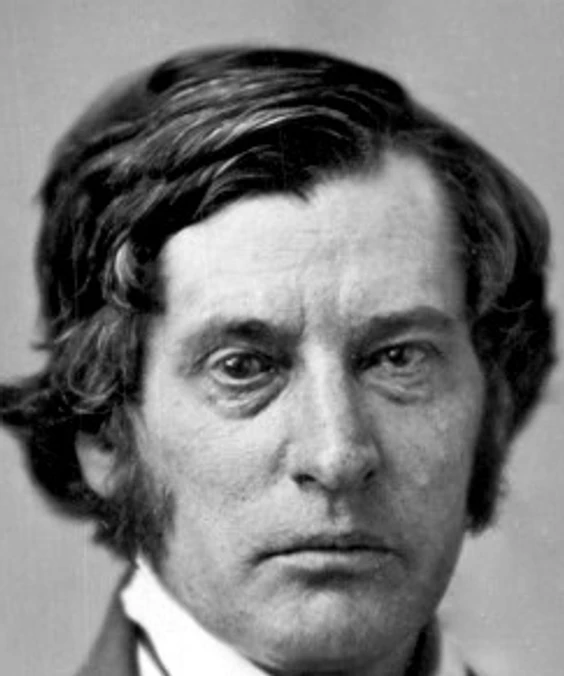
Horace Mann was an American educational reformer, abolitionist and Whig politician known for his commitment to promoting public education; he is thus also known as The Father of American Education. In 1848, after public service as Secretary of the Massachusetts State Board of Education, Mann was elected to the United States House of Representatives (1848–1853). From September 1852 to his death in 1859, he served as President of Antioch College.
gutenberg.org
A southern slave stands higher, politically, than a northern laborer, if the latter must vote as his employer dictates.
Better be debarred from the privilege of voting at all, than to be mocked with the form, while cheated of the substance.
Why, fellow-citizens, the ballot is worse than useless, if it be not FREE!
My instincts, reason, judgment, conscience, may all mislead; but from the first time, now years ago, when I heard this subject broached, my instincts, reason, judgment, conscience, have all been in its favor.
I answer, that this difference which they so be-little and disparage will often be all the difference between freedom and bondage, between life and death, between honor and infamy, between happiness and perdition.
These are but specimens of what the Fugitive Slave law has already done, before the public mind has become familiarized with its brutalities, and while there is yet some sensibility to the claims of justice and mercy left among us.
The kidnapper, Alberti, now lies in a Pennsylvania prison for carrying away a mother and her child; but the mother and the child are now groaning under the lash of a southern taskmaster.
Let me read to you the disparaging and contemptuous remark of the address on that great palladium of human liberty, the trial by jury.
Men of Massachusetts! moral and religious men! lovers of freedom and of your country, were you prepared for this?
But such largesses to slavery as kings could not afford to give, and the robbery of an entire race of all its rights,--yes, and with authority, too, to make us help commit the robbery,--these are “factitious and imaginary” causes of…
A three-penny tax on tea was a real grievance,--one fit to be resisted unto blood, to be historically recorded, and to which we are not ashamed to refer when descanting upon the honor of our fathers.
Collins, of Georgia, offering the use of the army and navy of the United States to catch one poor white woman, Ellen Crafts, and her husband, and return them to bondage.
Two armed expeditions have been fitted out in our own ports against the territory of a government with which we are at peace, resulting in the loss of hundreds of lives, while the President and his first secretary have been spending their…
The most prominent member of the administration has been engaged in carrying out the policy of the south,--in visiting southern cities to pander to the slave power, and northern cities to stifle the spirit of freedom.
What interest of the country, then, has been faithfully cared for or secured?
I lay down this great principle: I think the Free Soil party should act at any time, on any point, with any party through whom they can help the cause of freedom.
This would be the old and wicked partisan principle of standing by our party, right or wrong.
His character is not to be affected by any office which he shall hold, but only by what he does, whether in office or out of it.
Sumner was not elected on any principle of availability, but on the principle of “Detur digniori,”--“Let it be given to the most worthy.” His lofty pedestal is too firm to be shaken by any such accusation.
What conclusively proves this to be so is, that the people who elected these representatives were satisfied with what they did; and, since the work has been done, have shown their approval of it in every practicable way.
It was not originated by representatives against the wishes of their constituents; but the representatives carried out what the people who chose them willed.
But the coalition entered into by the Free Soil party in this state, last year, was a coalition planned, formed, sanctioned, and executed, as far as they could execute it, by the people themselves, acting in their original, sovereign…
I believe the same charge against the Free Soil party will have come, twenty years hence, to the same result,--that of conferring honor upon its object, and infamy upon its authors.
Politicians like Horace Mann