Yes, fellow-citizens; for there is an attempt, and that attempt is to be followed up, to overwhelm the Free Soil party by obloquy and denunciation.
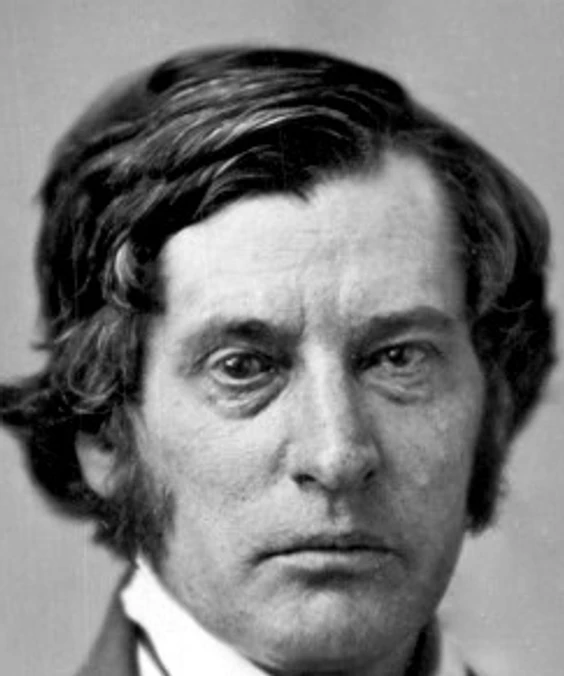
Horace Mann
The Public Record
Horace Mann was an American educational reformer, abolitionist and Whig politician known for his commitment to promoting public education; he is thus also known as The Father of American Education. In 1848, after public service as Secretary of the Massachusetts State Board of Education, Mann was elected to the United States House of Representatives (1848–1853). From September 1852 to his death in 1859, he served as President of Antioch College.
gutenberg.org
A coalition, I suppose, like other acts, must be right or wrong according to the motive that prompts it.
Well, before I either approve or condemn a “coalition,” I must know by whom, and for what purpose, it was formed.
Having read their last address and resolutions, I must now say, that if they desire any more votes of mine, they must revive my faith by some new evidence of their good works.
I give the great majority even of the Whig leaders the credit of having yielded to this pressure reluctantly, and under what they deemed a sort of political duress; for, gentlemen, a new and most alarming fact in the history of the Whig…
Its members, I admit, are free to follow them to their ruin, if they will; but free, too, I thank God, to go on in their old course, steering for the haven of honor and liberty.
Yet, at this crisis in human affairs, the one idea, the master purpose of the address and resolutions of that convention, seems to have been, to disparage and depreciate the great, eternal principles of freedom, and to bring odium and…
Resolved, That Massachusetts avows her unalterable determination to maintain all the principles and purposes she has in times past affirmed and reäffirmed, in relation to the extension of slavery.
Remove the disturbing force, and it returns to its fidelity.
The needle points to the pole; but if you bring a huge black mass of pig iron and place by its side, it trembles, yet deviates, like a man struggling to be virtuous before overwhelming temptations.
It was by such false pretences as these that thousands, and I doubt not tens of thousands, of men wholly penetrated and imbued with Free Soil principles, were kept in the Whig ranks.
I pray to know with what feelings they can inspire my breast more resolute and firm in resisting slavery EXTENSION OR ENCROACHMENT than have inhabited my bosom since the first time I opened my mouth in public life.
I pray to know what words they can use, or can dictate to me, freer than those which have dwelt upon my lips.
The Whigs were the true Free Soilers; they held Free Soilism as a hereditament, or as an heir-loom long possessed by the ancient family of the Whigs.
No more slave representation in the Congress of the United States!” At all their conventions, the Whigs “resolved and re-resolved,” and--but I hope we may not be compelled to finish the line.
Webster’s slogan, or war-cry, “No more slave states!
I believe he desired freedom for all the territories; and, could he have been permitted to carry out his own plans, he would have secured not only the freedom of the territories, but would also have consummated all the great national…
He voted the Taylor electoral ticket, but indorsed a prayer on the back of his ballot, saying that he was painfully uncertain as to the course of duty, and imploring that his vote might be sanctified for the good of the country.
I trust the reluctant and struggling editors of that paper are not to be overcome by the mammon of slavery, whatever disguises it may assume or compulsion it may use.
But from the fatal day of the annexation of Texas, thousands and thousands of honest and intelligent Democrats, though still remaining true to what they believed to be the principles of the party, became alienated from its leaders.
Precisely the arguments which were then used to seduce and corrupt the Democratic party into “acquiescence” are used by leading Whigs and Whig presses now for the same unhallowed purpose.
Yet, notwithstanding this perfidy to all the principles of a true democracy, such was the external pressure brought to bear upon the members of the Democratic party, that but few of them abandoned its ranks.
But the slave power then had possession of all the departments of the national government, and under the auspices of a slaveholding President, a breach was made in the walls of the constitution wide enough to let in a foreign government…
The question was taken by yeas and nays, and all the Whigs and almost all the Democrats in the general court recorded their names on the side of the constitution and liberty.
John Quincy Adams sounded the alarm; but men were so engrossed by their business, and by their paltry local and temporary political strifes, that even his voice, potent and prophetic as it was, passed by unheeded.
Politicians like Horace Mann