Sep 11, 2019
How many breaches is it going to take before Congress takes appropriate action to view cybersecurity as a top priority?
The Public Record
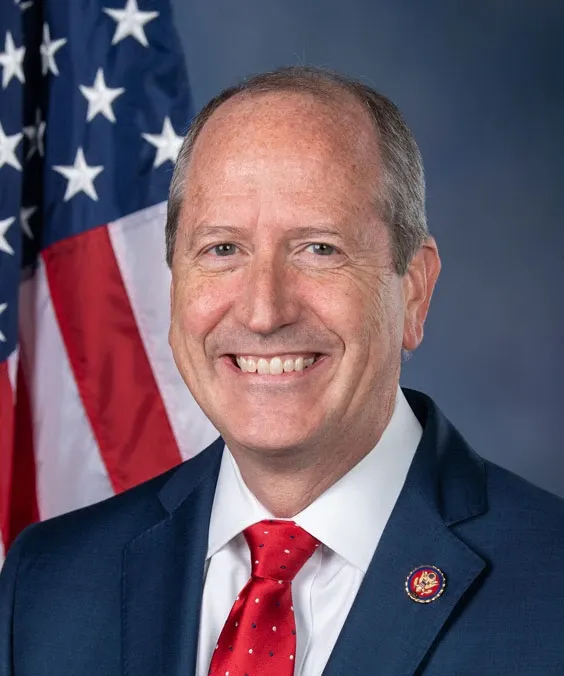
Patrick Timothy McHenry is a Republican member of the United States House of Representatives, representing North Carolina's 10th congressional district since 2005. Throughout his tenure, he has held various leadership roles, including serving as the ranking member of the House Financial Services Committee. McHenry is known for his focus on financial services and technology issues, advocating for policies that promote innovation and economic growth.
How many breaches is it going to take before Congress takes appropriate action to view cybersecurity as a top priority?
So, we would follow the Germans and stop nuclear power plants, and then go to more CO2 emissions as a result of it.
We are cleaner today than Europe in the United States, and that is a positive thing, but it is not enough.
Climate change is real, and we have to break free from the established partisan politics of Capitol Hill.
We have an aggressive policy called the Green New Deal that wants to reorder society.
One simple change like that could make a major impact on the ability to service it.
It is unconscionable that Congress would do that. We have to fix the law and ensure that the Federal student debt market is much more like the private student debt markets.
We have saddled a generation with unaffordable debt, and an education that does not match the cost of that education.
The question of affordability of the institution is an important question. It is. I think we all agree on that.
It is a consequence of Democrat policies that have nationalized the student debt lending in this country.
These students are given way too many choices for their financial literacy basically.
The Federal Government must become a responsible lender as we demand of the private sector.
I look forward to hearing the thoughts of the panel today, and over the years, I think this is going to be a fascinating way for Mr. Lynch and I to make recommendations.
We need to ensure that alternative data remains nondiscriminatory and that consumer data and privacy are protected.
Technology is creating new pathways for more consumers to access the financial system. That is a good thing.
It seems to be a fairly proactive step. Her predecessor delegated that authority and didn't require a Board vote.
I guess we will leave the rancor down the hall, and we have a bit of comity here, which is welcome.
Despite the rhetoric, the Democrats have solidified the reality that size equals survival.
It is my colleagues on the other side of the aisle who have made the largest banks larger, while suffocating smaller institutions.
I asked the Federal Reserve and the Federal Deposit Insurance Corporation to at least defer any final decisions on the application for this merger until after this committee has had the opportunity to conduct a full review of the matter.
I do think, however, it was a really good hearing, because we now have before Congress a deeper understanding about these digital assets and the breathtaking speed at which the world is changing and how we have to catch up.
There's something additional here, which is that people fear something they don't understand.
I fear not well, though. There's a breathlessness to the hyperventilation about Facebook.
Politicians like Pat McHenry