Dec 5, 2023
I suggest we have a mechanism of accountability for votes we cast that increase the deficit and debt.
The Public Record
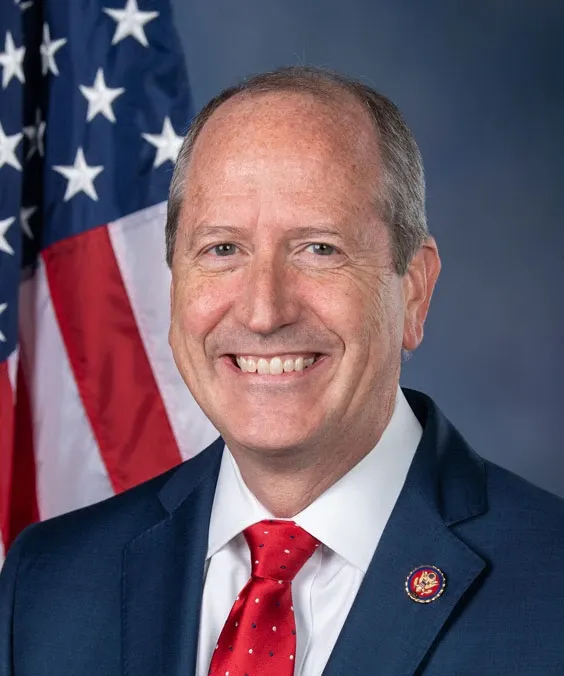
David Cheston Rouzer is an American politician serving as the U.S. Representative for North Carolina's 7th congressional district since January 3, 2014. A member of the Republican Party, Rouzer has focused on issues such as agriculture, veterans' affairs, and economic development during his time in office. He has been active in promoting policies that support the agricultural sector, which is vital to North Carolina's economy. Rouzer has also served on various committees, contributing to legislative discussions on a range of topics affecting his constituents.
I suggest we have a mechanism of accountability for votes we cast that increase the deficit and debt.
Our current fiscal calendar and the Executive Branch's inability to effectively deliver the President's budget proposal to Congress on time are not conducive to the current fiscal year structure.
Wastewater is often viewed as a source of pollution but should be promoted as a resource to provide sustainable nutrients and energy.
Innovation is key to moving our clean water infrastructure into the 21st century.
Investments in water reuse build communities that are modern, sustainable and stable--ready for families to flourish and businesses to grow.
In addition to funding the Pilot Program for Alternative Water Source Grants, we urge you to work with the Appropriations Committee to fully fund the Clean Water and Drinking Water State Revolving Fund (SRF) Programs in final FY 2024…
I also ask unanimous consent that the record remain open for 15 days for any additional comments and information submitted by Members or witnesses to be included in the record of today's hearing.
So, I agree that we need to reduce the regulatory burden, but in doing that, we should not undermine the protections that Davis-Bacon offers to our taxpayers so that we can get the best value for our taxpayer dollars.
Workers do need protections, not because of the vast majority of contractors, but because there are people that would take advantage of the law.
The Biden administration has a final rule that will go into effect next month to ease the compliance burden.
What we don't want is for sub-par contractors... More workers die. Those projects don't last.
This was a way to ensure that when we use taxpayer dollars, that those dollars were spent for the highest quality work.
I just think it is important that we take a step back as to why we have prevailing wage for projects built with Federal dollars.
Are we concerned that maybe we are putting too much money towards grants movement that way that is going to shortchange us long term?
There is going to be more and more pressure to cut discretionary dollars because nobody really wants to touch the mandatory spending, which is what really is driving the debt.
I think it is important to underscore just what a wide gap exists there, and we must maximize every dollar that we can.
In order to maintain robust clean water infrastructure now and in the future, a robust and effective program is critical.
The Clean Water SRF is an example of good public policy that helps keep wastewater costs down.
Even by congressional standards, these investments are expensive and cannot be handled by simply authorizing and appropriating the same or larger amounts of federal funds.
In my home state of North Carolina alone, there is a documented need of $11 billion for clean water projects.
According to EPA's last 'Clean Water Needs Survey' report to Congress in 2016, the total documented needs for sustainable wastewater infrastructure... are at least $270 billion over the next two decades.
Politicians like David Rouzer