Sep 27, 2023
These needs are especially urgent for hundreds of communities trying to fix the problems of combined sewer overflows and sanitary sewer overflows.
The Public Record
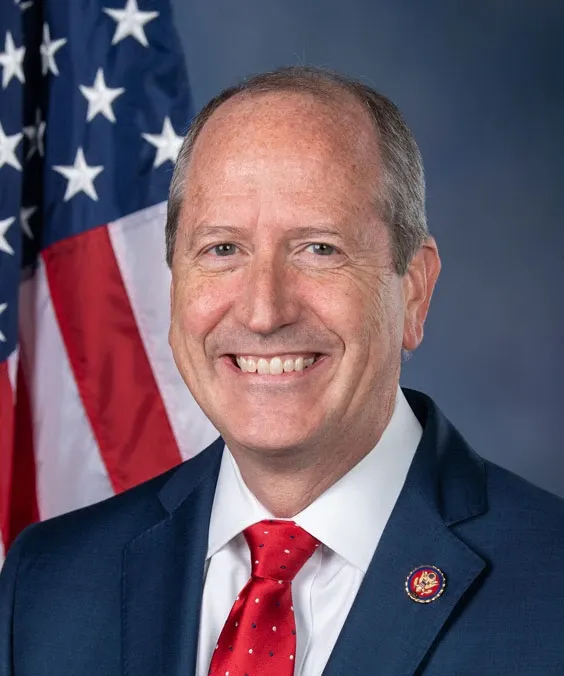
David Cheston Rouzer is an American politician serving as the U.S. Representative for North Carolina's 7th congressional district since January 3, 2014. A member of the Republican Party, Rouzer has focused on issues such as agriculture, veterans' affairs, and economic development during his time in office. He has been active in promoting policies that support the agricultural sector, which is vital to North Carolina's economy. Rouzer has also served on various committees, contributing to legislative discussions on a range of topics affecting his constituents.
These needs are especially urgent for hundreds of communities trying to fix the problems of combined sewer overflows and sanitary sewer overflows.
I am excited to hear from the members of this panel on the issues communities are facing in addressing the nation's water and wastewater infrastructure needs.
Wastewater infrastructure is incredibly important for my constituents and those of every Member of Congress.
In my home State of North Carolina alone, there is a documented need of $11 billion for clean water projects.
According to the EPA's last 'Clean Water Needs Survey Report to Congress,' the total documented needs for sustainable wastewater infrastructure... are at least $270 billion over the next two decades.
The Clean Water SRF program has allowed them to maintain their systems while they pursue long-term solutions.
Wastewater infrastructure deficiencies are particularly acute in many small and rural communities.
In many cases and in many communities, these water and wastewater systems are long past their design life and in need of critical repairs, upgrades, or total replacement.
Our clean water infrastructure is something most Americans don't think about, but rely on 24/7.
I am eager to hear from you on the issues local communities are facing in their efforts to address the Nation's water and wastewater infrastructure needs.
I think that is a real public policy question that needs to have more of a definitive answer.
Well, it seems pretty simple to me. Other agencies have banned it, and the Department of Transportation ought to ban it, too.
It is no secret that China is engaged in a concerted surveillance strategy to infiltrate U.S. airspace and spy on our country.
I have some legislation that will help clarify this and make everybody's life a little easier.
As my colleague Mr. Graves mentioned, there is no question you have a tough job.
I am significantly concerned that this approach, which the EPA has called 'surgical' or 'ministerial,' is rather a veiled attempt to articulate compliance while actually circumventing the process.
I urge them to listen to the will of the American people and the Supreme Court and do just that.
I am concerned this is not being done through the right procedures, and instead, ramrodded without appropriate input.
Will areas of land with no water present where an aquatic plant has been dropped by a bird be considered a WOTUS?
Will water collected in ditches from back-to-back rainstorms be considered a WOTUS?
This ruling enables EPA, along with the Army Corps of Engineers, to kick-start project completion, eliminate regulatory redtape, and maintain crucial environmental protections by conforming with Sackett.
I was encouraged to see the Supreme Court act decisively in Sackett v. EPA, delivering a seemingly easily implementable and consistent definition of WOTUS.
The Corps' halt on issuing AJDs is causing significant uncertainty for the mining industry.
We urge the agencies to issue a clear public directive of what waters are clearly not jurisdictional.
The National Stone, Sand & Gravel Association (NSSGA) strongly urges the U.S. Environmental Protection Agency (EPA) and the U.S. Army Corps of Engineers (Corps) to immediately issue a public, post-Sackett memo on approved jurisdictional…
Politicians like David Rouzer