Importations from England being absolutely stopped by reason of the war, and in large part excluded from other countries by high duties, the American market was for the first time left substantially, or in large degree, to the American…
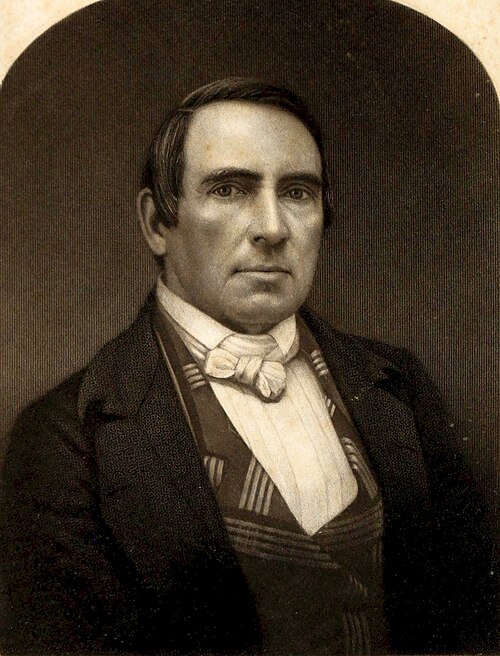
James Blaine
The Public Record
James Gillespie Blaine was an American statesman and Republican politician who represented Maine in the United States House of Representatives from 1863 to 1876, served as Speaker of the House from 1869 to 1875, and was a United States senator from 1876 to 1881. He served twice as Secretary of State, under presidents James A. Garfield and Chester A. Arthur in 1881, and under Benjamin Harrison from 1889 to 1892. He sought the Republican presidential nomination in 1876 and 1880, and received the nomination in 1884, narrowly losing the general election to Democratic nominee Grover Cleveland. Blaine was a prominent figure in the moderate faction of the Republican Party, known as the "Half-Breeds".
gutenberg.org
With the experience of recent days before him, the reader does not need to be reminded that, under the stimulus of this extraordinary rate of duties, manufactures rapidly developed throughout the country.
The action of the Federal Government was a new departure, of portentous magnitude, and was so recognized at home and abroad.
The first tariff Act was therefore in a certain sense a second Declaration of Independence; and by a coincidence which could not have been more striking or more significant, it was approved by President Washington on the fourth day of…
These great statesmen proceeded in the light of facts which taught them that, though politically separated from the mother country, we were still in many ways dependent upon her, in as large a degree as when we were Colonies, subject to…
The ability which framed the Constitution was not greater than that displayed by the first generation of American statesmen who were called to legislate under its generous provisions and its wise restrictions.
It is therefore a fact of lasting importance that the first tariff law enacted under the Federal Government set forth its object in the most succinct and explicit language.
In addition therefore to every other form of poverty, the new government was burdened in the manner so expressively described as land poor, which implies the ownership of a large extent of real estate constantly calling for heavy outlay…
They inherited a mountain of debt from the Revolutionary struggle, they had no credit, and the only representative of value which they controlled was the vast body of public land in the North- west Territory.
American statesmen exhibited wisdom, moderation, and foresight in overcoming the obstacles to the material prosperity of the new Republic.
The emancipated Colonies found therefore in the mother country the most resolute foe to their manufacturing and commercial progress.
British industries were protected by the most stringent enactments of Parliament, and England was the determined enemy not only of free trade but of fair trade.
Systems of taxation were everywhere crude and ruthless, and were in large degree fashioned after the Oriental practice of mulcting the man who will pay the most and resist the least.
When the Republic was organized, Political Economy as understood in the modern sense was in its elementary stage, and indeed could hardly be called a science.
Thus capital and labor coalesce in favor of high duties to protect the manufacturer, and, united, they form a political force which has been engaged in an economic battle from the foundation of the government.
The industrial classes study the question closely; and, in many of the manufacturing establishments of the country, the man who is working for day wages will be found as keenly alive to the effect of a change in the protective duty as the…
The cause is readily apprehended when it is remembered that the tariff question is always presented as one not merely affecting the general prosperity, but as specifically involving the question of bread to the millions who are intrusted…
On a question of sentiment and of sympathy like that of slavery, feeling is inevitable; but it has been matter of surprise that the adjustment of a scale of duties on importations of foreign merchandise should be accompanied, as it often…
Theories on the side of high duties and theories on the side of low duties are maintained with just as great vigor as in 1789.
After the experience of nearly a century on the absorbing question of the best mode of levying duties on imports, the divergence of opinion is as wide and as pronounced as when the subject first engaged the attention of the Federal…
Thus far in our history, settlement has only been the basis of new agitation, and each successive agitation leads again to new settlement.
Public attention may be temporarily engrossed by some exigent subject of controversy, but the tariff alone steadily and persistently recurs for agitation, and for what is termed settlement.
Taxes, whether direct or indirect, always interest the mass of mankind, and the differences of the systems by which they shall be levied and collected will always present an absorbing political issue.
But whether the rate of duty upon a foreign import should be increased or lowered was a question to be settled solely by business and financial considerations.
Whether one man could hold property in another was a question which took deep hold of the consciences of men, and was either right or wrong in itself.
Politicians like James Blaine