Mike Capuano
The Public Record
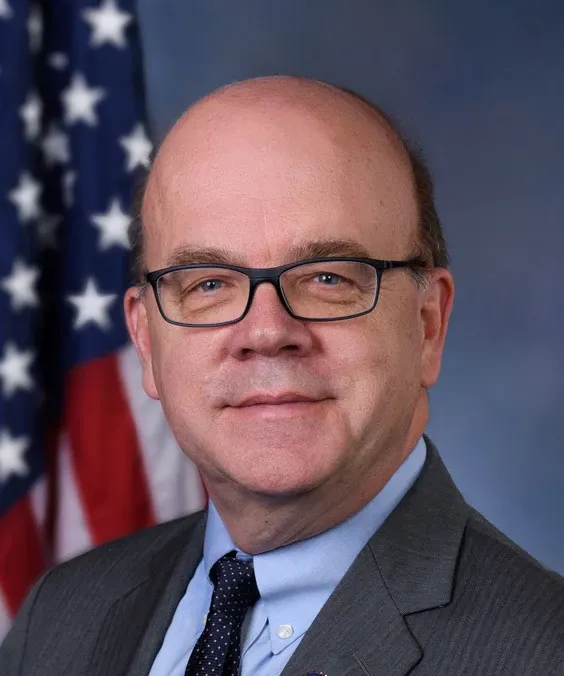
Mike Capuano is a former U.S. Representative from Massachusetts, serving from 1999 to 2019. A member of the Democratic Party, he represented Massachusetts's 8th congressional district. During his tenure, Capuano was known for his advocacy on issues such as healthcare, education, and civil rights. He served on several committees, including the Transportation and Infrastructure Committee, where he focused on infrastructure development and public transportation improvements in his district.
Mar 27, 2012
The one on stock options being the most unbelievably byzantine complex thing I have ever seen in my life.
Mar 27, 2012
I have no doubt that most of you have been, as well. And in that time, for those of you--I am sure you all know. But we have $1 billion missing.
Mar 27, 2012
I guess I am way over time. We are going to have to go through this another day, Mr. Roth.
Mar 27, 2012
It is my money. I didn't play that game, and yet, you are taking my money to protect some other customer--who lost their money, because they took a gamble.
Mar 27, 2012
How does it protect me if some other customer loses their money and, to me, somebody else uses my money to cover their losses?
Mar 27, 2012
Yes, I guess at some point, somebody is going to have to explain to me how using my money protects my money.
Mar 27, 2012
So, you would--there is no way in the world you would know what they had in an account of $100 or $100 million or a billion, how much money is customer money and how much money is not customer money. Is that correct?
Mar 27, 2012
It is kind of funny. It is a classic. I actually think they ought to be in politics, whoever came up with this term.
Mar 27, 2012
Good. I guess I feel better that you wouldn't, because I am not aware that any financial institution in the world would let that happen in any legal capacity.
Mar 27, 2012
In the normal course of events, what would you expect? I will not hold you to it. Just give me a ballpark idea how long you think it might take for FASB to conclude its review of this and decide whether to amend it or not to amend it. How…
Mar 27, 2012
If there was criminal activity at MF Global, I just don't think that is Congress' role to investigate criminal activity.
Mar 27, 2012
So I have well-paid employees of a major company that somehow has misplaced or misappropriated a billion dollars of customer funds, and yet you are asking the trustee in bankruptcy to give bonuses to the very people who may or may not have…
Mar 27, 2012
If that is the case, I think we have more than a little bit of a problem here.
Mar 27, 2012
Did anybody in the company, anyone, have authority to transfer customers' funds?
Mar 27, 2012
It is MF Global Inc.'s issue, not mine. I don't have anything to do with it.
Mar 27, 2012
I would like to know if Dodd-Frank caused this problem, then what caused Lehman Brothers, what caused Madoff?
Mar 27, 2012
Since the Dodd-Frank Act became law, the Commission has acted like a little child abandoning the old toys and swapping them out for the new.
Politicians like Mike Capuano