I can't help but note that, as we're in a Presidential election year, that some of the proposals coming out of this committee remind me of the Mitt Romney view of the world, which is we dismantle Amtrak, which he would do by zeroing it…
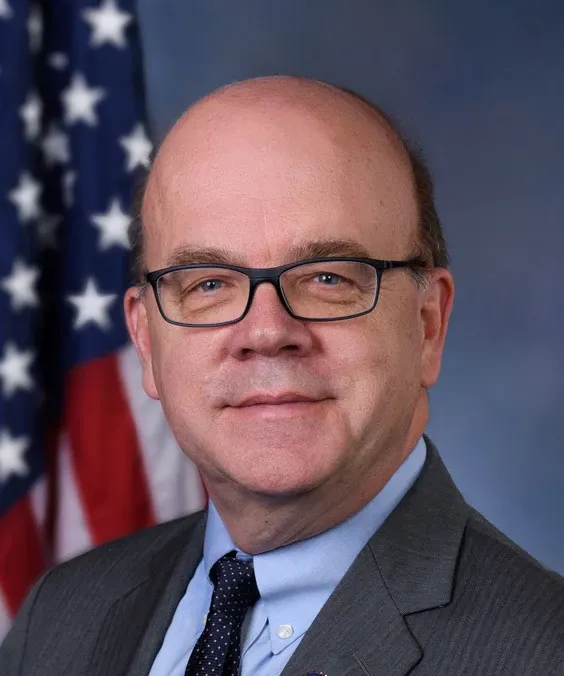
Mike Capuano
The Public Record
Mike Capuano is a former U.S. Representative from Massachusetts, serving from 1999 to 2019. A member of the Democratic Party, he represented Massachusetts's 8th congressional district. During his tenure, Capuano was known for his advocacy on issues such as healthcare, education, and civil rights. He served on several committees, including the Transportation and Infrastructure Committee, where he focused on infrastructure development and public transportation improvements in his district.
It is--the irony is not lost on me, and I'm sure most others, that we're here on 9/11 discussing proposals that would, unfortunately, dismantle Amtrak on the very day when, 11 years ago, Amtrak workers, among other transportation workers…
But let's be clear. Fair, open, and balanced competition isn't what Mr. Chambers and his clients are looking for here.
Mr. Chairman, I have had some good-tasting whoppers in my time, but this is a whopper of a bad idea if I ever heard one, trading good paying jobs with benefits for cheaper cheeseburgers.
The notion that the problem in America today with the financial institutions is too much regulation--once a week we get a demonstration that is not true.
These are the very same people who thought you were doing too much probably most of the time.
I happen to agree with them; I voted against that repeal. And I wish they had voted against that repeal, as well, but they didn't.
If this law prevents a similar financial crisis from occurring it would actually save American households approximately $22.4 billion per page.
I don't think anyone would suggest that Dodd-Frank was a perfect bill, certainly not by my measure, but perfection is really never the measure of anything.
Dodd-Frank was passed with the aim of increasing financial stability, improving investor confidence, and enhancing consumer protection.
Not all regulation is inherently bad. Some regulations are necessary and it is important for all of us to work together to try to get it right.
the wholesale rejection of regulation of the financial industry, I would have to say to my friends at the Chamber, going back to 2006, they remind me of the Bourbon, when the Restoration came in the 19th Century in France, and people said…
They were clearly engaged in misleading customers--2 million customers--and they were slapped for it.
You would think that any business that engages in intentional misleading of customers is doing something wrong and bad for the economy, bad for America.
I need to know facts. I need to know specific regulations that are either proposed or finalized that don't work.
Regulations are not meant for the good players. No regulation is ever meant for the good players. They are only meant to say, 'There is the line. Bad players can't cross here.'
I have all of my family's personal, business, and campaign funds in small banks. I don't have any--not one penny that I have control over is in a large bank.
Mr. Chairman, I ask unanimous consent to place 2 news articles in the record: one from The Wall Street Journal entitled, 'Financial Crisis Amnesia,' by Secretary Geithner; and another one from Forbes Magazine entitled, 'What's in Your…
Secretary Geithner wrote a nice little article in The Wall Street Journal a couple of months ago that talked about the amnesia of people who forget how we got to where we are.
I can't help myself. You do realize that your company is named after a place where one of the most--not devastating--broad-based regulations in history came out of.
the way to deal with the fear is not to not do it; the way to deal with the fear is to try to get it right before the mistake is made, or even after the fact.
I am proud of those. While we can make them more efficient, I am not prepared to maintain more and more military spending at their expense.