I hazard nothing in saying that the ordinance of 1787 has been expressly referred to as valid, or expressly or impliedly reënacted, a dozen times, by the Congress of the United States; and, in the state courts of Ohio, Illinois, Louisiana…
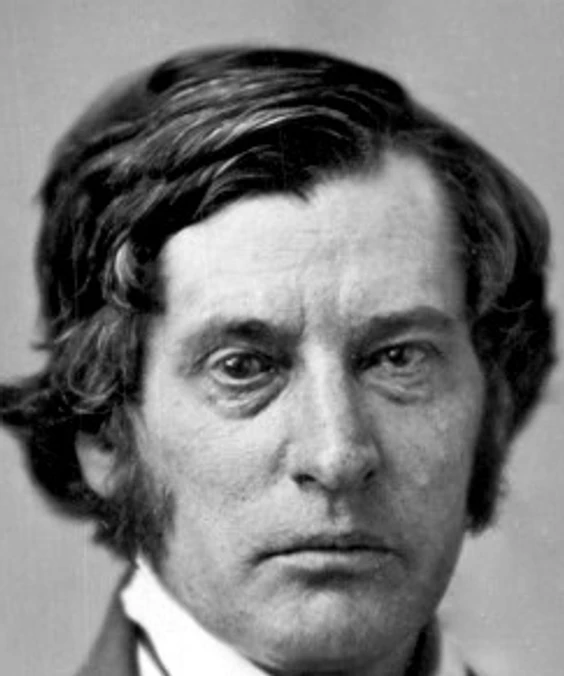
Horace Mann
The Public Record
Horace Mann was an American educational reformer, abolitionist and Whig politician known for his commitment to promoting public education; he is thus also known as The Father of American Education. In 1848, after public service as Secretary of the Massachusetts State Board of Education, Mann was elected to the United States House of Representatives (1848–1853). From September 1852 to his death in 1859, he served as President of Antioch College.
gutenberg.org
The Presidents, all members of Congress, all judges upon the bench, have been in a dream for the last sixty years, and are now waked up and recalled to their senses by the charm of a newly-discovered reading of the constitution.
Is it not obvious, then, that this new reading of the constitution sets aside the whole legislative, judicial, and executive administration of this government over territories, since the adoption of the constitution?
If Congress has no power over territory, only as land, then what does this land want of judges and marshals?
He who takes from this government the law-making power, in regard to territories, strikes also the balances of justice from the hands of the judge, and the mace of authority from those of the executive.
If the government of the United States, therefore, has no right to legislate for the territories, it has no right to adjudicate for the territories; if it has no right to adjudicate, then it has no right to enforce the decisions of the…
Whoever denies one of these must deny them all.
Government is one, but its functions are several.
From year to year, it goes on conquering and to conquer, and human power cannot dethrone it.
It is self-existent, like a god, and human power cannot prevent it.
Look at this: Congress determines for the territory the qualifications of electors and elected,--at least in the first instance.
Cannot Congress make provision for the rights of the people, as well as for the language in which the laws and records defining those rights shall be expressed?
The knife wounds him who would use it to wound his fellow.
By what other law than this can a runaway slave be retaken in a territory?
If Congress has no such power, by what right can a master recapture a fugitive slave escaping into a territory?
Does it not seem almost incredible that a defender and champion of slavery should deny the power of Congress to legislate on the subject of slavery in the territories?
Surely, to decree on what subjects a community shall legislate, and on what they shall not legislate, is the exercise of the highest power.
As if we could command others to do what we have no right to do ourselves, and prohibit others from doing what lies beyond our own jurisdiction!
A constitution prescribes to the legislature what it shall do, and what it shall not do; it commands, prohibits, and binds men by oaths to support itself.
So far as the uniform practice of sixty years can settle a doubtful, or confirm an admitted right, this power of legislating over the territories has been taken from the region of doubt, and established upon the basis of acknowledged…
Congress has legislated on the subject of slavery in the territories all the way up from the adoption of the constitution to the present time; and this legislation has been sustained by the judiciary of both the general and state…
Is there any express power in the constitution authorizing Congress to say to all the citizens of the United States, “If you wish to buy ungranted land in the territories, you must come to us, for no one else can sell, or shall sell”?
Whence, but from this right of sovereignty, does the government obtain its power of saying that no man shall purchase land of the natives, or aborigines; and that, if you wish to buy land in the territories, you shall come to the…
Would any judge or lawyer doubt the validity of such a condition; or would any sensible man ever doubt its wisdom or humanity?
In disposing of their land, therefore, to the men whom they would gather about them and employ, they incorporate the provision, as a fundamental article in the deed of grant, that ardent spirits shall never be sold upon the premises; and…
Politicians like Horace Mann