But a minority of seven from the slaveholding states controlled a majority of sixteen from the free states,--ominous even at that early day of a fate that has now relentlessly pursued us for sixty years.
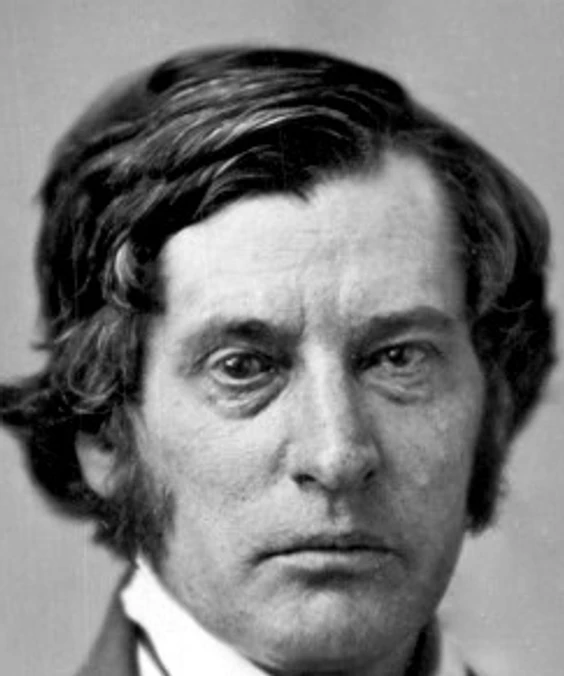
Horace Mann
The Public Record
Horace Mann was an American educational reformer, abolitionist and Whig politician known for his commitment to promoting public education; he is thus also known as The Father of American Education. In 1848, after public service as Secretary of the Massachusetts State Board of Education, Mann was elected to the United States House of Representatives (1848–1853). From September 1852 to his death in 1859, he served as President of Antioch College.
gutenberg.org
Jefferson should have the honor of it; and would to Heaven that our southern friends, who kneel so devoutly at his shrine, could be animated by that lofty spirit of freedom, that love for the rights of man, which alone can make their acts…
Even admitting, then, that the law is equal for both north and south, I will show that all the equity is on the side of the north.
I repeat, then, that the north cannot shut out the south from the new territories by a law for excluding slavery, more effectually than the south will shut out the north by the fact of introducing slavery.
But the sentiments he expressed on this subject, at the close of the last century, are now the prevalent, deep-seated feelings of northern men, excepting, perhaps, a few cases where these feelings have been corrupted by interest.
The influence of slavery on the whites is almost as fatal as on the blacks themselves.
No right is so inseparable from humanity, and so necessary to the improvement of our species, as the right of exerting the powers which nature has given us in the pursuit of any and of every good which we can obtain without doing injury to…
No empire is so valuable as the empire of one’s self.
Man, when forced to substitute the will of another for his own, ceases to be a moral agent; his title to the name of man is extinguished; he becomes a mere machine in the hands of his oppressor.
Nature never made such a distinction, or established such a relation.
Not one in five hundred of the freemen of the north could ever be induced to take his family and domicile himself in a territory where slavery exists.
If our demand for free territory, then, excludes them, their demand for slave territory excludes us.
We, at the north, know too well the foundations of worldly prosperity and happiness; we know too well the sources of social and moral welfare, ever voluntarily to blend our fortunes with those of a community where slavery is tolerated.
If, on the one hand, the consecration of this soil to freedom will exclude the slaveholders of the south, it is just as true, on the other hand, that the desecration of it to slavery will exclude the freemen of the north.
Here, on the threshold, we are confronted with the claim that the gates shall be thrown wide open to the admission of slavery into the broad western world; because, otherwise, the southern or slave states would be debarred from enjoying…
Must not that democracy be false which begets slavery as its natural offspring?
The reason for claiming the supreme right of legislation for the territorial inhabitants, is the hope that they will establish slavery within their borders.
The reason for denying to Congress the power to legislate for the territories, is the fear that Congress will prevent slavery in them.
This claim, then, is not made for the purpose of making freemen more free, but for making slaves more enslaved.
Because, by so doing, you enable them to abolish all rights for a whole class of human beings.
But, sir, it is the most painful aspect of this whole case, that the very object and purpose of claiming these ample and sovereign rights for the inhabitants of the territories is, that they may deny all rights to a portion of their…
Did this doctrine grow out of a jealousy for the rights of man, a fear of usurpation, an assertion of the principle of self-government, I should sympathize with it, while I denied its legality.
Now, if these declarations were a sincere and honest affirmation of human rights, I should respect them and honor their authors.
All men have the right of self-government; and this principle holds true with regard to the inhabitants of territories, as well as the inhabitants of states.
How, then, is it possible for any mind, amenable to legal rules for the decision of legal questions, to say that Congress cannot legislate, or has not legislated, (except once or twice inadvertently,) on the subject of slavery in the…
Politicians like Horace Mann