Look at the seigniories of New York,--the anti-rent districts as they are now called;--every man acquainted with the subject knows that both people and husbandry are half a century behind the condition of contiguous fee-simple…
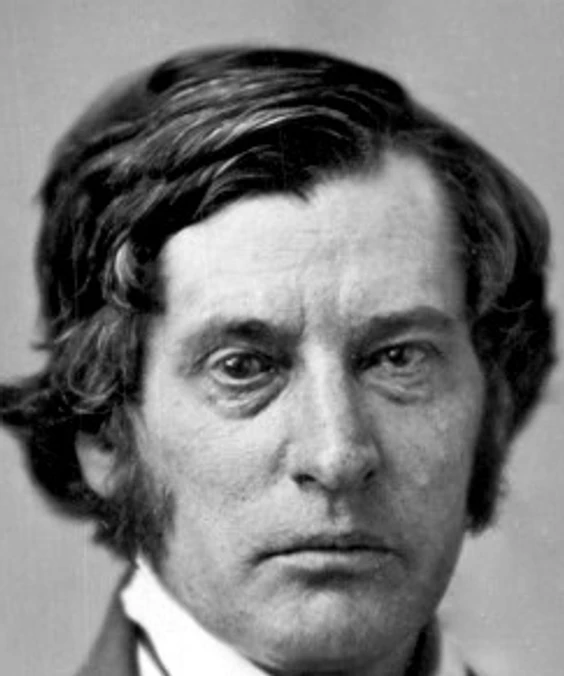
Horace Mann
The Public Record
Horace Mann was an American educational reformer, abolitionist and Whig politician known for his commitment to promoting public education; he is thus also known as The Father of American Education. In 1848, after public service as Secretary of the Massachusetts State Board of Education, Mann was elected to the United States House of Representatives (1848–1853). From September 1852 to his death in 1859, he served as President of Antioch College.
gutenberg.org
If a tenant is to be no better off for the improvements he makes on an estate, he will not make the improvements.
Under the villeinage system of England, the villeins were a low, idle, spiritless race; dead to responsibility; grovelling in their desires; resistant of labor; without enterprise; without foresight.
In all ages of the world, among all nations, wherever the earnings of the laborer have been stolen from him, his energies have gone with his earnings.
He cuts deeper than the muscles; he destroys the spirit that moves the muscles.
Yet the planter does more than this when he makes a man a slave.
I do not ask what he would think of his humanity, but what would he think of his sanity?
What would a slave owner at the south think, should he come to Massachusetts, and there see a farmer seize upon his hired man, call in a surgeon, and cut off all the flexor muscles of his arms and legs?
When he moves his tardy limbs, it is because of the suffering that goads him from behind, and not from the bright prospects that beckon him forward in the race.
However industrious and frugal he may be, he has nothing to bequeath to his children,--or nothing save the sad bonds he himself has worn.
The slave’s heart never beats with this high emotion.
The mighty impulse of parental affection repays for diligence, and makes exertion sweet.
A free man labors, not only to improve his own condition, but to better the condition of his children.
The slave does not participate in the value of the wealth he creates.
The first touch of slavery snaps this spring.
In the constitution of human nature, the desire of bettering one’s condition is the mainspring of effort.
Enslave a man, and you destroy his ambition, his enterprise, his capacity.
Were we so constituted as to care for nothing, to aspire to nothing, beyond mere temporal well being, this well being would counsel us to abolish slavery wherever it exists, and to repel its approach wherever it threatens.
Other things being equal, a free people will thrive and prosper, in a mere worldly sense, more than a people divided into masters and slaves.
So far from facilitating the increase of individual or national wealth, slavery retards both.
Though slaves are said to be property, they are the preventers, the wasters, the antagonists of property.
I now proceed to consider the nature and effects of slavery, as a reason why new-born communities should be exempted from it.
If all our new territory be doomed to slavery, where can the non-slaveholders of the slaveholding states emigrate to?
And, in addition to this, it is to be considered that the non-slaveholding population of the slave states have as direct and deep an interest as any part of the country, adverse to the extension of slavery.
But there is another fact, which shows that the slaveholders have already had their full share of territory, however wide the boundaries of this country may hereafter become.
Politicians like Horace Mann