This question, when put in reference to slaves, appears ridiculous; and yet it is no more absurd, when asked in reference to an ignorant slave, than when asked in reference to an uneducated white man.
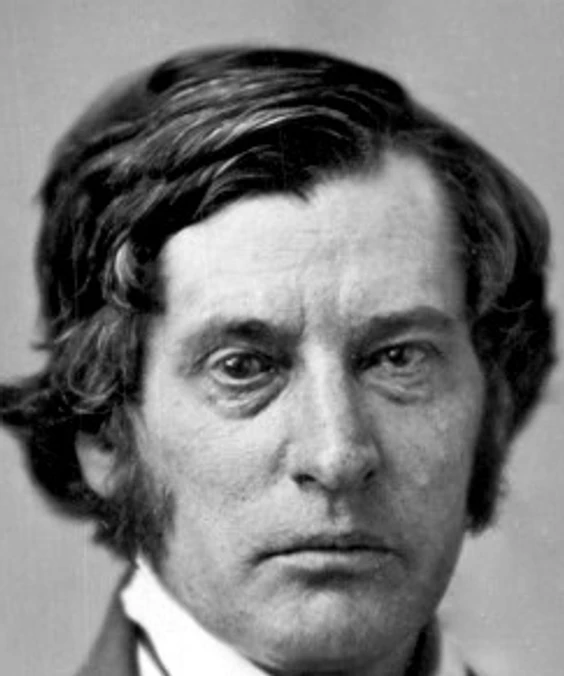
Horace Mann
The Public Record
Horace Mann was an American educational reformer, abolitionist and Whig politician known for his commitment to promoting public education; he is thus also known as The Father of American Education. In 1848, after public service as Secretary of the Massachusetts State Board of Education, Mann was elected to the United States House of Representatives (1848–1853). From September 1852 to his death in 1859, he served as President of Antioch College.
gutenberg.org
Out of five hundred and seventy-two patents issued in 1847, only sixty-six went to the slave states.
Increase the constituency, if I may so speak, of developed intellect, and you increase in an equal ratio the chances of inventive, creative genius.
All history and experience affirm that they have come, and must come, from people among whom education is most generous and unconfined.
Destroying common education, slavery destroys the fruits of common education,--the inventive mind, practical talent, the power of adapting means to ends in the business of life.
Slavery would abolish education, if it should invade a free state; education would abolish slavery, if it could invade a slave state.
All this is the inevitable consequence of slavery; and it is as impossible for free, thorough, universal education to coëxist with slavery as for two bodies to occupy the same space at the same time.
The rich may do it, but what becomes of the children of the poor?
If a parent wishes to educate his children, he must send them from home, and thus suffer a sort of bereavement, even while they live; or he must employ a tutor or governess in his family, which few are able to do.
They set forth the benefits and the blessings of education; but they speak in a vacuum, and no one hears the appeal.
And if the schools in the slave states are compared with the schools in the free states, the deficiency in quality will be found as great as the deficiency in number.
Surely it would take more than five of these to make three freemen; for the more a state has of them, the less of intelligent freedom will there be in it.
The scholars in the primary schools of Ohio alone, outnumbered all those in the fifteen slave states and territories by more than 17,000.
Yet in many of the slave states there are beautiful paper systems of Common Schools,--dead laws in the statute books,--and the census tells us how profitless they have been.
A republican government supported by the two pillars of Slavery and Ignorance!
When has Virginia, in any state or national election, given a majority equal to the number of its voters unable to read or write?
The degrading idea of pauper schools would be discarded forever.
With such a free population, the school children would be so numerous that public schools might be opened within three or four miles of each other all over its territory,--the light of each of which, blending with its neighboring lights…
I say, sir, the single State of Virginia could support in abundance the whole population of New England.
With New England habits of industry, and with that diversified labor which would be sure to spring from intelligence, the State of Virginia, which skirts us here on the south, would support all the population of the New England states, and…
Now, this can never be done in an agricultural community where there are two classes of men--one to do all the work, and the other to seize all the profits.
It is impossible, in the present state of things, or in any state of things which can be foreseen, to have free and universal education in a slave state.
Create a serf caste, and debar them from education, and you necessarily debar a great portion of the privileged class from education also.
Slavery, then, by an inexorable law, denies general education to the whites.
You cannot have general education without Common Schools.
Politicians like Horace Mann