Could they not have infused into the mind of these slaves the idea of liberty?
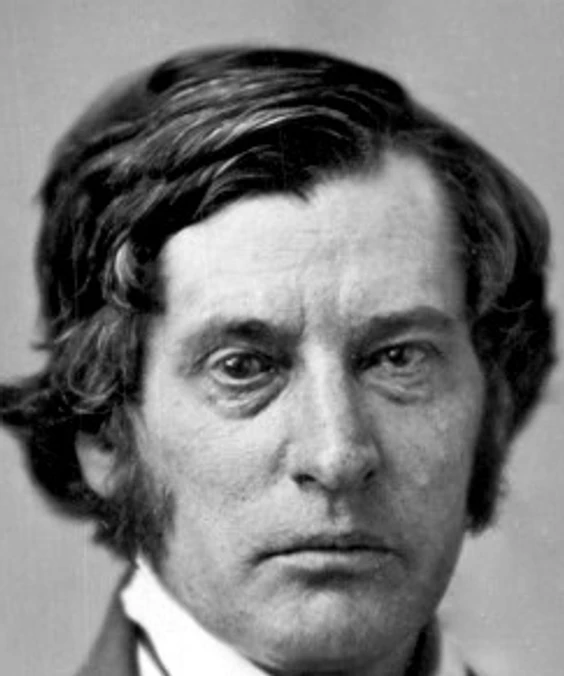
Horace Mann
The Public Record
Horace Mann was an American educational reformer, abolitionist and Whig politician known for his commitment to promoting public education; he is thus also known as The Father of American Education. In 1848, after public service as Secretary of the Massachusetts State Board of Education, Mann was elected to the United States House of Representatives (1848–1853). From September 1852 to his death in 1859, he served as President of Antioch College.
gutenberg.org
Here, too, are thousands of free negroes, or colored persons, in this District, with whom the slaves are in daily and open communication.
There are white men in this city hostile to the institution of slavery, and desiring the freedom of all slaves.
Now, gentlemen, I maintain that, at most, nothing but the offence of “transporting” has been proved against this prisoner.
Then it would be necessary, in an indictment, to set out the kind of book stolen, and no man could be lawfully punished for the weightier offence who had only committed the lighter.
No, you could find him guilty only of the thing proved to have been done.
But could you, therefore, on your oaths, convict a man of stealing a chronometer, when he had only taken a clock or a watch?
All are made for the measurement of time, as all these laws were made for the protection of slave property.
As, therefore, if the geographical metes and bounds of the State of Maryland were shown to you, you could not say, upon your oaths, that it was a description of the State of Pennsylvania; so, if the offence of “transporting” be proved to…
How much better for him had its powerful machinery never existed, than that he should be ground to powder beneath its wheels!
But suppose this very civil society, wielding as it does the combined and terrible strength of the whole community, should turn its collected force against an innocent man, and crush him, then in what an utter and hopeless ruin is he…
It has done well, though it has not done all.
And, therefore, even if a guilty person does sometimes escape, all we can say is that civil society has not done its work infallibly.
But civil society, like every thing human, is imperfect.
Civil society takes away something from a man’s rights, but it adds immensely to his powers; it makes him stronger than any individual oppressor, and, on the whole, it protects its members far better than they could protect themselves.
Without civil society, each man would have a right to preserve his own rights and to redress his own wrongs.
The object of civil society is to protect rights and to redress wrongs.
This would be to suppose that you sit there to administer the worst kind of Lynch law,--a kind that has all its injustice, while screening itself from the odium of its violence.
Follow their example, gentlemen, and, whatever fierce sounds of public condemnation may be now rung in your ears, you will have the same glorious reward, and your children, and all the good men of your country, will honor your memories.
Noble and illustrious bravery of the soul, which, when the yelling fiends of popular passion and prejudice beset the ascending pathway of virtue, can look to conscience, to posterity, and to God, and defy them all!
The storm of popular disaffection soon cleared away, and now twelve purer and fairer names are not inscribed on the roll of fame than the names of those twelve jurymen, who dared to brave public opinion, and to perform an act of arduous…
In a case which has excited so much attention, both here and throughout the country, you, too, must expect to be put on trial; your verdict will go into the great record of history, to be passed upon by your country and by posterity.
It must be one which your children can look at with a filial and honorable regard for their fathers’ uprightness.
It should be a verdict, therefore, which you can look upon, at the close of life, with conscientious satisfaction.
It should be a place consecrated to the inquiry, “What is truth?” and to the application of its conclusions to the conduct of men.
Politicians like Horace Mann