Thus the seeds of freedom have emanated from the tree of our liberties.
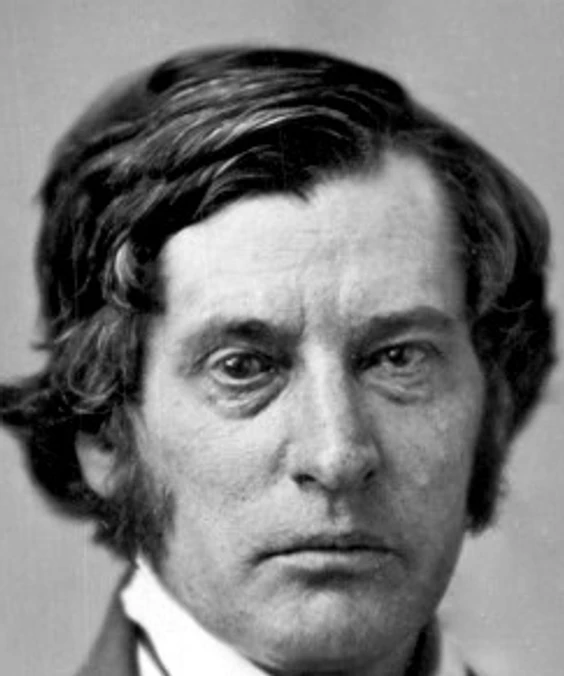
Horace Mann
The Public Record
Horace Mann was an American educational reformer, abolitionist and Whig politician known for his commitment to promoting public education; he is thus also known as The Father of American Education. In 1848, after public service as Secretary of the Massachusetts State Board of Education, Mann was elected to the United States House of Representatives (1848–1853). From September 1852 to his death in 1859, he served as President of Antioch College.
gutenberg.org
We do not, indeed, propagate our principles with the sword of power; but there is one sense in which we are propagandists.
How different would have been the struggle for liberty to be secured by republicanism, if there had been no example of a stable republican government to which the patriot could point, for the encouragement of his people!
The slaves in this city are constantly hearing what must remind them that they are slaves; and therefore they are constantly incited to escape from their bondage.
If they hear the word “tyrants” used in reference to one who deprives others of their rights, for “tyrants” they will read “masters;” and no mortal power, or law, or art, can help it, but by blotting out all that is human within them.
If they hear the word “slave” used in reference to those who have been deprived of their natural rights in other countries, they will apply that word to their own condition in this.
Every Fourth of July oration, if understood, is a torch to light up another St.
If they hear this, and are above the condition of brutes, they will apply it to themselves.
In all places slaves hear something, but in this place they hear much, of what is said in behalf of human liberty and of human rights.
And just in proportion as their value is increased by intelligence and development, just in that proportion is the bond weakened by which they are held.
They are instinct with the common desires of humanity, and among them one of the deepest and strongest is the love of liberty.
I reiterate, then, if slaves are property, they are a peculiar kind of property.
Those who cannot read, can hear; and if you are to keep from them the perpetually recurring sights and sounds which must awaken the quick instincts of liberty, you must extinguish their eyes, and seal up their ears in everlasting silence.
If such ideas once got possession of a man’s mind, do you think that fire or water could ever burn them or drown them out?
All men are created equal!” and among their “inalienable rights” “are life, LIBERTY, and the pursuit of happiness!” Who knows but that they may have seen these doctrines, with a constellation of names subscribed to them as glorious as any…
Who knows but some of them have read the Declaration of American Independence; and, in their blindness and simplicity of mind, applied its immortal truths to themselves?
In this capital of a nation so boastful of its freedom, the common air is vocal with the accents of liberty.
As he saw a handful of money paid to his master every week, or every month, for his own earnings, think you he never asked himself, why that money could not be his?
So that, as the value of a slave increases, the strength of the tenure by which he is held becomes less secure.
With increased intelligence and mental development, the desires natural to manhood spring up;--the longing for liberty, and for the possession of free agency; the desire of selecting one’s own field of labor, and means of enjoyment; the…
As human beings, could not the desire of escape from their master’s possession have originated with themselves?--prompted by the inward and instinctive longings for liberty, which spring perennial in the human breast.
If, then, the slaves were, in fact, instigated to leave their master’s possession, the probabilities are a thousand to one that they were so instigated by some other person or persons resident here, and not by the prisoner.
Should he accost a colored man in the streets, and ask him if he were a slave, the chances are three to one that the person addressed would turn out to be a freeman; for I suppose the proportion, in this District, of the free colored…
Can aught be conceived more absurd or preposterous than that the prisoner should go round the streets of Washington, picking up a slave here and there, to complete his cargo, as the driver of a stage-coach goes round picking up passengers?
Is it not a thousand times more probable that it was done by some citizen in the District, or by some colored acquaintance or friend of theirs, enjoying the means of constant communication with them, than that it was done by an entire…
Politicians like Horace Mann