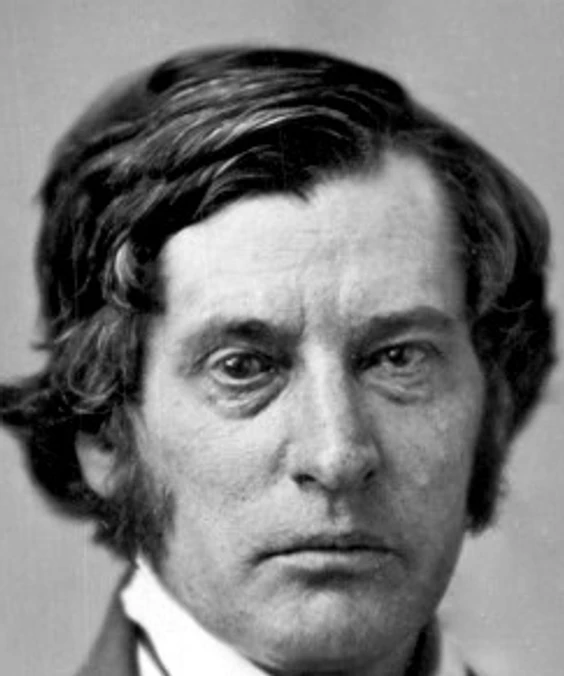
And, sir, I should be sure of a response; for out of those schools there is going forth a nobler band of young men and women than ever before conferred intelligence, virtue, refinement, and renown upon any people or community on the face…
Horace Mann
The Public Record
Horace Mann was an American educational reformer, abolitionist and Whig politician known for his commitment to promoting public education; he is thus also known as The Father of American Education. In 1848, after public service as Secretary of the Massachusetts State Board of Education, Mann was elected to the United States House of Representatives (1848–1853). From September 1852 to his death in 1859, he served as President of Antioch College.
gutenberg.org
When others will abandon their offences, then let the remembrance of them be blotted out.
Where else, where universal suffrage is allowed, is a million of dollars voted every year, by the very men who have to pay it, for the public, free education of every child in the state?
And where, I ask, on the surface of the earth, is there a population of only eight hundred thousand, who are striving so earnestly, and doing so much, to advance the cause of humanity and civilization, as is doing by the people of…
But they condemn themselves, for they show that even the resuscitation of the errors of the dead gives them more pleasure than a contemplation of the virtues of the living.
If they could find present offences wherewith to upbraid us, they would not exhume the past.
This is worse than non-forgiveness; it is making punishment hereditary.
Is a crime committed by ancestors to be forever imputed to their posterity?
But, sir, let me say this for Massachusetts, that whatever sins she may have committed in former times,--whatever dissenters she may have persecuted, or witches she may have hanged, or Africans she may have stolen and sold,--she has long…
I cannot deny,--would to God that I could,--that we still have vices and vicious men amongst us.
In vindicating what is right, I will not defend what is wrong.
This, too, is an honor, which it will be hers, through all the immortality of the ages, alone to wear.
This is an honor that no rival can ever snatch from her brow.
She was the first government in the civilized world,--in the whole world, ancient or modern,--to abolish slavery, wherever she had power to do so.
She once held slaves; but when she saw that slavery was contrary to the rights of man and the law of God, she emancipated them.
Massachusetts has committed errors; but when they were seen to be errors, she discarded them.
But it is as true of a state as of an individual, that repentance is the first step towards reformation.
The recital of her offences can fall more sadly upon no ear than upon my own.
I mourn over her errors, and would die to reform, rather than spend one breath to defend them.
And thus infernal as well as celestial qualities are coined into money, according to the demands of the market and the uses of the purchaser.
Is not this the case of Judas selling his Master over again, with the important exception of the remorse that made the original culprit go and hang himself?
Is not this making merchandise of the Savior?
If the slave will forgive injuries, not merely seventy times seven, but injuries inflicted all his life long, then an additional hundred may be bid for him.
If mere bones and muscles compacted into human shape be worth five hundred dollars, then, if the auctioneer can warrant the subject to have the meekness of Moses and the patience of Job, the same article may be worth seven hundred.
Hence, it is said in advertisements that a slave is pious, and, at the auction block, the hardened and heartless seller dwells upon the Christian graces and religious character of some slaves with the unction of an apostle.
Politicians like Horace Mann