I say, sir, under such circumstances, slavery would melt away upon your borders like an iceberg in the tropics.
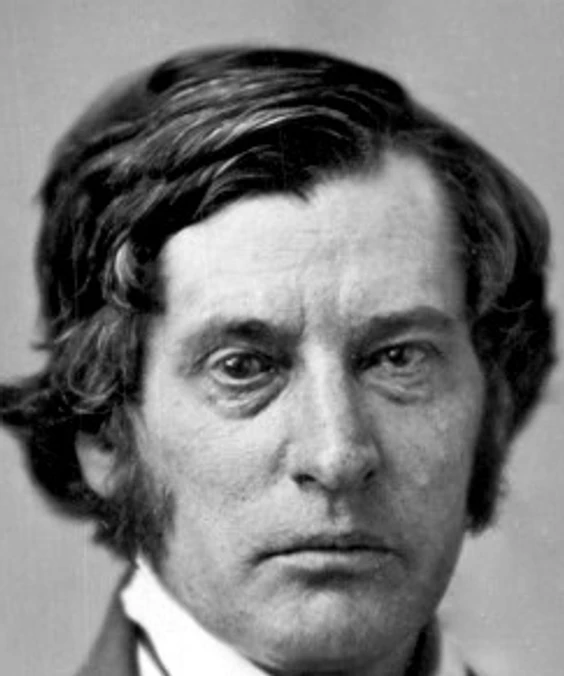
Horace Mann
The Public Record
Horace Mann was an American educational reformer, abolitionist and Whig politician known for his commitment to promoting public education; he is thus also known as The Father of American Education. In 1848, after public service as Secretary of the Massachusetts State Board of Education, Mann was elected to the United States House of Representatives (1848–1853). From September 1852 to his death in 1859, he served as President of Antioch College.
gutenberg.org
Now, the ignorant slave knows but little of geography, but he would know of these avenues to freedom, and nothing but death could extinguish such knowledge and the hopes it would inspire.
These slaves, therefore, had no place to flee to, where better institutions and juster laws prevailed.
Southern gentlemen, when they threaten disunion, cannot surely be so much at fault as to forget that slavery exists here as it never existed before in the world.
In looking over the criminal codes of the slave states, I think I have noted cases where the slave is not punished with death for an offence for which a white man is.
It not only releases the slave himself, but is a prospective and perpetual amnesty,--a true act of oblivion,--for all his descendants.
Will you make the act of escape a capital offence in a slave, and destroy the victim you cannot restrain?
All such punishments not only nourish the love of freedom, but breed the purpose of revenge; and it is a kind of lesson which a brutalized nature is always prone to retaliate with improvements.
Will you mutilate them, or scourge them till within a minute of death?
Will you make your laws horribly penal, in order to deter slaves from escaping by fear?
Affection, indeed, would bind the parents to their children, but they know too well how often this bond is remorselessly broken by the master; and, besides, an enlightened affection would look to future children and their posterity…
What but affection should prevent the able-bodied and the profitable from escaping, and leaving the aged and the young on their masters’ hands.
A million and a half are left; five hundred thousand of these will have attachments to their own parents or children, or to their masters, too strong to be broken; or they may be so degraded as to be contented with bondage; for their…
The day for the power and the triumph of those whom you hate as abolitionists will have arrived.
Thousands and tens of thousands can escape, even while you are dining.
We will retort the Scripture, that “he that stealeth a man, and selleth him, or if he be found in his hand, he shall surely be put to death.
As our laws make it piracy to kidnap slaves in Africa, or to ship them thence, so it shall be a felony, punishable with death, for any southern master to kidnap a colored man, in a free state, or transport him from it, on the ground of…
Before God, and Christ, and all Christian men, they are my brothers and sisters.
The states being separated, I would as soon return my own brother or sister into bondage, as I would return a fugitive slave.
When they cross the line into a free state, they are free,--as free as you or I.
By this law, every case of an escaping slave is but the self-recovery of stolen goods.
The constitution of the United States, and the law of 1793, being at an end, the law of nature revives.
The free states are therefore absolved from all obligation to surrender fugitives.
The old adage says, “riches have wings.” You will find that these riches have legs.
I venture to predict, that in such a state of things, slaves will become cheap, and horses will become dear.
Politicians like Horace Mann