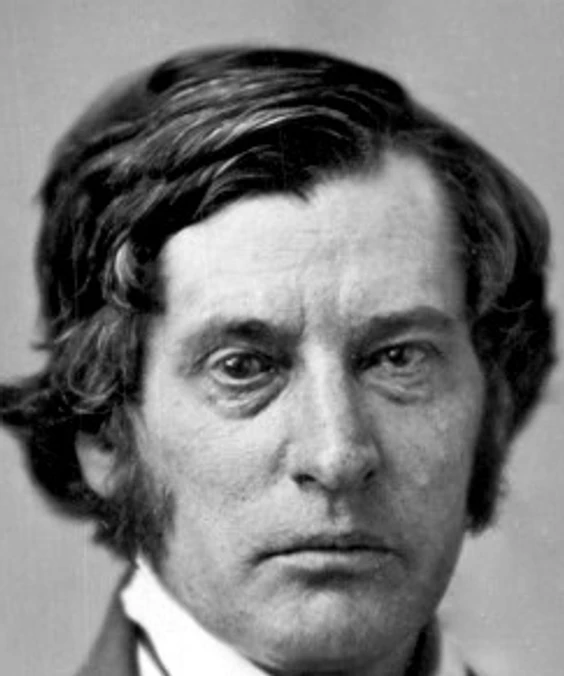
With the creation of every human being, God creates this love of liberty anew.
Horace Mann
The Public Record
Horace Mann was an American educational reformer, abolitionist and Whig politician known for his commitment to promoting public education; he is thus also known as The Father of American Education. In 1848, after public service as Secretary of the Massachusetts State Board of Education, Mann was elected to the United States House of Representatives (1848–1853). From September 1852 to his death in 1859, he served as President of Antioch College.
gutenberg.org
It is a thread of asbestos in the web of the soul, which all the fires of oppression cannot consume.
Weakened it may be, but it cannot be destroyed.
It is an indestructible part of the nature of man.
In the educated and civilized, this love of liberty is a regulated but paramount desire; in the ignorant and debased, it is a wild, vehement instinct.
Among these passions, one of the strongest and boldest is the love of liberty, which dwells in every bosom.
Human passions feed the combustion; and the flame which the breath of man has kindled, the passions of the multitude,--stronger than the breath of the hurricane,--will spread.
But if civil war once blazes forth, it is not given to mortal wisdom to extinguish or control it.
They can light the torch of civil war, or they can quench it.
They are the sensorium of the body politic, and their social inferiors are the mighty limbs, which, for good or for evil, they wield.
Where great social distinctions exist, the intelligence and the wealth of a few stimulate or suppress the volition of the masses.
Under God, the men of education, of talent, and of attainment, turn the tides of human affairs.
Let the high-toned and chivalrous sons of the south,--those “who feel a stain upon their honor like a wound,”--think of all this, as one in the long catalogue of “hazards” upon which they are rushing.
There are now but two places on the globe where a woman can be publicly whipped,--in Hungary and in the Southern States!
Penal codes have been ameliorated, and barbarous customs abolished.
The rights of individuals, not less than the rights of communities, have emerged from oblivion into recognition, and have become law.
What a tempest now beats upon Austria, from all points of the compass, because, during the last season, she attempted only to half enslave the Hungarians,--because she attempted to do what, during the last century, she might have done…
Since the year 1814, written constitutions have been extorted by the people from more than three fourths of all the sovereigns of Europe.
Great Britain, which in former times sent more vessels to the coast of Africa to kidnap and to transport its natives, than all the other nations of the earth together, now maintains a fleet upon the same coast to suppress the trade she so…
These revolutions are only gigantic struggles of the popular will to escape from oppression; and, at each struggle, the giant snaps a chain.
In Europe, the tide of liberty, though meeting with obstructions from firm-seated dynasties and time-strengthened prerogative, still rises, and sweeps onward with unebbing flow.
We are often reminded by gentlemen of the south, that, at the time of the adoption of that constitution, slavery existed in almost every state in the Union; and that some northern merchants, by a devilish alchemy, transmuted gold from its…
Mark the progress in the public sentiment of Christendom, within the last few centuries, on the subject of slavery and the rights of man.
Every intelligent and virtue-loving wife or mother, at the south, when she thinks of her husband and her sons, is forced to be an abolitionist.
They are natural abolitionists, and unless blinded by ignorance, or overawed by their social superiors, they will so declare themselves.
Politicians like Horace Mann