Our present difficulties, which, as you well know, have arrested the gaze of the nation, and almost suspended the legislative functions of Congress, pertain to the destiny of freedom or of slavery, to which our new territories are to be…
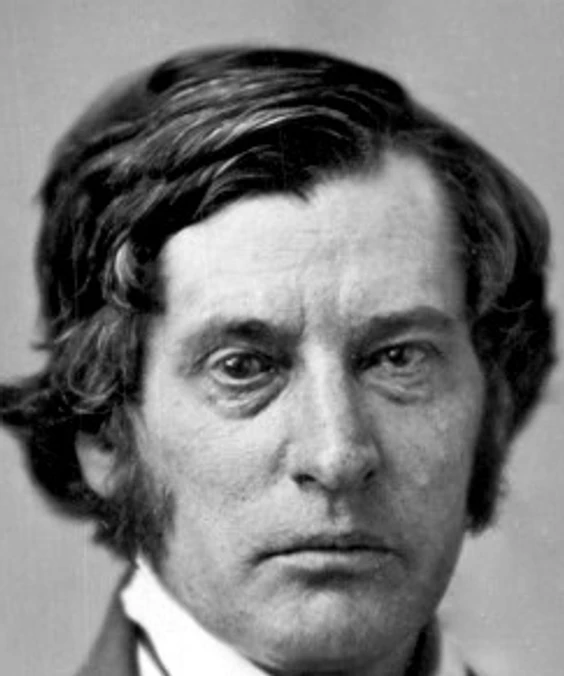
Horace Mann
The Public Record
Horace Mann was an American educational reformer, abolitionist and Whig politician known for his commitment to promoting public education; he is thus also known as The Father of American Education. In 1848, after public service as Secretary of the Massachusetts State Board of Education, Mann was elected to the United States House of Representatives (1848–1853). From September 1852 to his death in 1859, he served as President of Antioch College.
gutenberg.org
He who would provide for the welfare of mankind, must first provide for their liberty.
But a new question had arisen,--the great question of freedom or slavery in our recently acquired territories,--and this question I deemed, for the time being, to be, though not exclusive of others, yet paramount to them.
I had long entertained most decided convictions in favor of protecting American labor, in favor of cheap postage, and of security to the lives and property of our fellow-citizens engaged in commerce.
But I feel, on the other hand, that my constituents, having intrusted to me some of their most precious interests, are entitled to know my “views and opinions” respecting the hopes and the dangers that encompass them.
It would be rash and reckless in me to encounter the distinguished senator on any other subject; but on this I would say, as was said by a knight in an old tournament, that he had such confidence in the justness of his cause that he would…
As “humane” men, they would deprecate and forefend that greatest of inhumanities, the dooming of increased thousands and millions of their fellow-men to the dreadful inheritance of bondage.
As “patriotic” men, they prefer to bear any calamity that may come upon themselves, rather than to devolve accumulated calamities, growing out of their own dereliction from duty, upon their posterity.
As “intelligent” men, my constituents foresee that the extension of slavery over our territories will not only be an unspeakable crime in itself, but will be converted into the means of future unspeakable crimes in further extensions.
I affirm, then, that a knowledge of the premises is indispensable to a judgment on the conclusion.
As well may one declare the judgment of a court to be legal or illegal, merciful or tyrannous, without looking back to the allegations and proofs on which it is founded.
With all deference to the senator,--and mine is unfeignedly great,--I submit that this is false logic and worse ethics.
Surely, the honorable senator is too good a lawyer to be ignorant of the maxim, “qui hæret in litera” &c.; and too good a theologian not to have read that “the letter killeth” if divorced from the spirit.
I do not see that it is less unjustifiable to attach false meanings to words correctly quoted, than to forge quotations.
I answer, as before; the injustice consists in giving a false meaning to true “words” and “syllables,”--a meaning which both the subject-matter and context of my speech repudiate.
By his own admission, too, he had done this without reading the speech itself; when, had he accorded to me the justice of hearing me before he condemned me, he would have found that both subject-matter and context confuted his…
My complaint was, that he had taken half a dozen lines from my speech, and had attributed a meaning to them, in some respects odious, in other respects ridiculous, and in all respects unwarrantable.
I cheerfully submit to all “intelligent men,” if they are at the same time humane and patriotic, to pass upon such a sentiment.
Every student of the criminal legislation of the Southern States in regard to slaves, knows that their laws are replete with proofs where the sensibilities of a man are sacrificed to the spirit of gain.
That the creation of a new slave territory will increase the victims of slavery, is a proposition too plain to be argued.
But the real issue on this point is, (and the senator must know it,) whether the victims of slavery shall be indefinitely multiplied by the addition to its domain of regions now free.
The whole scope and stress of my argument went against yielding any such portion of our new acquisitions to slavery as would form either a state or a territory.
But this wrongful imputation of such a sentiment, without substance or semblance to justify it, is far worse than ridiculous; it becomes unjust and ungenerous; and is none the less so for being made in a place where he knew I could not…
In a national point of view, and looking at the subject as a statesman, the sentiment imputed to me is simply ridiculous.
Badger further charges me with invoking all the calamities he enumerates, “rather than permit one man who now stands upon the soil of North Carolina a slave, to stand a slave upon the soil of New Mexico.” This statement is not merely…
Politicians like Horace Mann