Is there a single Whig constituency, in any free state in this country, that would return any man that would not vote for freedom?
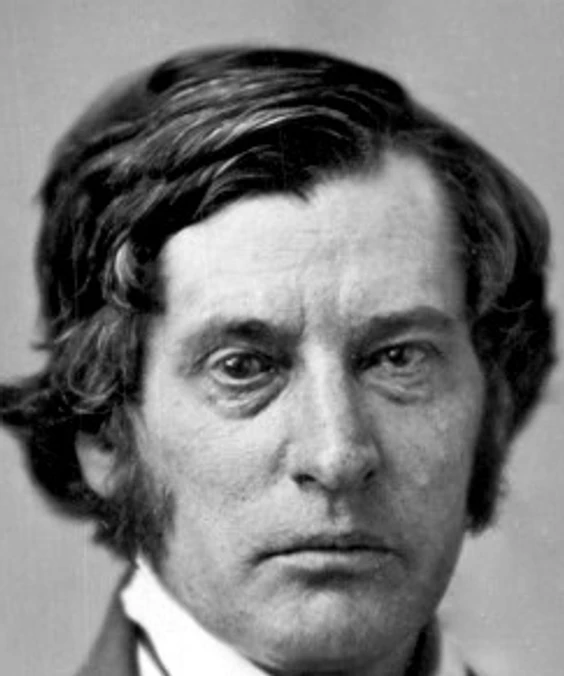
Horace Mann
The Public Record
Horace Mann was an American educational reformer, abolitionist and Whig politician known for his commitment to promoting public education; he is thus also known as The Father of American Education. In 1848, after public service as Secretary of the Massachusetts State Board of Education, Mann was elected to the United States House of Representatives (1848–1853). From September 1852 to his death in 1859, he served as President of Antioch College.
gutenberg.org
Is there a Whig upon this floor who doubts that the strength of the Whig party next March will insure freedom to California and New Mexico, if by the constitution they are entitled to freedom at all?
It is the passage of a law to say that California and New Mexico shall remain forever free.
Webster, in his Marshfield speech, September 1, 1848, opposed the election of General Cass, because, through his recreancy to northern principles, slavery would invade the territories.
General Cass never took the ground that slavery could not exist in the new territories; and no inconsiderable part of the opposition made to him in Massachusetts and in other free states, was placed expressly upon the ground that he would…
But admit slavery there, and the power of the government will be invoked to exterminate these Indians, as it was before to exterminate the Cherokees and Seminoles,--not to drive them beyond the Mississippi, but beyond the Styx.
Custom blinds conscience, until, without any attempt to emancipate or ameliorate their victims, men can preach and pray and hold slaves, as Hamlet’s grave digger jests and sings while he turns up skulls.
All moral and religious principles are lowered till they conform to the daily practice.
There is a combination of poverty and pride, which slavery produces, on the doctrine of natural appetence, and which, therefore, it exactly fits.
It is not poetry, but literal truth, that the breath of the slave blasts vegetation, his tears poison the earth, and his groans strike it with sterility.
Yet this is done wherever slavery exists, and is part and parcel of its working.
Can the oppression that tramples out voluntary industry, enterprise, intelligence, and the desire of independence, conduce to riches?
Can there be genius, the inventive talent, or profitable labor, where ignorance is so dense?
Generally, ignorance is a necessary concomitant of slavery.
Do not Maryland, Virginia, North Carolina, and other states, furnish witnesses by thousands and tens of thousands that slavery impoverishes?
Should it be said that slavery will not go into the new territories, because it is unprofitable; I ask, Where is it profitable?
Slavery, being a crime founded upon human passions, can go wherever those passions are unrestrained.
At what elevation will the whip fall from the hand of the master, and the fetter from the limbs of the slave?
How high up can a slaveholder go and not lose his free agency?
Avarice, sloth, pride, and the love of domination, are its cause.
Wherever the wicked passions of the human heart can go, there slavery can go.
Slavery depends, not upon climate, but upon conscience.
What a problem would this be: “Required the height above the level of the sea at which the oppressor ‘will undo the heavy burdens and let the oppressed go free, and break every yoke,’--to be determined barometrically.” Alas! this cannot be…
To ascertain whether a people will obey the Divine command, and do to others as they would be done by, it looks at the thermometer.
It abandons the second commandment of Christ and all bills of rights enacted in conformity thereto, and leaves our obligations to our “neighbor” to be determined by the accidents of earth and water and air.
Politicians like Horace Mann