The last is the republican’s question, volunteering all that he can grant.
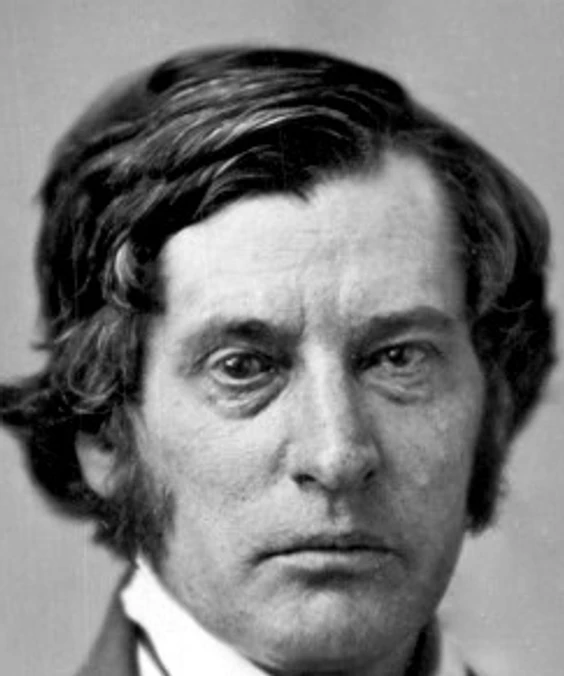
Horace Mann
The Public Record
Horace Mann was an American educational reformer, abolitionist and Whig politician known for his commitment to promoting public education; he is thus also known as The Father of American Education. In 1848, after public service as Secretary of the Massachusetts State Board of Education, Mann was elected to the United States House of Representatives (1848–1853). From September 1852 to his death in 1859, he served as President of Antioch College.
gutenberg.org
The first is the tyrant’s question, granting no more than he is compelled to give.
In regard to this Fugitive Slave act, is it not astonishing that men should ever ask the question, Does the constitution demand the trial by jury? instead of the question, Will the constitution allow it?
But all debate was suppressed; property vanquished liberty; and a pure pro-slavery law was enacted, unadulterated by any alloy of freedom.
While the south were seeking new guaranties for men who claim to own other men, it was a time for the north to demand new guaranties for men who own themselves.
It struck me that if new and oppressive measures were to be taken to carry back alleged slaves to bondage, something should also be done to restore freemen to liberty.
I refer to the Fugitive Slave act, so called; and I trust this will not be deemed an unfitting occasion to lay bare a portion of its enormities.
The great points on which men and parties so vehemently differ, can only be permanently settled at the tribunal of reason and conscience.
It is as necessary that the man whom I would convince should be in a calm state of mind, as that I should be in such a state myself.
The cause of liberty is one in which the true object of ambition is to make great principles most clear, and not to use harsh expressions respecting the conduct or opinion of others.
I make this statement of my views all the more readily, because I do not wish to receive an unintelligent vote from any man, and I therefore abjure all disguises and reserves.
I believe that the money, and the comforts purchasable with it, which such competitions take from the workman here, do not go to improve the condition of the workman there, but are intercepted and appropriated by others.
You know that I embrace this same article of faith with my whole heart.
I know that the leading and most valued article in your creed is the sacredness and security of human freedom.
And without the Ordinance, it is no irreverence to say, that even the omnipotent Spirit of God, working through natural laws, for human progress and human blessedness, would have met with bafflings and threatenings in its operations and…
Without the Ordinance, the discovery of this Western continent, so far as that territory constitutes a part of it, would have given us no occasion to remember the name of Columbus with gratitude.
Without the Ordinance, the Revolution itself, in its application to that territory, and the treaty of 1783, by which its ample domain was secured to the Union, would have been shorn of their glory, and robbed of their value.
I regard the Ordinance which redeemed a territory of more than two hundred and sixty thousand square miles, from the unspeakable sin and curse of slavery, and consecrated it to freedom, as one of the grandest moral events in the annals of…
Whatever his ‘authority’ may have been, we do not hesitate to pronounce it unqualifiedly false to the last degree.
It has been, in times past, the misfortune of the Society of Friends to be vilified, caricatured, and misrepresented; but we remember nothing, even in the old days of persecution, so hard to bear as the compliments of the Massachusetts…
It is said by “members of Congress” from Vermont, that an alleged fugitive was carried before Judge Harrington of Vermont, in 1807, and on his being asked what evidence would satisfy him that the person was a slave, he replied, “A bill of…
Hence, were I a southern man, and my property invested in slaves, I should consider the markets of New Mexico, Utah, and California, for slave labor, worthy of an honorable contest to secure.
That these whole regions are filled with rich mines, is little less than certain, and that they can be profitably worked by slave labor is sure.
If slave labor is like other capital, if it will go where it is best paid, then we have a right to say it will seek these mines, and become a part of the producing capital of the country where those mines are located.
If the nature of the climate and resources of these countries are such as to furnish a profitable market for slave labor, it appears to be conceded, on all sides, that it would be introduced, if left free to seek profitable investment…
Politicians like Horace Mann