I have watched the tide of battle with sleepless eye; and when Liberty at last was stricken down, my heart bled with hers.
Horace Mann
The Public Record
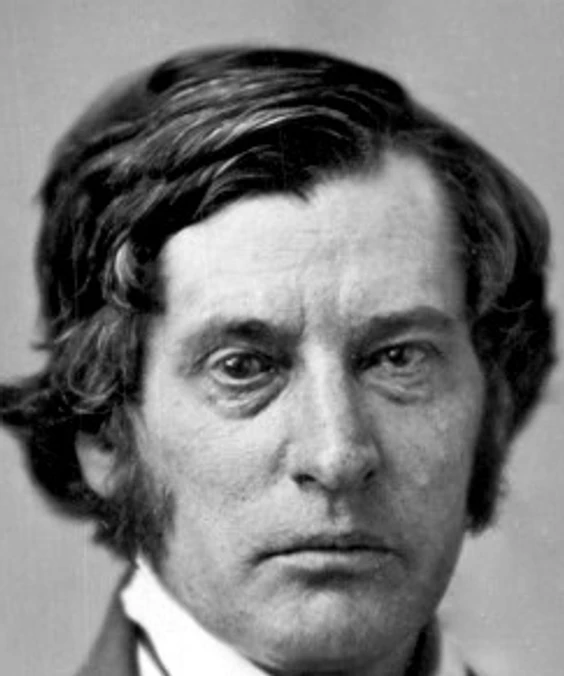
Horace Mann was an American educational reformer, abolitionist and Whig politician known for his commitment to promoting public education; he is thus also known as The Father of American Education. In 1848, after public service as Secretary of the Massachusetts State Board of Education, Mann was elected to the United States House of Representatives (1848–1853). From September 1852 to his death in 1859, he served as President of Antioch College.
gutenberg.org
In this country, I still trust that we shall redeem something of the past, and secure the future.
In the old world, things seem already to be settling back into their former condition, and hopes are darkening into fears.
So, I fear, it is in regard to the late commotions in Europe; and especially in regard to some of the marvellous doings of Congress in our own country.
We have been so often astonished and amazed, by shock after shock, and convulsion after convulsion, that I fear we are beginning to lose our moral sensibility to political catastrophes, however grand or fatal they may be.
I feel assured that I do meet “old friends,”--true men, who carry their hearts in their hands, and whose lives are anchored to their convictions of duty.
Right opposite to us is the court house, in whose forum my feeble voice was first raised, and where, I thank God, it was never raised in behalf of the oppressor, nor on the side of any cause which I believed to be wrong.
One liberty the slave always has,--whenever he deems it expedient, he may re-clothe himself in the rights which God and nature gave him, and which, though they may be ravished from him, can never be destroyed.
Those who would forcibly resist the law, lose half their motive and impulse for repeal; for if we abolish it without repealing it, it will be likely to remain upon the statute book an eternal monument of the nation’s disgrace.
I trust I shall never join a mob to resist a law, until I am ready for revolution.
But the bill has become a law, and the practical question now is, how can the country be exculpated from the crime, and the dishonor.
You and I, sir, must help pay the costs of sending a fellow-being into bondage; when we are under no more constitutional obligation to do so, than to pay the expenses of a slave dealer who ships his cargoes direct from Africa.
The inexorable certificate of a commissioner remands him to bondage and despair.
The alleged slave may have been amongst us for fifty years; he may have earned property, be married, and surrounded by children.
While life lasts, its fangs strike into the flesh.
Unrelentingly it fastens its clutch upon all cases.
But the Fugitive Slave act knows no mercy or compassion of this kind.
With the single exception of murder, all crimes are barred in Massachusetts by a six years’ delay to prosecute.
Hence our laws bar a right of action, otherwise incontrovertible, after that tacit abandonment of which the mere lapse of time is proof.
Human welfare requires that claims which have long been voluntarily acquiesced in, should not be revived.
Though the alleged fugitive should disable him, though the enemies of the country should capture him, though the act of God should strike him down, though an armed mob should commit a rescue,--yet he is still liable.
It is, however, clear proof of wicked legislation, when humane and conscientious men cannot hold the offices it creates.
He that hath ears to hear the cry of the oppressed, let him hear!
I will not waste words to point out the impossibility of their defence, and the certainty of their doom!
It would conflict with that “summary manner” in which it is deemed expedient to dispose of human liberty.
Politicians like Horace Mann