Did the glorious band of reformers count on majorities, when they defied the racks and the flames of Rome?
Horace Mann
The Public Record
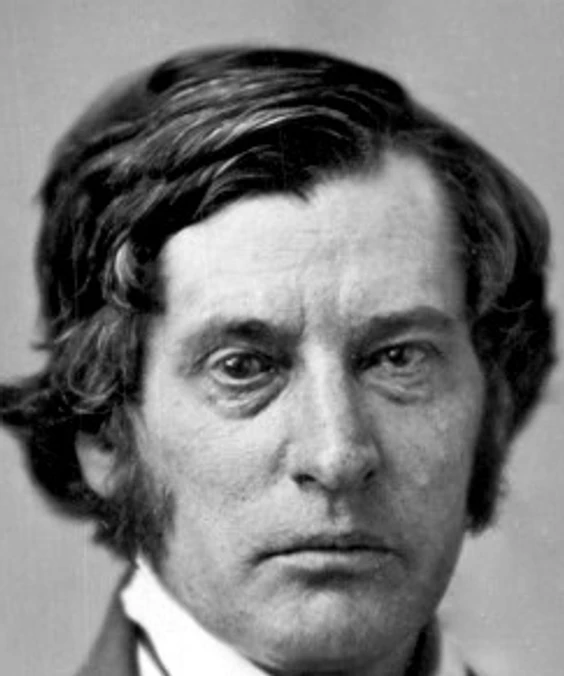
Horace Mann was an American educational reformer, abolitionist and Whig politician known for his commitment to promoting public education; he is thus also known as The Father of American Education. In 1848, after public service as Secretary of the Massachusetts State Board of Education, Mann was elected to the United States House of Representatives (1848–1853). From September 1852 to his death in 1859, he served as President of Antioch College.
gutenberg.org
Did the Pilgrim fathers resist conformity to ecclesiastical oppression because they were a majority of the people?
Did the resistance of the revolutionary patriots to the government of Great Britain start with a majority on its side?
Did Clarkson and Wilberforce open their twenty years’ contest with a majority? or were not all the office-seekers and mammon-worshippers opposed to them?
Has any great and glorious cause ever been started upon earth, that did not find itself, at the outset, in a minority?
It has been said by the Secretary of State, in a late speech, that if this subject be reöpened in Congress, the friends of freedom will be found in a “lean and miserable minority.” What cares my conscience, sir, whether I am in a minority…
Base as human nature often proves itself to be, it sometimes manifests a divine resilience by which it springs with recuperative energy from its guilty fall.
In this sense only do I accept the President’s declaration, that the action of the last Congress on this subject is to be deemed final;--that, in all future conflicts, the right shall not be trampled under foot, but the victims of…
They belied still another time the gospel of love and human brotherhood.
They affixed another stain upon the country, and set in deeper shade the contrast between the theory of our government and its practice.
They furnished another argument for those who despair of human nature; and they supply the misanthrope with a plausible reason for hating mankind.
No, sir; agitation is a part of the sublime order of nature.
In the present century, what but discussion and agitation, through all the realms of Great Britain and in this country, could have sufficed to extinguish the slave trade,--that foulest blot upon modern civilization?
Where was there ever written or published a more incendiary and fanatical document than the Declaration of Independence?--a torch to set the world on fire.
It is because SLAVERY has existed among men; and Christianity never will and never can pervade the earth until the barriers of slavery are first overthrown.
It was by discussion and by agitation, in synagogue and in temple, in distant cities and in different empires, that Christianity was carried from its cradle in Jerusalem to the ends of the earth.
Discussion, or agitation, if you so please to call it, is one of the Heaven-appointed means by which truth is to be spread until it covers the face of the earth, as the waters cover the sea.
Almighty God has so constituted the human soul, that while wrong exists upon the face of the earth, all the noblest impulses of that soul will war against it.
How comes it to pass that this should be done, not in the despotisms of Austria and of Russia, but in republican America?
All other parts of the temple may be entered, but slavery is the ark of the covenant, and whoso lays his profane hands thereon must perish.
This is a free country, except when a man wishes to vindicate the claims of freedom.
We may discuss the question of bank or sub-treasury, of tariff or free trade; but the only subject too sacred to be approached, is slavery and its aggrandizements.
Is it not extraordinary, too, that this interdict on discussion should be applied to a subject which touches the highest interests of man, and calls into fervid action all the noblest faculties of his nature; which, more than any thing…
Is free speech to be only on one side; and is it one of the offices of free speech to silence the sentiments it dislikes?
In the most clamorous days of anti-slavery, there never was half so much said and written against the institution as is now said and written for it.
Politicians like Horace Mann