Nor is there any intermediate class, who may be presumed to be slaves on account of their color, or who may be proved to be slaves by less evidence, or by an inferior kind of evidence, because of color.
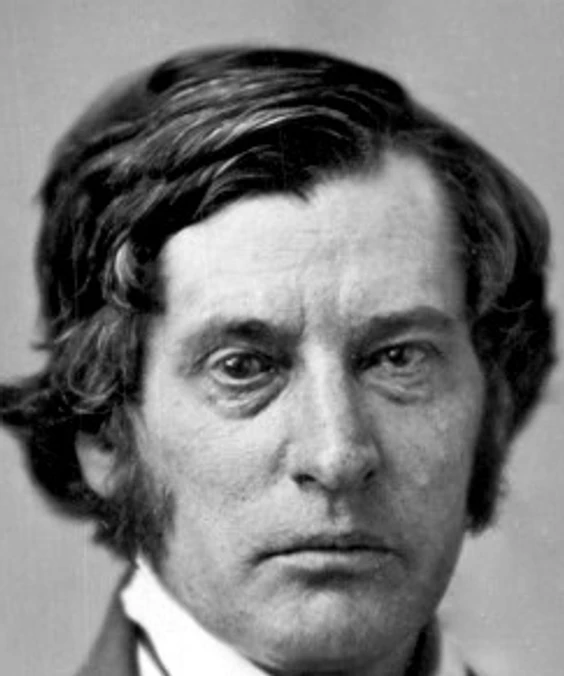
Horace Mann
The Public Record
Horace Mann was an American educational reformer, abolitionist and Whig politician known for his commitment to promoting public education; he is thus also known as The Father of American Education. In 1848, after public service as Secretary of the Massachusetts State Board of Education, Mann was elected to the United States House of Representatives (1848–1853). From September 1852 to his death in 1859, he served as President of Antioch College.
gutenberg.org
There is no such class as slaves known to our laws.
It is the most cruel of sophisms to say, that because a man is claimed as a slave, he is not under the protection of the constitution, and then to prescribe a base mode of trial for him, by which he can be proved the thing he is claimed…
Every man, therefore, in any one of the free states of this Union, has a right to stand upon this legal presumption, and to claim all the privileges and immunities that grow out of it until his presumed freedom is wrested from him by legal…
No matter what complexion he may wear, or what language he may speak, he is a free man UNTIL some other civil condition is proved upon him, or until he forfeits his freedom by crime.
Both by the constitution of the United States, then, and by the constitutions of all the free states, every man found within the limits of a free state is prima facie FREE.
But the government of the United States has no more power to turn a freemen in a free state into a slave than it has to turn a slave in a slave state into a freeman.
It is a government whose powers consist of the grants that have been made to it; and nowhere, by no competent party, has any such grant ever been made.
The government of the United States can neither hold a slave, nor make valid title to a slave by sale.
And I hold further, that if the government of the United States, by escheat, by purchase, by execution against a debtor, or in any other way, should become possessed of a slave, that moment he would be free.
Nor has it power to establish the condition of slavery any where.
So the constitution of the United States creates no slaves, and can create none.
The constitution of every free state in this Union must be first altered, before any such being as a slave, or any such condition as slavery, can be recognized under them, as state authorities.
In the eye of the legislators of the free states, and in the eye of the courts of the free states, so far as their domestic polity is concerned, there can be no such creature as a slave.
By the laws of the free states, we know no such being as a slave.
What he has, he has ex gratia, by the good will of those who own him, body and soul, and who are graciously pleased to forego some of their legal rights from generosity in themselves, and not from justice to him.
It is alleged that the whole force of the above argument, otherwise conclusive, is annulled, because a slave is no party to the constitution, is not under its protecting shield any more than a horse or an ox, and therefore, any provisions…
I might here rest the argument, feeling that, from authority and from reason, from the old and time-honored principles of the common law, as well as from those interpretations of the constitution which have been given by the supreme court…
And can it be that a man’s right to his own freedom cannot be tried by a jury, when, if two men dispute about his value, each may claim the jury trial, and cannot be denied?
Could they have intended that the mere fact of claiming a man as a slave,--which claim might be made against a freeman as well as against a slave,--should be sufficient to deprive him of this ancient muniment of the subject’s liberty?
And will any one be rash enough to say that a man ostensibly free,--free according to all legal presumption,--can be “delivered” over to bondage for life, without the intervention of “a court of justice”?
The slave, then, can be constitutionally and legally “delivered up” in no other way than “on claim,” by “suit.
That very thing is done to him which the constitution says shall not be done but by a jury of his peers.
I affirm, then, that when a man in Massachusetts, who by the constitution of Massachusetts is free, is adjudged to be a slave, is transported as a slave, and held as a slave, in a southern state, though it be but for a single day, he is…
The moment he should arrive within the limits of a slave state, that moment he would be in the same condition as three million other fellow-bondmen; and it would be just as rational to say that they have never been deprived of liberty as…
Politicians like Horace Mann