Under such a law, not one man in ten who will be arrested, even though he should be free, will be prepared to establish his freedom.
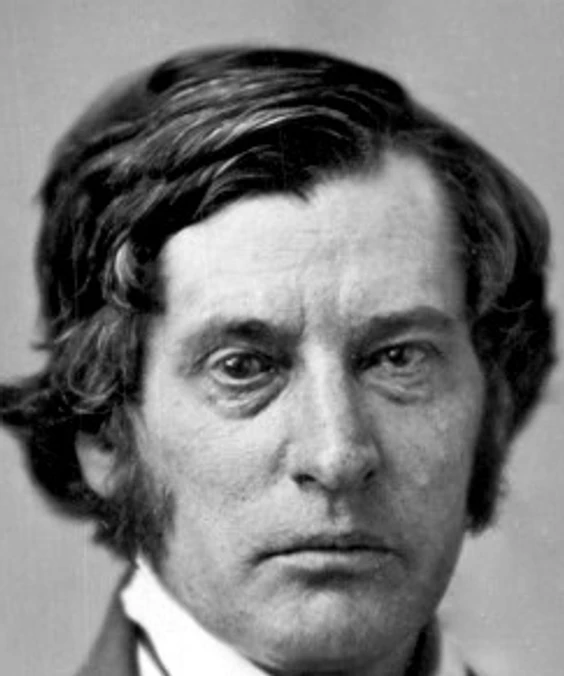
Horace Mann
The Public Record
Horace Mann was an American educational reformer, abolitionist and Whig politician known for his commitment to promoting public education; he is thus also known as The Father of American Education. In 1848, after public service as Secretary of the Massachusetts State Board of Education, Mann was elected to the United States House of Representatives (1848–1853). From September 1852 to his death in 1859, he served as President of Antioch College.
gutenberg.org
All these obstacles to instantaneous readiness may exist together, and yet the inexorable mandate of the law scorns his appeal for that delay on which his highest interests are suspended, and dooms him to bondage because he cannot achieve…
Let me ask any man who ever had a case in court that was worth defending, whether he was prepared to meet it the first hour he had notice of its existence?
What noble barriers are these against the oppression of a powerful government, and the malignant passions of powerful men!
Then come the traverse jury, the right of peremptory challenge, the assignment of counsel, the right to see the indictment beforehand, and to know the names of witnesses who are to be called against the accused, and compulsory process to…
There must be a presentment, by at least twelve sworn men, before a man can be held to answer to a charge by which it can be forfeited.
Yet by what safeguards of constitution, of law, and of forms of practice, is life protected amongst us?
It is the noblest attribute of our race, that we hold civil and religious liberty to be more sacred and more precious than life itself.
One’s blood must all be corrupted in his veins, before he can hear of it without indignation.
The “summary manner” of trial provided for by this law, when considered in reference to rights so momentous, shocks every Anglo-Saxon mind.
This surpasses the bribery of Judas by the high priests.
Yet for decreeing the freedom of a man, the fee is but half as much as when a sentence of bondage is awarded against him.
The cases, therefore, that result in freedom will ordinarily occupy sixfold or tenfold more time, besides requiring the exercise of more legal knowledge and ability, than those which terminate fatally to the respondent.
The law, as it stands, is as much a slave-making as it is a slave-catching law.
The law might just as well have made color conclusive, not only that the respondent was a slave, but that he ran away from the man who claims him.
I say that a law so worthy of abhorrence, so truculent, so fiendish, is not to be found upon the statute book of any other civilized nation on the globe.
With the images of wife and children before the eyes, martyrdom for their protection has been sweet.
A brave heart could withhold a false confession, even upon the rack.
A cloud charged with lightning is forever suspended over his head, and no genius can devise the means to turn aside its bolts.
The life of such a man is a perpetual agony of alarm for himself and for his family.
For him the Prince of Darkness has obtained the ascendency in the affairs of men, and offers impunity to guilt, while protection is withdrawn from innocence.
The virtuous man cannot rely upon his government, nor the pious man upon his God, for earthly protection.
That sense of personal security which every honest man is entitled to feel, this law abolishes.
Who can wonder if, in his city residence, he starts as he turns the corner of every street; or, in his rural home, if he shudders at the rustle of every leaf, lest some kidnapper should spring from his ambush to seize him?
Who can wonder, if he is tormented in his nightly dreams by images of the man-stealer, in far off regions, plotting for his ruin?
Politicians like Horace Mann