Mr. Chairman, first of all, we keep talking about disclosure. As I said before, when the labor unions ran ads against me last time on television, every ad said ``Paid for by AFL-CIO.'' The Federal Communication Commission requires that on…
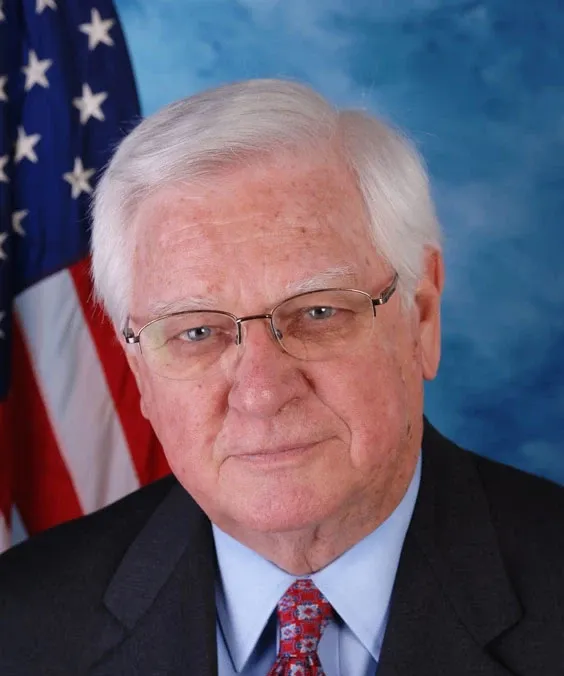
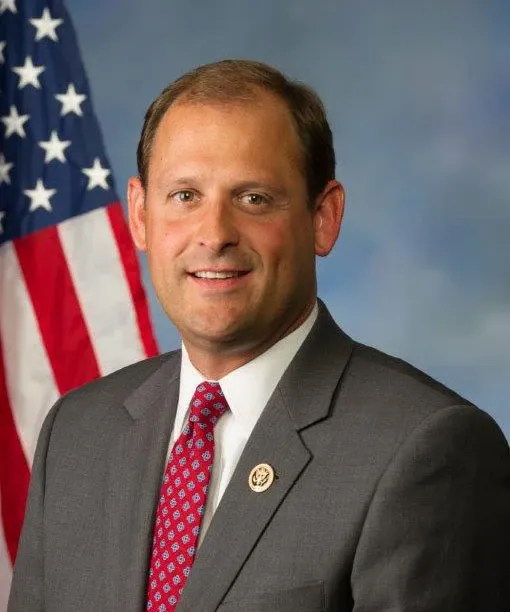
Ed Whitfield
The Public Record
Ed Whitfield is a former Republican member of the United States House of Representatives, who served Kentucky's 1st congressional district from 1995 to 2017. During his tenure, he was known for his work on energy and commerce issues, particularly in relation to the energy sector and healthcare. Whitfield played a significant role in various legislative efforts, including those aimed at reforming the Affordable Care Act and addressing energy policy in the United States. He was also involved in initiatives related to veterans' affairs and agriculture, reflecting the interests of his constituents in rural Kentucky.
I want to quote Justice Thurgood Marshall whom I do not think anyone could say is a very conservative judge, but in Buckley v. Valeo he said, ``One of the points on which all Members of the Court agree is that money is essential to…
the gentleman has been discussing our right to know, and on any ad run on television or on the radio there is a disclaimer required, so the gentleman knows the organization that is paying for the ad.
Mr. Chairman, I think the real concern that we have today, the crux of this issue of the debate that we are really talking about today, gets down to this definition of express advocacy. The Supreme Court has consistently and very clearly…
the reason that we are endorsing the gentleman from California's amendment is that he, in essence, returns to the original Supreme Court language here. Basically, there will not be any question about it. That is really what this is all…
my point is that this is the core of our democracy, being involved in political elections. And who can speak and who cannot speak and who determines what they can say and what they can spend, that is okay for candidates. I understand that…
Yes, it does. It makes it ambiguous. And reasonable men and women can differ as to what is and what is not allowed.
Well, Mr. Chairman, I did not make that argument. The President, I think, still appoints them. I might also add, if the gentlewoman wants to come up with an amendment on truth in advertising for political ads, I would be the first to…
I want to just read from the Shays-Meehan language. Their language says, ``. . . words that, in context, have no reasonable meaning other than to urge the election or defeat of one or more clearly identified candidates.'' Those are two…
Of course, if it is coordinated. But a wealthy individual can go out and run an ad.
there are two sides of this. Do the American people have the right to know about these issue advocacy ads and who pays for them? But second of all, on the other side, my colleague mentioned the point, the person who makes the contribution…
I think many of us feel the way the gentlewoman feels, that many of us had ads run against us in the last campaign that we did not like. But we do believe that is the right of organizations to do that. I was just curious, what were some of…
Well, all I would say is that, if the gentleman is talking about the hard money, of course, anybody can go down to the FEC and get a record and they will know who gave him money or anybody else in this Chamber and it is spelled out very…
Reclaiming my time, I think all of us are very much concerned about any ads that run without a disclaimer. I talked to some FEC lawyers yesterday about that very point; and it is my understanding that if an ad like that runs anywhere…
The only point I would raise there is that that brings up the whole issue of the right of privacy of individuals who contribute or organizations that contribute; and the Supreme Court, in certain cases, has indicated that they have a right…
I wanted to confess tonight that I do represent 31,000 tobacco farmers and tobacco companies through their political action committee using hard money, which is legal, which Shays/Meehan does not try to address at all. So they are not…
the cosponsor of the bill from Massachusetts mentioned that they had 127 legal scholars working on this project. They issued a report called Buckley Stops Here, the 20th Century Fund, not-for-profit group. This is paid for by what we would…
This says, ``Just such an exhortation.'' It says, ``Rather, it provides in effect an explicit directive: vote for these candidates.'' And that is the bright line test.
Buckley adopted the `express advocacy' requirement to distinguish discussion of issues and candidates from more pointed exhortations to vote for particular persons. We therefore concluded in that case that a finding of `express advocacy'…
The most that an individual can give to a candidate is $1,000 in the primary, and so he cannot give them $25,000.
I really do not understand why the other side would be so surprised that there are so many amendments being offered on these bills. When we have bills that so blatantly trample on constitutional rights, I think those of us on the other…
we have had quite a loud and lively debate here today about campaign finance. I for one think that that debate is healthy. Anyone watching this debate would see that there are very deep feelings about this issue. I think that all sides are…
all of us have been clamoring for debate on campaign finance for some time. In fact, that has been the issue that most people have been talking about, particularly on that side of the aisle, since the beginning of this Congress, and…
I would just say in 30 seconds that my colleague talks about giving everyone equal rights; and it is so interesting that in the Shays-Meehan bill and the bills that ban soft money, they are allowing politicians and their hard money to…
as a result of the 1996 presidential elections, the Nation's news media and many other people began to focus upon the way campaigns are financed in America. This focus was generated because of the Clinton/Gore campaign violating provisions…