And the misfortune of this legislation is heightened by the probability of its continuance; for it is not easy to uproot a body of laws once accepted by a people, however mischievous in their character.
George Julian
The Public Record
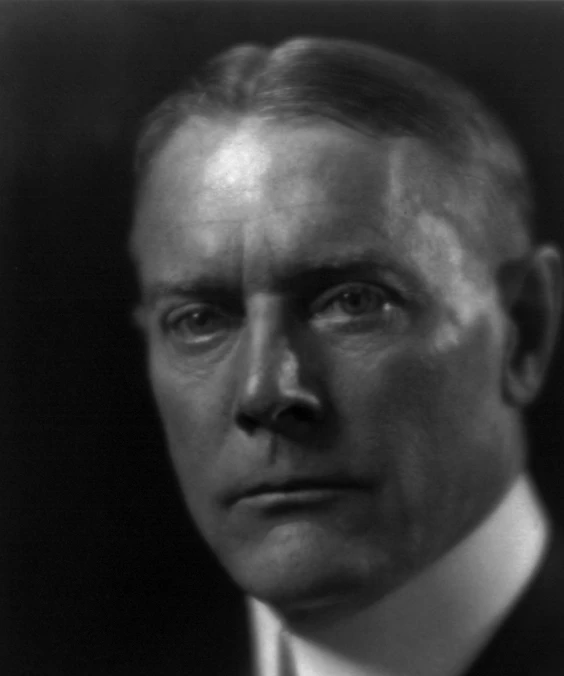
George Washington Julian was a politician, lawyer, and writer from Indiana who served in the United States House of Representatives during the 19th century. A leading opponent of slavery, Julian was the Free Soil Party's candidate for vice president in the 1852 election and was a prominent Radical Republican during the American Civil War and the Reconstruction era.
gutenberg.org
They cripple a great national industry and source of wealth, and insult the principles of American jurisprudence.
They thus undermine the morals of the people, and pave the way for violence and crime.
They scourge the mining States and Territories with the unspeakable curse of uncertainty of land titles, as everywhere attested by incurable litigation and strife.
It has been extensively and thoroughly tried, and after repeated attempts to amend it by supplementary legislation, its failure stands recorded in the manifold evils it has wrought.
I was obliged, also, to encounter a prevailing but perfectly unwarranted presumption that the representatives of the mining States were the best judges of the question in dispute, while it was foolishly regarded as a local one, with which…
What guarantee has he for the investment of either capital or labor under such a system?" The report proceeds to show that these regulations can have no permanency.
A stranger, seeking to ascertain the law, is surprised to learn that there is no satisfactory public record to which he can refer; no public officer to whom he may apply, who is under any bond or obligation to furnish him information, or…
It was easy to see that this was an act to encourage litigation and for the benefit of lawyers, and not to promote the real interest of the miners or increase the product of the mines.
The Government was thus required to part with its lands by proceedings executed by officials wholly outside of its jurisdiction, and irresponsible to its authority.
It was at war with our theory of Democracy, which has respect chiefly to the individual, and seeks to strengthen the Government by guarding his rights and promoting his well-being.
It would be to follow the Governments of the Old World, which reserve their mineral lands for the Crown, because they are esteemed too precious for the people.
Such a policy would not be American, but European.
It was obvious that if the Government continued to reserve these lands from sale, some form of tax or royalty on their products must be resorted to as a measure of financial policy; but this would have involved the same political anomaly…
To sleep over its grand opportunity was as stupid as it was criminal.
The country, loaded down by a great and continually increasing war debt, could not afford to turn away from so tempting a source of revenue.
The case was a very curious one, and the more I considered it, the more astonished I became at the strange indifference of the Government, and that no public man of any party had ever given the subject the slightest attention.
The Government had no policy whatever in dealing with these immense repositories of national wealth, and declined to have any; for a policy implies that something is to be done, and points out the method of doing it.
It excluded sober and intelligent citizens, and hindered the establishment of organized communities and the development of the mines.
The leasing policy drew into the mining regions a population of vagrants, idlers and gamblers, who resisted the payment of tax on the product of the mines, and defied the agents of the Government.
This policy was thoroughly and perseveringly tried, and proved utterly unprofitable and ruinous.
They not only perfectly satisfied the soldiers everywhere, but revolutionized the opinion of both Houses of Congress, and thus saved the public domain from the wholesale spoilation that had threatened it.
The great body of the land fell into the hands of monopolists, who thus hindered the settlement and productive wealth of the country, while the sum received by the soldier for his warrant was in very many cases a mere mockery of his just…
Probably no great question has been so imperfectly understood by our public men as the land question, and the truth of this is attested by the multiplied schemes of pillage and plunder to which the public domain has been exposed within the…
If the member from Maine had the least idea of how profoundly indifferent I am to his opinion upon the subject which he has been discussing, or upon any other subject personal to me, I think he would hardly take the trouble to rise here…
Politicians like George Julian